
Versatile Catering Robot with Advanced Obstacle Avoidance Features
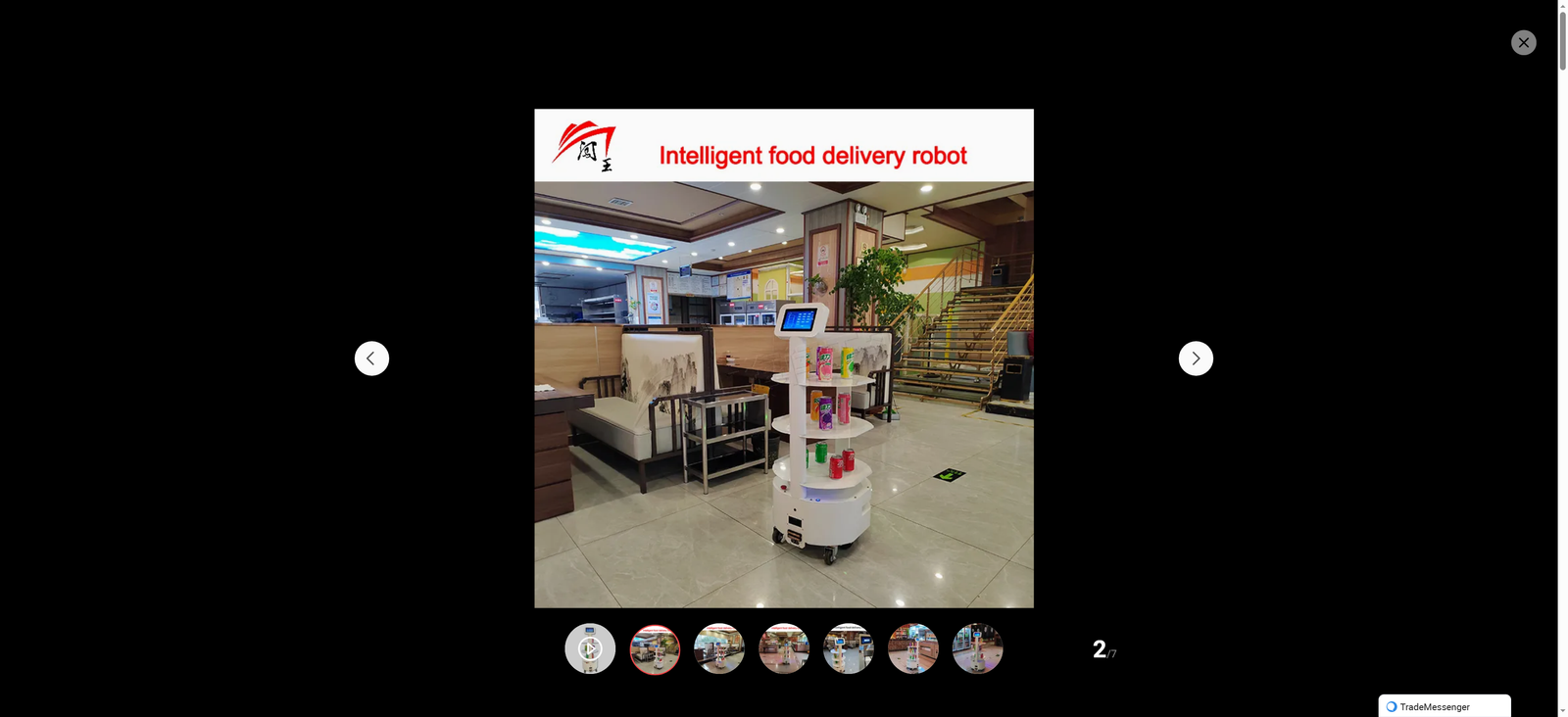
In the dynamic landscape of the catering industry, where labor shortages, operational efficiency, and service quality have become core challenges, versatile catering robots equipped with advanced obstacle avoidance features are emerging as transformative solutions. These intelligent machines are no longer mere novelty tools but indispensable partners that seamlessly integrate into diverse dining scenarios, from bustling restaurants and hotels to lively bars and KTVs. By combining multi-scenario adaptability with cutting-edge obstacle avoidance technologies, they redefine service standards while addressing the industry's "high cost, high pressure, high demand, and low efficiency" predicament.
Core Obstacle Avoidance Technologies: The Foundation of Reliable Operation
The reliability of catering robots in complex environments hinges on their obstacle avoidance capabilities, which have evolved from passive sensing to proactive prediction through technological innovation. Modern catering robots adopt a multi-sensor fusion strategy that integrates laser radar, depth cameras, inertial measurement units (IMU), and ultrasonic sensors, forming a comprehensive environmental perception network.
SLAM (Simultaneous Localization and Mapping) technology, enhanced by laser radar, enables robots to construct high-precision indoor maps and achieve centimeter-level positioning, even in spaces with glass partitions, highly reflective floors, or empty corridors—areas where single-sensor systems often fail. Complemented by depth cameras, these robots can detect low-height obstacles such as children or pets and suspended objects like table corners, eliminating blind spots in perception. For instance, the TF-NOVA laser radar developed by Benewake covers a 48cm detection area 2 meters ahead with a 14° horizontal field of view, ensuring no small obstacles (as small as 5cm²) are missed, thus enhancing operational safety.
Beyond static obstacle detection, advanced predictive obstacle avoidance algorithms elevate robot performance in dynamic scenarios. By analyzing pedestrian movement trajectories, these algorithms can predict positions 0.5 seconds in advance, allowing robots to decelerate, detour, or stop proactively instead of reacting passively. In crowded restaurants, this capability reduces collision risks and avoids congestion caused by frequent sudden stops. For multi-robot operations, decentralized scheduling systems enable dozens of robots to negotiate right-of-way autonomously, ensuring smooth traffic flow even during peak hours.
Versatile Functions: Adapting to Diverse Catering Needs
Equipped with robust obstacle avoidance systems, modern catering robots boast versatile functions that extend far beyond basic food delivery, catering to the full spectrum of front and back-of-house operations. In dining areas, they serve as multi-role attendants: automatically delivering dishes to designated tables with shock absorption systems to prevent spills, introducing menu items via high-definition touchscreens, and greeting customers with colorful breathing lights to enhance the dining experience. Their multi-layered trays can carry up to 30 kilograms, accommodating various dish sizes and types, making them suitable for Chinese restaurants, hot pot restaurants, Western restaurants, and more.
The versatility of these robots is further demonstrated in specialized scenarios. In hotels, for example, collaborative robot systems combine cooking and delivery functions—cloud-based noodle-making robots can prepare up to 66 bowls per hour with consistent quality, while delivery robots transport meals to guest rooms accurately. These robots operate 24/7, filling service gaps during non-peak hours and reducing labor dependency by 40% to 60%. In bars and KTVs, their IP54 protection rating and corrosion-resistant design enable stable operation in humid, high-temperature environments, while their 360° protective frames withstand collisions in crowded spaces.
Advanced models integrated with embodied intelligence have taken versatility to new heights. Equipped with multi-modal interaction systems, they can recognize gestures, distinguish between staff and customers, and even respond to voice commands amid background noise. For instance, robots with Deepoc development boards can adjust delivery sequences based on requests like "Serve the elderly first," maintain food temperature at 65℃ for hot dishes, and trigger anti-slip modes when detecting oil stains on the floor—blending technical precision with human-centric service.
Industry Impact and Future Trends
The widespread adoption of versatile catering robots with advanced obstacle avoidance features is reshaping the catering industry's operational model. Data shows that global restaurant robot market growth will maintain a CAGR of over 25% through 2030, with the Asia-Pacific region contributing over 50% of the market share due to its high labor costs and tech-savvy environment. For businesses, these robots not only cut labor costs but also drive customer traffic through innovative services and improve operational efficiency via data-driven management—recording order volumes, popular dishes, and peak hours to optimize inventory and staffing.
Looking ahead, the evolution of these robots will focus on three key directions: technological integration, scenario expansion, and business model innovation. Technologically, the fusion of embodied AI and digital twin technology will enable robots to learn from service data continuously, enhancing their adaptive capabilities in complex environments. Scenario-wise, applications will extend from dining areas to full-chain operations, including ingredient preprocessing and table cleaning, forming integrated smart restaurant solutions. Business models like Robot-as-a-Service (RaaS) will lower entry barriers for small and medium-sized enterprises, with subscription-based deployments expected to account for nearly 30% of the market by 2028.
As catering robots become more intelligent, versatile, and affordable, they are no longer just tools for efficiency but catalysts for reimagining the dining experience. By combining advanced obstacle avoidance with human-centric design, these machines bridge the gap between technology and service, proving that automation can enhance rather than replace the warmth of catering services. In the years to come, they will continue to drive the industry toward a more efficient, standardized, and innovative future.