
Advanced Hospital Robot Sterilizer for Effective Air Sanitization
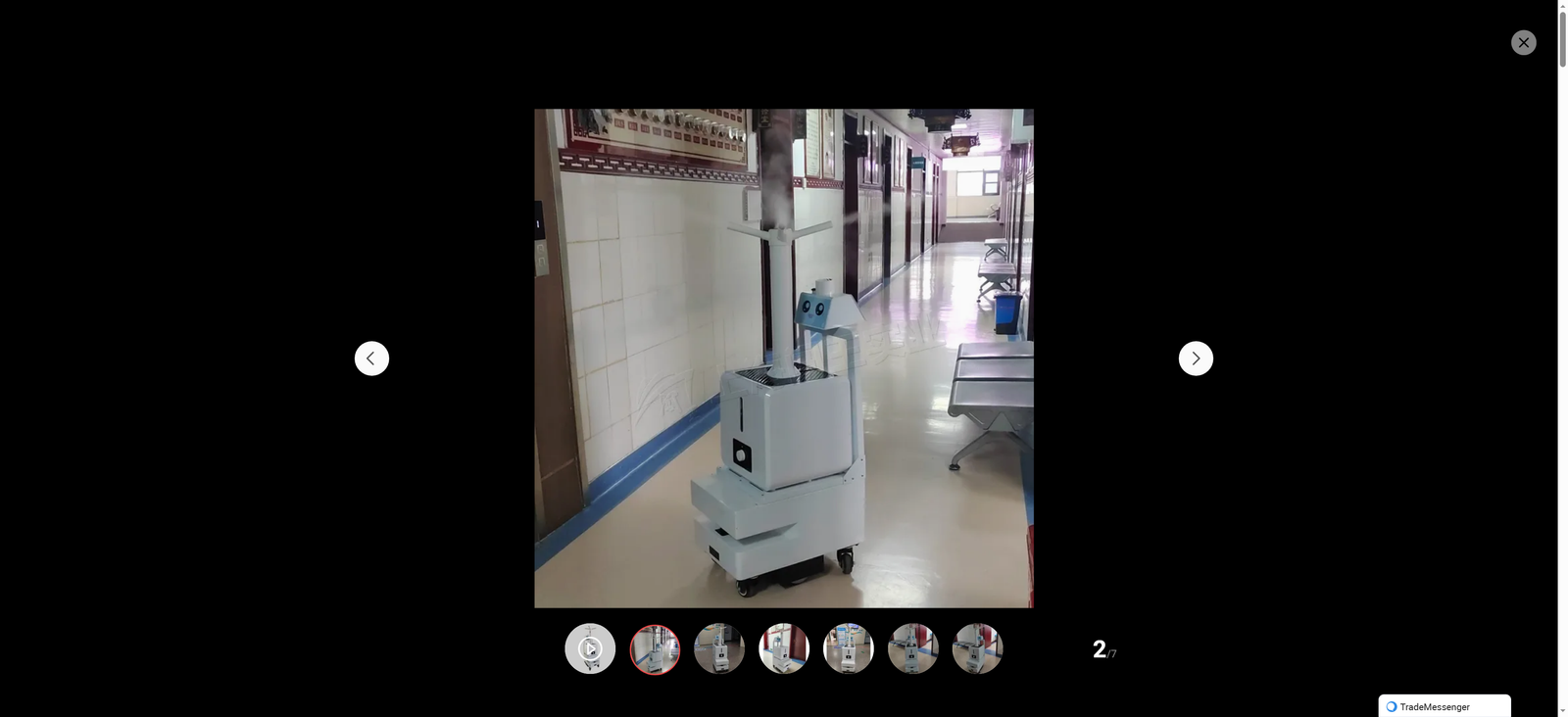
In healthcare settings, where the battle against healthcare-associated infections (HAIs) is perpetual, air sanitization stands as a critical line of defense. Traditional disinfection methods, relying on manual labor or static equipment, often fall short of addressing the dynamic and complex hospital environment—suffering from inconsistency, blind spots, and exposure risks to medical staff. The emergence of advanced hospital robot sterilizers has revolutionized air sanitization, integrating artificial intelligence (AI), precision sensing, and multi-mode disinfection technologies to deliver efficient, reliable, and safe air purification solutions.
At the core of these advanced robotic systems lies a synergy of intelligent navigation and adaptive disinfection capabilities. Unlike conventional static UV-C devices or manual spraying, modern sterilizer robots leverage high-resolution vision sensors, lidar, and ultrasonic detectors to construct real-time environmental maps . Embedded deep learning algorithms enable them to identify obstacles, avoid human presence, and pinpoint high-risk areas—such as door handles, medical equipment surfaces, and air ducts—that are prone to pathogen accumulation. A notable innovation is their dynamic route replanning function: if a person enters the disinfection area mid-cycle, the robot automatically pauses UV-C emission, recalculates the remaining coverage, and adjusts its path to resume efficiently, eliminating the need for restarting the entire process . This level of autonomy ensures uninterrupted sanitization while prioritizing staff and patient safety.
Multi-mode disinfection technologies further enhance the efficacy of these robots in air sanitization. Leading models integrate UV-C light, disinfectant spray, and even plasma purification to target a broad spectrum of pathogens—including bacteria, viruses, and fungi. UV-C light, proven to neutralize pathogens by damaging their DNA, is deployed through adjustable modules to cover both air and surfaces, reaching hard-to-access corners that manual cleaning misses . Complementary spray systems deliver atomized disinfectants to suspend and eliminate airborne microorganisms, while advanced models add plasma technology to decompose volatile organic compounds (VOCs) and bioaerosols without secondary pollution . The MediCleanX robot, for instance, combines UV-C robotic arms for targeted surface disinfection with ground-mounted UV modules and spray systems, supported by PIR motion sensors that instantly halt operations upon detecting human movement . This dual-action mechanism ensures comprehensive air and surface sanitization while adhering to strict safety standards.
Real-world applications and data validate the transformative impact of these robots on hospital hygiene. A case study at King Hamad Hospital Bahrain demonstrated that UV-C sterilizer robots achieved over 80% pathogen reduction on surfaces after just four minutes of exposure, with nearly 100% coverage in operating theaters and medical workshops . Beyond surface disinfection, their air purification capabilities have been linked to a 30% average reduction in HAIs across facilities that adopt the technology, alongside a 25% increase in patient satisfaction . For large-scale hospitals, the cost效益 is equally compelling: a 300-bed hospital can reduce annual operational costs by approximately 9 million yuan by cutting 65% of labor costs and 40% of disinfectant expenses compared to manual cleaning . These robots also excel in continuous operation, working 24 hours a day to maintain consistent air quality in high-traffic areas like ICUs, emergency rooms, and corridors—environments where manual disinfection struggles to keep pace with pathogen transmission risks.
The future of hospital robot sterilizers extends beyond incremental upgrades, with emerging trends pointing toward smarter, more integrated systems. Industry growth projections indicate the global market for medical disinfection robots will exceed 3 billion US dollars by 2028, with a compound annual growth rate (CAGR) of over 10% . Innovations on the horizon include AI-driven predictive disinfection—where robots analyze real-time air quality data to anticipate high-risk periods—and swarm robotics, enabling multiple units to coordinate for large-area sanitization. Additionally, the technology is expanding beyond hospitals to airports, schools, and food-processing facilities, addressing broader public health needs . As healthcare facilities strive to build smarter, more resilient hygiene infrastructure, advanced robot sterilizers are set to become indispensable tools in mitigating infection risks.
In conclusion, advanced hospital robot sterilizers represent a paradigm shift in air sanitization, addressing the limitations of traditional methods through intelligent autonomy, multi-mode disinfection, and data-driven efficiency. By reducing HAIs, cutting operational costs, and protecting medical staff, these robots are not just technological innovations—they are vital contributors to safer healthcare environments. As research and development continue to refine their capabilities, their role in safeguarding public health will only grow, marking a new era of precision and reliability in hospital hygiene management.