
Custom Robot Platform: Revolutionizing Obstacle-Avoidance Driverless Food Delivery in Hotels and Restaurants
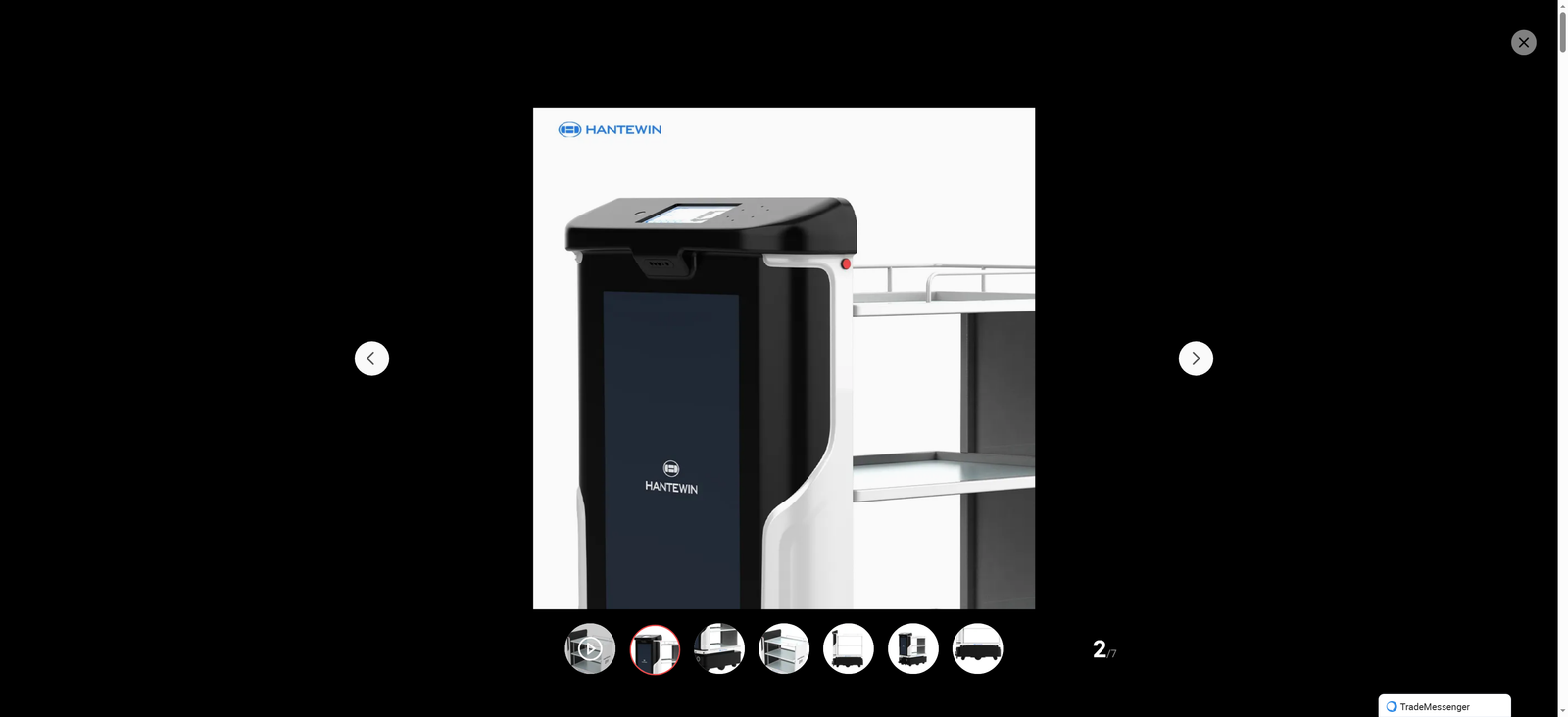
In the bustling lobbies of high-end hotels and the dynamic dining halls of restaurants, a new generation of service providers is making its mark—custom robot platforms designed for driverless food delivery. Equipped with advanced obstacle-avoidance technology, these commercial robots are redefining operational efficiency, service quality, and customer experience in the hospitality industry. As labor shortages persist and consumer demand for contactless, efficient service grows, these intelligent machines are no longer a novelty but a strategic necessity for forward-thinking businesses.
The Core Technology: Obstacle Avoidance and Driverless Navigation
At the heart of every reliable food delivery robot lies its obstacle-avoidance system and driverless navigation capability, both built on a flexible custom robot platform. Unlike standardized robots, custom platforms allow businesses to integrate tailored sensor fusion solutions that adapt to the unique complexities of hotel and restaurant environments—narrow corridors, crowded dining areas, sudden pedestrian movements, and even low-height obstacles like chair legs or spilled food.
Leading solutions leverage a combination of laser radar (LiDAR), depth cameras, and ultrasonic sensors to achieve 360° environmental perception . For instance, the TF-NOVA laser radar, with its 14° horizontal field of view, can cover a 48cm detection area 2 meters ahead, accurately identifying obstacles as small as 5cm² even in low-light conditions . This precision is complemented by 3D vision sensors that elevate perception from 2D plane detection to full-body 3D environment modeling, drastically reducing the risk of collisions with suspended objects or blind-spot obstacles . Advanced algorithms like SLAM (Simultaneous Localization and Mapping) — available in both laser and visual variants — enable robots to autonomously plan paths, adjust routes in real time, and navigate dynamic spaces without pre-installed markers, cutting deployment time by up to 75% .
To address the risk of falls on uneven surfaces or stairs, custom platforms integrate dedicated anti-drop sensors such as the TF-Luna laser radar. These sensors detect distance mutations in real time, triggering immediate deceleration or steering when encountering steps or凹陷, ensuring safe operation across all areas of a venue . The synergy of these technologies delivers a driverless experience that is not just autonomous but also inherently safe, a critical requirement for commercial spaces with high foot traffic.
Customization: Tailoring Robots to Hotel and Restaurant Needs
The true power of these commercial robots lies in their customizable platforms, which adapt to the diverse operational demands of hotels and restaurants. Unlike one-size-fits-all solutions, custom platforms support modular upper modules that can be configured for specific tasks, making them versatile assets across different service scenarios.
For restaurants, modules can include multi-layer adjustable trays, insulated compartments for hot dishes, or sealed drawers for food safety, with payload capacities ranging from 20kg to 88kg to accommodate large orders . Some advanced models feature transparent upper sections for real-time content visibility, enhancing food presentation and safety monitoring . In hotels, robots can be customized with sleek, brand-aligned exteriors, integrated touch screens for guest interactions, and voice broadcast systems that announce arrivals at rooms or banquet halls . They can even be programmed to handle room service delivery, concierge tasks, or event catering, seamlessly integrating with elevator systems and IoT networks for end-to-end automation .
Beyond hardware, custom software solutions further enhance adaptability. Cloud-based management platforms allow operators to remotely schedule tasks, update navigation maps, and monitor robot status, while multi-robot coordination systems enable seamless collaboration between multiple units to handle peak-hour rushes . For example, Bear Robotics’ Servi Plus can synchronize with 30 robots in a single venue, resolving bottlenecks instantly and maintaining consistent service quality . Businesses can also add brand logos, customize alert sounds, or integrate POS (Point of Sale) systems for automated order tracking, turning robots into extensions of their brand identity.
Transforming Operations: Efficiency, Cost Savings, and Customer Experience
The adoption of custom driverless food delivery robots delivers tangible benefits to hotels and restaurants, addressing industry pain points while enhancing guest satisfaction. Labor shortages and rising wages have long plagued the hospitality sector; robots alleviate this burden by handling repetitive delivery tasks, freeing staff to focus on high-value customer interactions such as table service, recommendations, and problem-solving . A single robot can operate continuously for 6–12 hours on a single charge of a lithium-iron-phosphate battery, with automatic return-to-charge functionality ensuring 24/7 availability without manual intervention .
Operational efficiency is further boosted by streamlined workflows. Robots equipped with multi-point task scheduling can deliver to multiple tables or rooms in one trip, reducing delivery time by up to 20% compared to manual service . Contactless delivery, a post-pandemic priority for consumers, is seamlessly enabled, minimizing human contact with food and reducing hygiene risks . For businesses, these efficiencies translate to significant cost savings: reduced labor costs, lower food waste from timely deliveries, and improved table turnover rates, all contributing to a rapid return on investment .
From a customer perspective, these robots enhance the dining and hospitality experience. Guests benefit from faster, more consistent service — no more waiting for forgotten dishes or delayed room service — while the interactive elements (voice alerts, LED indicators) add a touch of innovation and convenience . In family restaurants or hotels, robots often become a source of engagement and delight for guests, creating memorable experiences that drive repeat visits and positive reviews.
Market Outlook: The Future of Driverless Food Delivery Robots
The market for hotel and restaurant food delivery robots is poised for explosive growth, fueled by technological advancements and evolving industry needs. Valued at USD 13.9 billion in 2023, the market is projected to reach USD 95.0 billion by 2032, growing at a CAGR of 23.84% . This growth is driven by increasing investments in AI and robotics, rising demand for contactless service, and the need for scalable, cost-effective solutions in a labor-constrained market.
Future innovations will focus on enhancing customization and connectivity. We can expect robots to integrate more deeply with smart venue systems, leveraging 5G connectivity for real-time data sharing and AI-driven predictive analytics to optimize delivery routes based on peak hours and customer flow . Advances in material science will lead to lighter, more durable robots with enhanced waterproof and dustproof capabilities, expanding their use to outdoor patios and poolside areas . Additionally, improved human-robot interaction — such as natural language processing and gesture control — will make robots even more intuitive to work with for staff and guests alike.
Conclusion
Custom robot platforms with obstacle-avoidance and driverless capabilities are transforming the way hotels and restaurants deliver services. By combining precision technology, tailored customization, and operational efficiency, these robots are not just tools but strategic partners that address labor challenges, enhance safety, and elevate customer experiences. As the hospitality industry continues to embrace automation, the flexibility of custom platforms will ensure that these robots remain adaptable to evolving business needs, solidifying their role as indispensable assets in the smart venues of tomorrow. For forward-thinking operators, investing in these intelligent systems is more than a trend — it’s a commitment to innovation and excellence in service.