
Touchless Disinfection Spray Robot: A Safe Sanitation Solution for Food Industry and Gyms
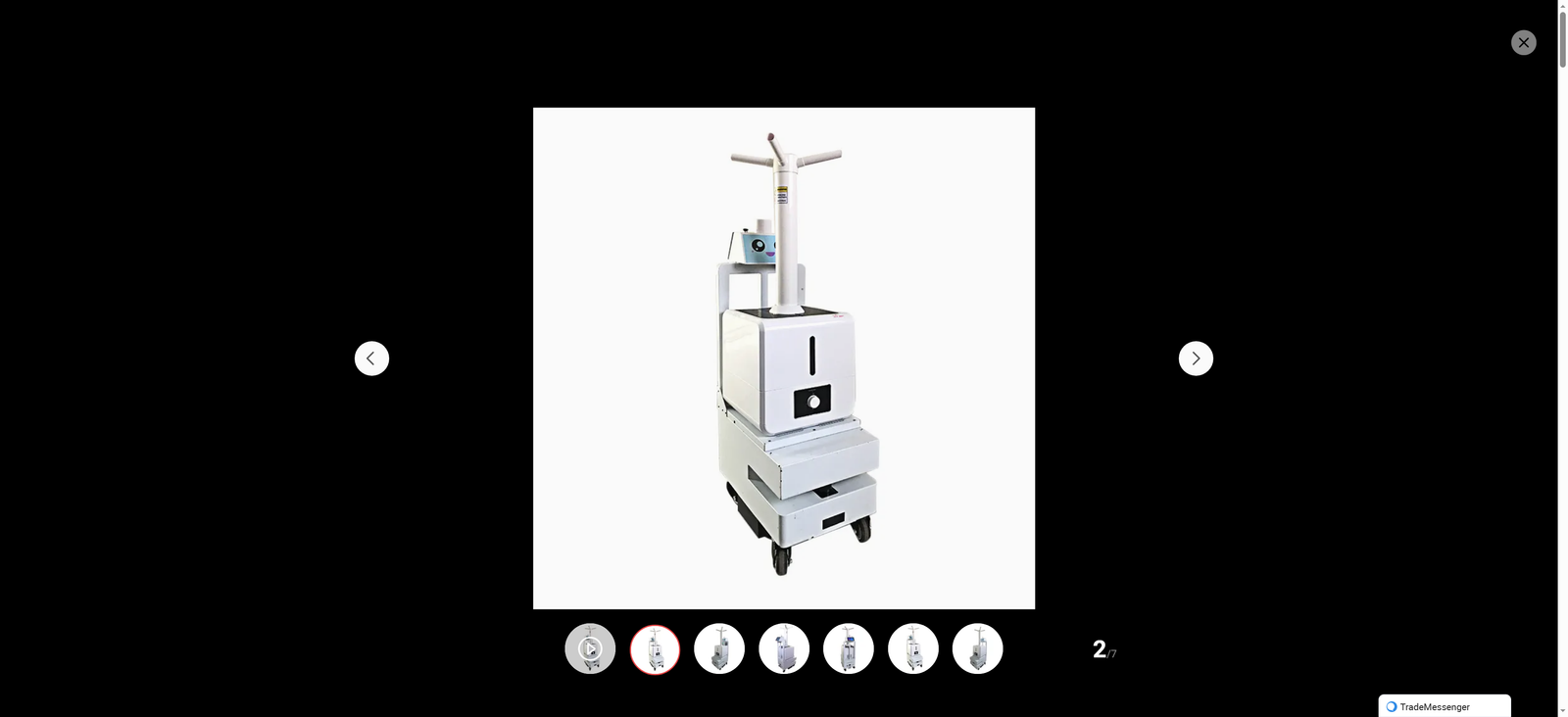
In the post-pandemic era, public health awareness has reached an unprecedented height, and industries such as food processing and fitness have raised higher requirements for environmental sanitation. The touchless disinfection spray robot, as an intelligent sanitation tool integrating automation, safety and efficiency, has gradually become a core equipment to solve sanitation challenges in these two industries. It not only breaks through the limitations of traditional manual disinfection, but also ensures the safety of products and users with strict safety standards and targeted design.
Food Industry: Safeguarding the Whole Chain of Food Safety
The food industry is a high-risk area for microbial contamination, with foodborne diseases causing an estimated 76 million illnesses, 350,000 hospitalizations and 5,000 deaths every year in the United States alone <superscript>1. Cross-contamination between raw and cooked foods, improper disinfection of processing equipment, and chemical residues from disinfectants are the main hidden dangers affecting food safety. The touchless disinfection spray robot is tailor-made for these pain points, providing a safe and reliable solution that meets FDA and USDA certification standards.
Safety is the primary requirement for disinfection equipment in the food industry. The touchless disinfection spray robot adopts food-grade disinfectant compatibility design, which can use hydrogen peroxide mist with ultra-fine particles below 5μm or plant-derived disinfectants that meet food safety standards <superscript>4. These disinfectants can effectively inactivate common pathogens such as E. coli, Salmonella and Norovirus without leaving toxic residues on food contact surfaces <superscript>6. At the same time, the robot is equipped with a precision control system to strictly control the spray volume and concentration, avoiding chemical contamination caused by excessive disinfectant use, which is a common problem in manual disinfection.
In terms of operational efficiency, the robot is equipped with lidar and multi-sensor navigation systems, which can automatically plan paths in complex food processing workshops, covering every corner including production lines, storage areas and transportation channels <superscript>4. It can work continuously for 6-8 hours with a large 18L disinfection tank, reducing the frequency of manual refilling and avoiding cross-contamination caused by human movement <superscript>4. For food processing plants that implement the Hazard Analysis and Critical Control Points (HACCP) system, the robot can generate detailed disinfection reports through cloud management, recording disinfection time, location, dosage and other data in real time, providing traceable evidence for food safety supervision <superscript>1. This not only improves the efficiency of sanitation management, but also helps enterprises pass industry inspections smoothly.
Gyms: Balancing Efficient Disinfection and User Experience
Gyms are public places with high-frequency contact and dense crowds, where fitness equipment, changing rooms and rest areas are prone to the spread of bacteria and viruses. Traditional manual disinfection has problems such as low efficiency, uneven coverage and difficulty in frequent operation, which can hardly meet the sanitation needs of gyms with high passenger flow. The touchless disinfection spray robot has become a new choice for gyms to upgrade their sanitation services by virtue of its autonomous operation and intelligent management capabilities.
The core advantage of the robot in gym scenarios is its ability to achieve high-frequency and full-coverage disinfection without interfering with user activities. Equipped with 360-degree spray systems and adaptive disinfection algorithms, it can dynamically adjust disinfection paths according to the distribution of people and equipment usage, shortening disinfection time by 37% compared with traditional methods <superscript>2. For example, after a user finishes using a fitness machine, the robot can quickly reach the location for targeted reinforcement disinfection through the linkage with the gym's intelligent system, while maintaining regular disinfection frequency in other areas <superscript>2. This "precision disinfection" mode not only improves the efficiency of bacteria elimination, but also avoids excessive disinfection that causes user discomfort, balancing sanitation and experience.
In terms of safety and user acceptance, the robot has multiple humanized designs. It is equipped with motion sensors and obstacle avoidance systems, which can automatically stop working when a person approaches to prevent disinfectant from contacting the human body <superscript>6. Some advanced models also integrate interactive functions, such as playing light music and displaying disinfection animations during operation, which alleviates users' anxiety about disinfection and improves their acceptance of the equipment <superscript>2. In addition, the disinfection data of the robot can be uploaded to the blockchain platform in real time, and users can check the 24-hour disinfection dynamics through mobile apps, which enhances the transparency of gym sanitation work and helps improve user satisfaction and repurchase rate <superscript>2. Practice has shown that gyms using intelligent disinfection robots can reduce the bacterial growth rate by 85% and increase member repurchase rate by 12% <superscript>2.
Technological Innovation Drives the Popularization of Touchless Disinfection
The wide application of touchless disinfection spray robots in the food industry and gyms is inseparable from continuous technological innovation. On the one hand, the integration of AI algorithms and IoT technology enables the robot to realize autonomous navigation, intelligent scheduling and data traceability, which fundamentally solves the problems of manual disinfection such as human error and inconsistent standards <superscript>3. On the other hand, the innovation of disinfection technology, such as the combination of ultra-fine mist spray and UV-C disinfection, makes the robot achieve a 99.99% inactivation rate of common pathogens while ensuring safety, with no secondary pollution risk <superscript>2.
With the continuous growth of global demand for intelligent sanitation solutions, the market scale of disinfection robots is expected to break through 30 billion US dollars in 2025, with the food and fitness industries becoming important growth drivers <superscript>3. For enterprises in these two industries, introducing touchless disinfection spray robots is not only a response to public health needs, but also a strategic layout to improve core competitiveness. In the future, with the advancement of technology and the reduction of costs, touchless disinfection spray robots will be more widely used, bringing a more safe and reliable environment for food production and fitness activities.