
Open-Source Differential Drive Service Robot: Integrating Hub Motor, ROS Mapping, SLAM Navigation and Auto-Recharging
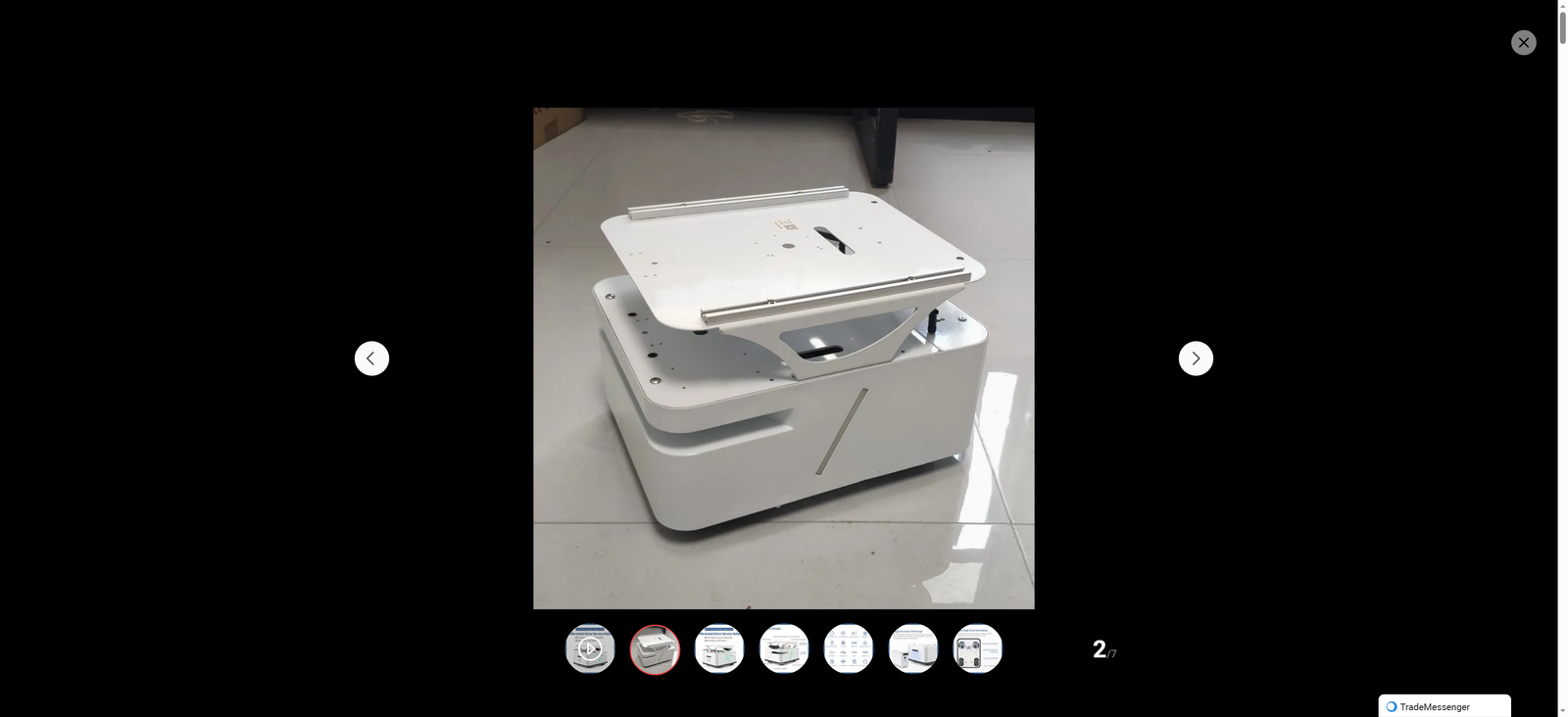
In the era of intelligent automation, service robots have become indispensable in industries ranging from logistics and healthcare to smart homes and industrial inspection. Among the diverse robot architectures, differential drive robots stand out for their simplicity, maneuverability, and cost-effectiveness—especially when combined with open-source ecosystems that foster innovation and customization. This article delves into the core components and integrated capabilities of an open-source differential drive service robot, focusing on hub motor propulsion, ROS-based mapping, SLAM navigation, and auto-recharging functionality, which together redefine the robot’s autonomy and practicality.
Hub Motor: The Core of Efficient Propulsion
The choice of drive system directly determines a robot’s mobility, energy efficiency, and structural compactness. Unlike traditional drive systems that rely on complex transmission chains (motors, reducers, gears, and drive shafts), hub motors integrate the motor directly into the wheel hub, eliminating 90% of intermediate components . This integrated design brings transformative advantages to differential drive service robots.
For open-source projects, brushless hub motors are the preferred option due to their exceptional efficiency (up to 90% energy conversion), long lifespan (no brush wear), and quiet operation . They address the shortcomings of brushed motors—such as high maintenance needs and electromagnetic interference—making them ideal for long-duration, unattended tasks. Additionally, hub motors enable precise speed and torque control, a critical feature for differential drive robots that rely on varying wheel speeds to achieve turning and positioning. With built-in encoders and Hall effect sensors, hub motors provide real-time motion feedback, laying the foundation for accurate odometry and navigation .
The structural benefits of hub motors are equally significant. By reducing the robot’s internal component volume, they free up space for larger batteries or additional sensors (e.g., laser radars, cameras), extending operational time and functional versatility . For example, industrial handling robots equipped with hub motors gain 30% more internal space, boosting battery life by up to 5 hours — a key advantage for open-source robots tailored to logistics or inspection scenarios.
ROS Ecosystem: Enabling Modular Mapping and Navigation
The Robot Operating System (ROS) serves as the backbone of the robot’s software architecture, offering a modular, open-source framework that simplifies the integration of mapping, navigation, and hardware control. For differential drive robots, ROS provides out-of-the-box tools for mapping (ROS Mapping) and simultaneous localization and mapping (SLAM), enabling seamless adaptation to unknown environments.
ROS Mapping: From Sensor Data to Environment Models
ROS Mapping leverages multi-sensor data (laser radar, IMU, visual cameras) to construct high-precision 2D or 3D environment maps. Open-source packages such as gmapping and karto_slam are widely used in differential drive robots, supporting direct installation via ROS Noetic (e.g., sudo apt install ros-noetic-gmapping) for rapid prototyping . The mapping process begins with the robot collecting sensor data as it moves; ROS then fuses this data with odometry information from the hub motor encoders to generate consistent, detailed maps.
A key advantage of ROS Mapping is its compatibility with diverse sensors. For indoor scenarios, laser radar (LiDAR) is preferred for its high accuracy and resistance to lighting changes, while visual cameras can enhance map details with texture information. ROS’s modular design allows open-source developers to customize sensor fusion strategies—for instance, using Kalman filtering to integrate IMU and wheel odometry data, reducing positioning error to ±5cm .
SLAM Navigation: Autonomy in Unknown Environments
SLAM (Simultaneous Localization and Mapping) is the cornerstone of autonomous navigation, enabling the robot to build a map of an unknown environment while simultaneously localizing itself within that map . For differential drive robots, ROS integrates SLAM with the Navigation Stack (Move Base), which handles path planning (A* or Dijkstra algorithms) and dynamic obstacle avoidance.
The open-source diffbot_slam package exemplifies this integration, providing launch files and configurations for multiple SLAM algorithms (gmapping, cartographer_ros, hector_slam) . Notably, hector_slam does not require odometry data, offering flexibility for scenarios where wheel slip may affect encoder accuracy. During navigation, the robot uses the pre-built map to plan optimal paths, adjusting in real time to avoid dynamic obstacles (e.g., pedestrians, moving objects) via sensor feedback. This capability makes the robot suitable for dynamic environments like shopping malls, hospitals, and warehouses.
Auto-Recharging: Extending Unattended Operation
To realize 24/7 unattended operation— a critical requirement for service robots—auto-recharging functionality is essential. Open-source differential drive robots integrate this feature through a synergy of battery management, path planning, and precise docking control, with Python and ROS serving as the core development tools .
The auto-recharging workflow follows a well-defined state machine : First, the battery management module (BMS) periodically monitors remaining power, triggering the charging process when the电量 drops below a preset threshold (typically 20% ). The robot then pauses its current task, invokes the ROS Navigation Stack to plan the optimal path to the charging station, and switches to high-precision localization mode as it approaches the target. To ensure accurate docking, the robot uses infrared, visual, or magnetic induction technology to identify the charger’s position, adjusting its posture via hub motor control to align with the charging interface .
Open-source solutions offer flexibility in communication protocols and control logic. For example, Modbus-RTU is used for basic DC charging stations, while ISO 15118 supports high-speed intelligent interaction for advanced applications . Developers can customize threshold parameters (e.g., charging target level, status check interval) and docking algorithms—such as angle correction and linear approximation—to adapt to different scenarios . After charging to the target level (usually 95% ), the robot disconnects automatically and resumes its previous task, forming a closed-loop of autonomous operation.
Open-Source Advantages and Application Prospects
The open-source nature of this differential drive service robot accelerates innovation by lowering development barriers. Developers can access and modify code for hub motor control, ROS mapping, SLAM navigation, and auto-recharging, tailoring the robot to specific use cases without reinventing the wheel. For education, the platform serves as an ideal teaching tool for ROS programming and robotics principles . In research, it enables rapid validation of new algorithms for navigation, sensor fusion, and energy management. In industry, it can be customized for logistics handling, indoor inspection, and smart cleaning—reducing operational costs by 20% or more compared to commercial closed-source robots .
Looking ahead, the integration of AI and IoT will further enhance the robot’s capabilities. Machine learning algorithms can optimize charging strategies based on usage patterns, while networked charging stations enable collaborative task scheduling among multiple robots . With continuous contributions from the open-source community, this robot platform will evolve to meet the growing demands of smart cities, intelligent logistics, and automated healthcare.
Conclusion
The open-source differential drive service robot, integrating hub motor propulsion, ROS mapping, SLAM navigation, and auto-recharging, represents a paradigm shift in accessible, autonomous robotics. Its modular design balances performance and customization, making it suitable for developers, researchers, and industry users alike. By leveraging open-source collaboration and advanced technologies, this robot not only addresses the practical challenges of mobility and autonomy but also paves the way for the next generation of intelligent service robots that seamlessly integrate into our daily lives and workplaces.