
Mobile Intelligent Disinfection Robot: Dual Modes of Atomization Spray, Comprehensive Sterilization
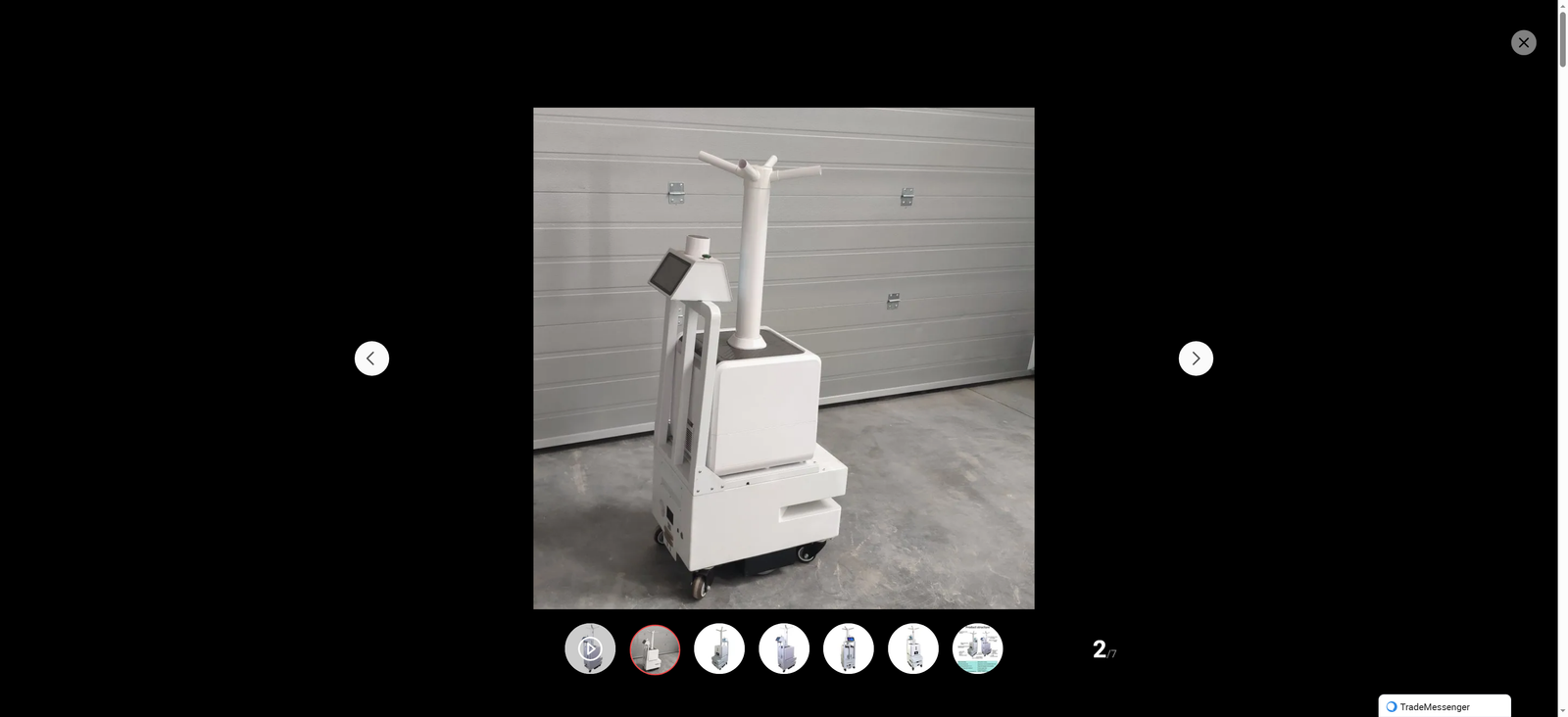
In the post-pandemic era, public health security has become a global focus, and the demand for efficient, intelligent disinfection solutions is soaring. The mobile intelligent disinfection robot, equipped with dual modes of atomization spray, has emerged as a core tool in modern sterilization systems. By integrating advanced atomization technology, autonomous navigation, and intelligent control, it breaks through the limitations of traditional disinfection methods, achieving comprehensive, efficient, and contactless sterilization across diverse scenarios.
The Core of Dual Atomization Spray Modes: Precision and Coverage
The dual atomization spray modes are the technological cornerstone of the mobile intelligent disinfection robot, combining ultrasonic atomization and pneumatic atomization to meet different sterilization needs. Ultrasonic atomization leverages high-frequency ultrasonic vibrations to convert disinfectants into micron-level particles (1-10μm in diameter), which can suspend in the air for 30-60 minutes and penetrate deep into narrow gaps such as equipment crevices and curtain folds, realizing 360° non-dead-angle disinfection . This mode is particularly suitable for enclosed spaces requiring thorough air and surface sterilization, as the fine aerosols can evenly cover every corner without causing damage to electronic components or precision equipment when paired with neutral disinfectants.
Pneumatic atomization, on the other hand, utilizes high-pressure gas to atomize disinfectants into ultrafine droplets (2-4μm), which excel in rapid diffusion and large-area coverage . This mode is ideal for open public spaces such as airports, subway stations, and shopping malls, as it can quickly increase the concentration of disinfectants in the target area and achieve efficient sterilization within a short time. The robot can automatically switch between the two modes based on the space size, environmental complexity, and sterilization standards, ensuring optimal disinfection effects while saving disinfectant consumption.
Intelligent Empowerment: Beyond Simple Spraying
The mobile intelligent disinfection robot is more than just a "mobile sprayer"; it integrates multiple cutting-edge technologies to realize autonomous and refined operation. Equipped with SLAM navigation and multi-sensor fusion technology, it can automatically map the environment, plan optimal paths, and avoid obstacles and personnel in real-time with a response speed of 0.1 seconds . In medical scenarios such as hospitals, it can even identify high-risk areas through AI analysis of infection warning data, automatically formulate disinfection plans, and track the effect dynamically .
A key advantage of the robot is its intelligent disinfection management system. It can automatically record and store operational data, including disinfection time, location, duration, and disinfectant consumption, and transmit the data to a cloud platform in real-time . This enables managers to monitor the disinfection process remotely, verify the effect, and ensure compliance with sterilization standards. Additionally, the robot is equipped with safety protection mechanisms such as PIR motion sensors, which instantly stop operation when human presence is detected, eliminating potential risks of disinfectant exposure . With a large-capacity disinfection tank (up to 22L), it can cover an area of 25,000㎡ in a single operation, avoiding frequent refueling and improving work efficiency .
Multi-Scenario Application: Guarding Hygiene in Every Corner
Driven by the dual atomization spray modes and intelligent capabilities, the mobile intelligent disinfection robot has been widely applied in various fields, becoming an indispensable hygiene guarantee. In the medical field, it plays a crucial role in hospitals, especially in intensive care units, operating rooms, and fever clinics. Tests show that after disinfection with hydrogen peroxide atomization combined with ultraviolet rays, the bacterial count on surfaces in medical environments can be reduced to below 5 CFU, meeting the Class IV environmental cleanliness requirements . It effectively reduces the workload of medical staff and minimizes the risk of cross-infection by replacing manual disinfection in high-risk areas.
In public facilities such as airports, subway stations, and schools, the robot operates during off-peak hours (e.g., late at night) to perform regular disinfection, ensuring the safety of public spaces for daily use . In industrial scenarios like food processing factories and semiconductor workshops, it adapts to strict hygiene standards by using corrosion-resistant materials and compatible disinfectants, meeting HACCP certification requirements . The hotel and catering industry also benefits from its efficient operation, as it can quickly disinfect guest rooms, dining halls, and kitchens, enhancing customer confidence in hygiene.
Market Trends and Future Outlook
The global market for cleaning and disinfection robots is growing at a high speed, with a projected compound annual growth rate of 23.5% from 2025 to 2030 . Among them, dual-mode robots integrating atomization and ultraviolet disinfection have become the mainstream, with a market penetration rate rising from 32% in 2022 to 67% in 2025 . The Asia-Pacific region, led by China, is the fastest-growing market, driven by policies supporting smart medical equipment and rising public health awareness .
The future development of mobile intelligent disinfection robots will focus on three directions: multi-modal data fusion for more accurate environmental perception, high-dynamic autonomous navigation to adapt to complex scenarios, and green disinfection technology to comply with global environmental standards . With the integration of 5G, IoT, and AI technologies, the robot will evolve from a single disinfection tool to a comprehensive smart hygiene solution, realizing real-time monitoring, early warning, and precise disposal of pathogens .
In conclusion, the mobile intelligent disinfection robot, with its dual atomization spray modes and intelligent advantages, has revolutionized the traditional disinfection model. It not only improves the efficiency and quality of sterilization but also provides a reliable guarantee for public health security. As technology continues to advance, it will play an increasingly important role in building a smarter, healthier future.