
Autonomous Catering Delivery Robots: Transforming Restaurants with Smart Lidar Navigation and Obstacle Avoidance
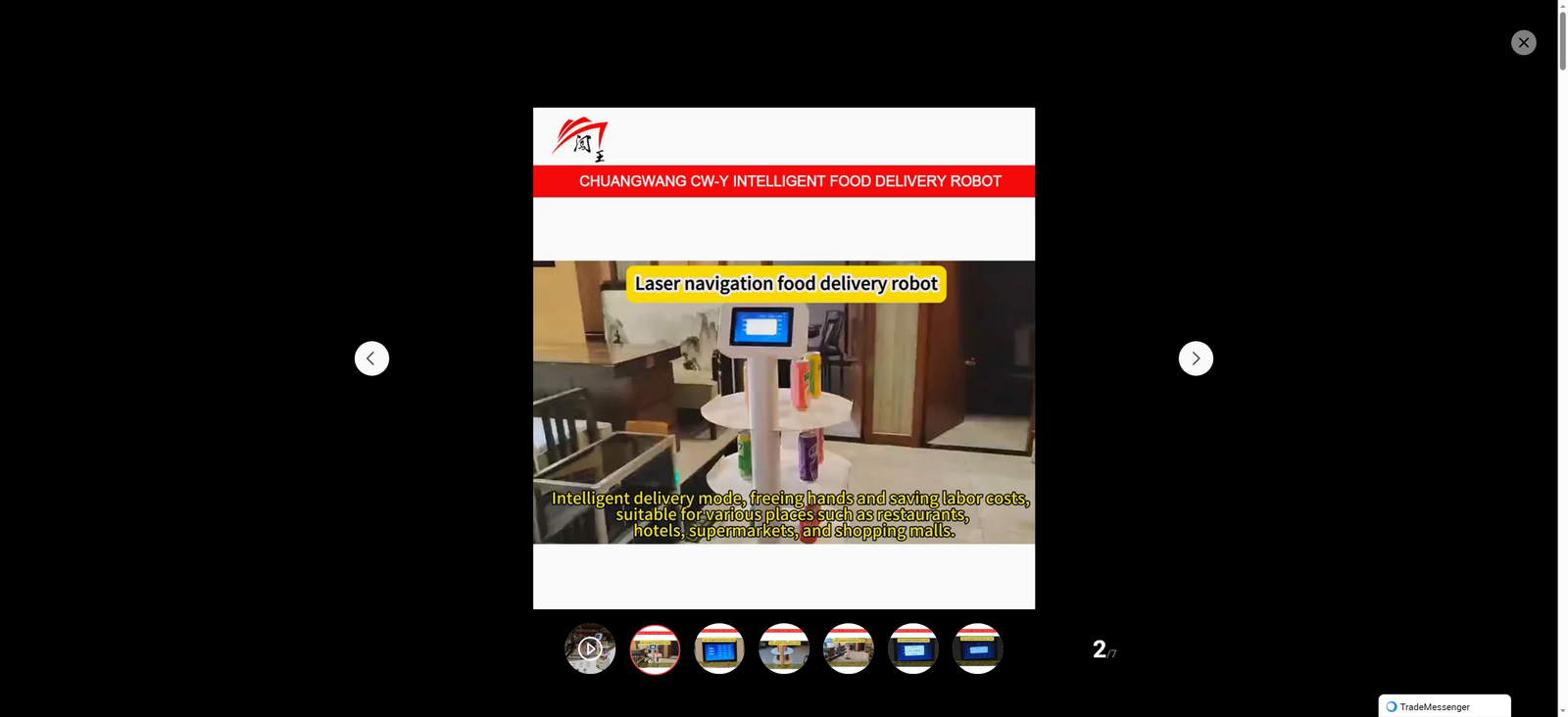
In the dynamic landscape of the catering industry, labor shortages, rising operational costs, and the pursuit of efficient service have driven a wave of technological innovation. Among these advancements, autonomous catering delivery robots have emerged as game-changers, redefining food serving processes in restaurants worldwide. At the core of their seamless operation lies a suite of cutting-edge technologies, with smart lidar navigation and intelligent obstacle avoidance standing out as the backbone of their reliability and efficiency. These robots are no longer mere novelties but essential tools that balance cost reduction, service quality enhancement, and customer experience elevation.
The ability of autonomous catering delivery robots to navigate complex restaurant environments with precision hinges on smart lidar navigation technology. Lidar, or Light Detection and Ranging, functions as the "eyes" of the robot, emitting thousands of laser pulses per second to scan the surrounding area and generate high-resolution 3D environmental maps. Unlike traditional navigation methods such as line-tracking, which are limited by predefined paths, lidar-based navigation enables robots to achieve simultaneous localization and mapping (SLAM), allowing them to understand their position in real time and plan optimal routes dynamically. This technology delivers centimeter-level positioning accuracy, ensuring that robots can reliably traverse from the kitchen to dining tables, even in venues with intricate layouts, moving furniture, or changing customer flows. For instance, leading solutions integrate lidar with modular navigation systems, often referred to as the robot’s "cerebellum," to process spatial data instantly and adjust paths in response to environmental changes.
Complementing smart lidar navigation is the critical capability of obstacle avoidance, which ensures safe and smooth food serving in dynamic restaurant settings. Restaurants are bustling spaces filled with moving pedestrians, waitstaff, chairs, and other unpredictable obstacles—challenges that demand more than passive collision detection. Modern catering robots employ a multi-sensor fusion strategy, combining lidar data with inputs from depth cameras, ultrasonic sensors, and inertial measurement units (IMUs) to achieve comprehensive environmental perception. Lidar detects large obstacles and maps overall space, while ultrasonic sensors identify transparent barriers like glass partitions that lidar may miss. Depth cameras spot low-lying obstacles such as children or pet bowls, and IMUs maintain stability when navigating uneven surfaces. This integrated approach enables predictive and proactive obstacle avoidance: robots can slow down when approaching pedestrians, stop at a safe distance, and reroute efficiently, all while emitting friendly voice prompts to guide customers. In peak dining hours, this technology prevents collisions and congestion, maintaining the rhythm of food delivery without disrupting the dining experience.
The practical application of these technologies in restaurants yields tangible benefits for both operators and customers. For restaurant owners, autonomous delivery robots address the industry’s persistent labor challenges. Labor costs typically account for 25% to 35% of restaurant sales, and robots can significantly reduce this burden—some models deliver over 300 dishes daily, with peak capacities exceeding 450 dishes, outperforming human servers by 1.5 to 2 times. Moreover, robots eliminate human errors such as order mix-ups and delivery delays, ensuring consistent service quality 24 hours a day. For customers, the robots enhance the dining experience by adding a tech-savvy touch: children are fascinated by their movement, and diners appreciate the prompt, reliable service that frees up human staff to focus on personalized interactions like explaining dishes or addressing special requests. In post-pandemic times, robots also minimize human contact, aligning with health-conscious consumer demands for reduced interpersonal interaction in food service.
Despite their transformative potential, the widespread adoption of autonomous catering delivery robots still faces certain hurdles. Initial procurement costs range from $5,000 to $15,000 per unit, with larger restaurants requiring multiple robots to match human service capacity, posing a barrier for small and medium-sized establishments. Additionally, robots require relatively stable environments—frequent table rearrangements or overly narrow aisles can compromise navigation accuracy. However, the industry is rapidly evolving to overcome these challenges: core component localization is reducing manufacturing costs, and advances in lightweight fusion algorithms are enhancing adaptability to complex spaces. Future robots are expected to integrate generative AI for more natural customer interactions, expand functions beyond food serving to include cleaning and table setting, and achieve seamless multi-robot collaboration through 5G and edge computing technologies.
As the catering industry embraces digital transformation, autonomous delivery robots powered by smart lidar navigation and obstacle avoidance are set to become indispensable. They not only resolve operational pain points but also redefine the boundaries of restaurant service, blending efficiency with innovation. With ongoing technological iterations and cost reductions, these robots will no longer be limited to large chains but will permeate eateries of all sizes, creating a more intelligent, efficient, and customer-centric dining ecosystem. The era of robots working alongside human staff to deliver exceptional food service is already here, and it promises to reshape the future of catering for years to come.