
Smart Service Assistant Delivery Robot for Commercial Kitchens and Front-of-House: Transforming Catering Operations with Intelligence
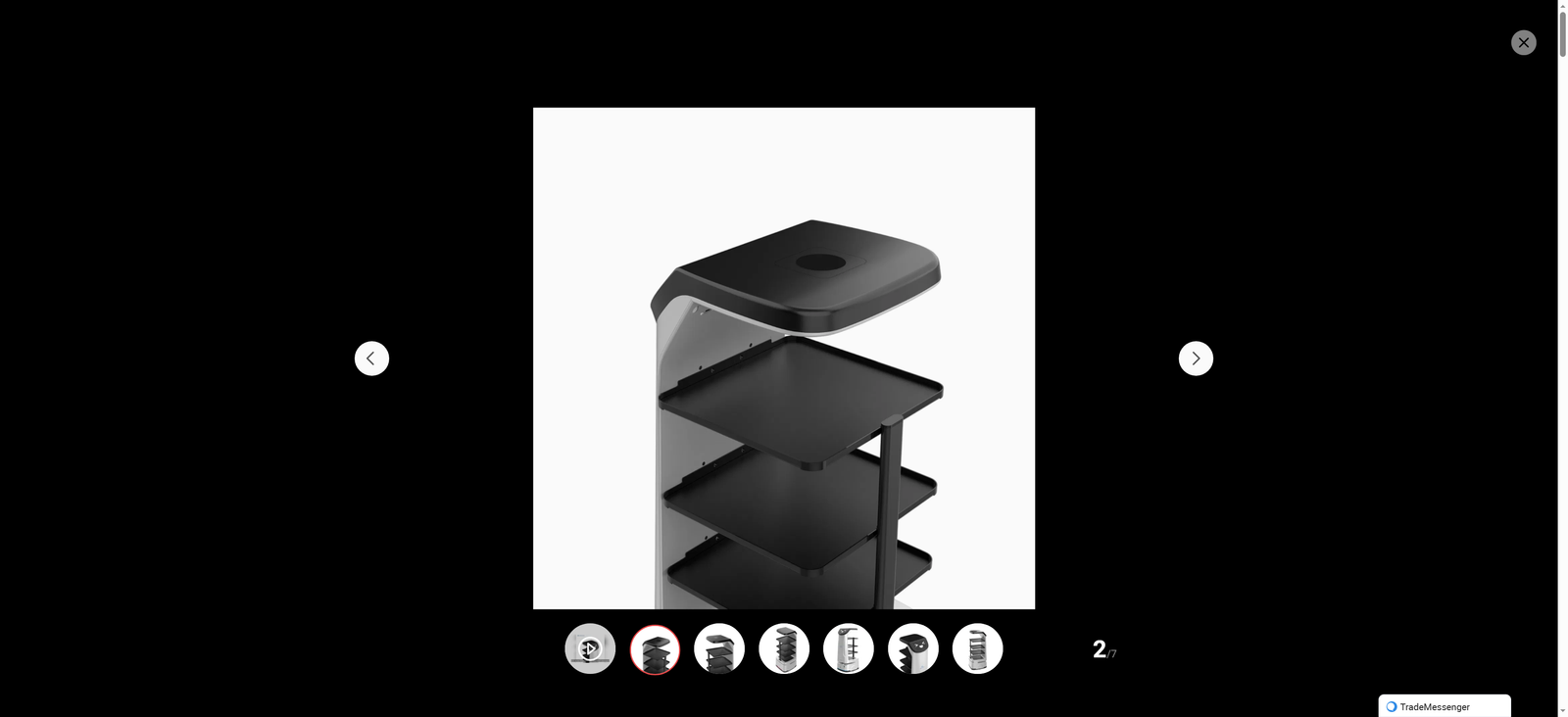
In the fast-paced world of catering and hospitality, efficiency, accuracy, and customer experience are the cornerstones of success. Commercial kitchens and front-of-house areas, as the core operational hubs of restaurants, hotels, and catering chains, often face pain points such as labor shortages, high operational costs, inconsistent service standards, and inefficient logistics links. Against this backdrop, the smart service assistant delivery robot has emerged as a game-changer, seamlessly integrating into both commercial kitchens and front-of-house scenarios to optimize workflows, reduce costs, and elevate the overall operational and customer experience. With the continuous breakthroughs in artificial intelligence, the Internet of Things, and edge computing, these robots are no longer just "novelty tools" but have become indispensable core assets in the digital transformation of the catering industry.
Commercial kitchens are characterized by intense work rhythms, narrow spaces, high temperature environments, and strict requirements for hygiene and efficiency. Traditional kitchen operations rely heavily on manual labor for tasks such as food delivery between workstations, ingredient transportation, and finished product transfer to the front-of-house. These repetitive and labor-intensive tasks not only consume a great deal of human resources but also are prone to errors such as delayed delivery, incorrect matching, and hygiene risks due to human fatigue or operational negligence. The smart service assistant delivery robot tailored for commercial kitchens effectively addresses these pain points through targeted functional design and advanced technical support.
Equipped with multi-sensor fusion perception systems and high-precision laser radar navigation, these robots can achieve centimeter-level positioning and autonomous obstacle avoidance, easily shuttling through narrow kitchen passages, avoiding cooking equipment, utensils, and staff movements without manual intervention. Their high-temperature resistant and waterproof casings are designed to adapt to the harsh environment of commercial kitchens, ensuring stable operation even in high-temperature and humid conditions. In terms of functional positioning, kitchen delivery robots can undertake a variety of tasks: transporting fresh ingredients from the storage area to the cutting station, transferring semi-finished products between cooking stations (such as from the preparation area to the stir-fry station), and delivering freshly prepared dishes to the front-of-house pickup point. Some advanced models are also integrated with IoT devices to monitor the temperature of food during transportation, ensuring that dishes maintain the optimal taste and meet food safety standards. By taking over these repetitive tasks, the robots free up kitchen staff to focus on more value-added work such as food preparation and quality control, thereby improving the overall efficiency of the kitchen and reducing the probability of human errors.
The front-of-house, as the first contact point between catering establishments and customers, directly determines the customer's consumption experience. In busy peak hours, front-of-house staff often struggle to cope with multiple tasks such as guiding customers, delivering dishes, refilling water, and collecting tableware, leading to delayed service, customer complaints, and inconsistent service quality. The smart service assistant delivery robot extends its capabilities to the front-of-house, forming a closed-loop intelligent service system with the kitchen and significantly optimizing the customer experience.
In the front-of-house scenario, these robots serve as "intelligent waiters" with diverse functions. They can automatically deliver dishes from the kitchen pickup point to the customer's table according to the order information, accurately matching the table number and dishes to avoid wrong delivery or missing delivery. Equipped with AI voice interaction technology, they can respond to simple customer requests, such as refilling water or calling the waiter, through voice commands, enhancing the interactivity and convenience of the service. For catering establishments such as hotels or large restaurants, the robots can also undertake tasks such as room meal delivery and banquet dish distribution. For example, some models with large-capacity cabins (up to 138 liters) and high load-bearing capacity (up to 40 kilograms) can easily transport large-volume meals or bulk beverages, and realize cross-floor delivery through autonomous elevator calling and elevator entry/exit functions. After the meal, the robots can also collect used tableware and transport them back to the kitchen for cleaning, reducing the workload of front-of-house staff and improving the efficiency of table turning.
The value of smart service assistant delivery robots in commercial kitchens and front-of-house is not only reflected in improving efficiency and reducing labor costs but also in promoting standardized operations and data-driven management. In terms of cost control, a single robot can work 24 hours a day without rest, and its long-term comprehensive cost is only about 35% of that of traditional manual labor. It can effectively replace 1 to 1.5 employees' workload in night shifts, significantly reducing the labor costs of catering establishments, which is particularly important in the context of the current structural labor shortage in the service industry. In terms of standardized operations, the robots strictly follow preset procedures to complete each task, ensuring the consistency of service quality and food safety, avoiding the impact of human factors such as mood and proficiency on service standards.
In addition, with the support of AI big data technology, these robots can record and analyze operational data in real-time, such as delivery times, order quantities, and peak service periods, and generate data reports to provide data support for the operation and decision-making of catering establishments. For example, restaurant managers can adjust the number of robots in operation according to the peak hours of orders, optimize the kitchen workflow based on delivery time data, and even adjust the menu and procurement plan according to the frequency of dish delivery, realizing refined operation management. At the same time, the continuous upgrading of core components such as domestic AI chips and laser radars has reduced the cost of robot whole machines by 15%-20%, further lowering the threshold for catering establishments to adopt intelligent equipment.
Looking at the market prospect, with the acceleration of the digital transformation of the global catering industry and the continuous improvement of robot technology, the demand for smart service assistant delivery robots in commercial kitchens and front-of-house scenarios is showing a rapid growth trend. According to industry reports, the global commercial service robot market size is expected to reach about 280 billion US dollars in 2025 and exceed 750 billion US dollars by 2030, with a compound annual growth rate of more than 21.5%. China, as one of the global growth engines, is expected to have a market size of 85 billion US dollars in 2025 and climb to more than 260 billion US dollars by 2030. In the catering field, the penetration rate of delivery robots is constantly increasing, and more and more catering chains, hotels, and group canteens are introducing such robots to upgrade their operational models.
However, the popularization and application of smart service assistant delivery robots also face certain challenges. For example, the initial investment cost of some small and medium-sized catering establishments is relatively high, the adaptation of robots to complex scenarios (such as old-fashioned kitchens with narrow passages) needs to be further improved, and the maintenance and after-sales service system still needs to be improved. With the continuous advancement of technology and the expansion of the market scale, these problems will be gradually solved. For example, some enterprises have launched robot leasing models to reduce the initial investment pressure of small and medium-sized catering establishments; targeted models (such as narrow-body robots with a width of about 450mm) have been developed to adapt to old-fashioned kitchen scenarios; and a comprehensive after-sales service network has been built to ensure the stable operation of robots.
In the future, with the integration of embodied intelligence and multi-modal large models, smart service assistant delivery robots will move towards a more intelligent and humanized direction. They will have stronger autonomous decision-making capabilities, be able to dynamically optimize delivery routes according to real-time passenger flow and table status, and even predict customer needs in advance (such as recommending suitable drinks according to the dishes ordered). They will also realize deeper integration with the digital management system of catering establishments, forming a full-chain intelligent operation ecosystem covering ingredients procurement, kitchen production, front-of-house service, and after-sales feedback.
In conclusion, the smart service assistant delivery robot has brought a profound transformation to the operation of commercial kitchens and front-of-house. It not only solves the pain points of traditional catering operations such as labor shortage, low efficiency, and high costs but also promotes the upgrading of service quality and operational management level. As the core force of the digital transformation of the catering industry, these robots will play an increasingly important role in the future, helping catering establishments gain competitive advantages in the fierce market competition and create a better consumption experience for customers. The era of intelligent catering driven by service robots has arrived, and it will surely reshape the new pattern of the global catering industry.