
Hot Selling Robot Automatic Loading and Unloading Unit: Empowering Intelligent Transformation Across Industries
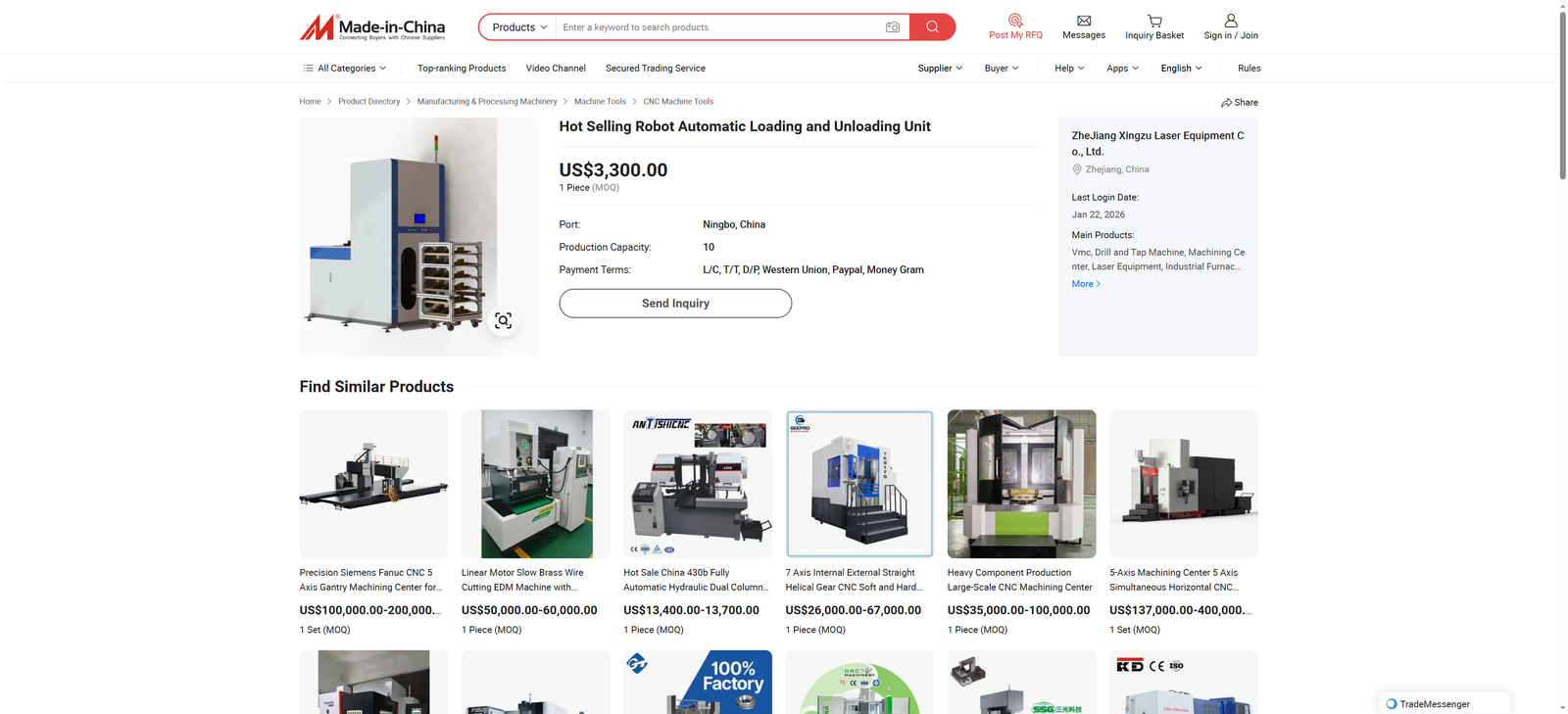
In the era of intelligent manufacturing and automated logistics, efficiency, precision, and cost-saving have become the core pursuits of enterprises across all sectors. Amid this trend, the Robot Automatic Loading and Unloading Unit has emerged as a hot-selling star product, revolutionizing traditional loading and unloading workflows with its advanced technology and outstanding performance. This automated solution is not just a piece of equipment; it is a key driver for enterprises to optimize production efficiency, reduce operational costs, and gain competitive advantages in the fierce market.
The Robot Automatic Loading and Unloading Unit, also known as ALUR (Automated Loading and Unloading Robot) system, is an integrated automated equipment designed to complete goods loading, unloading, and transfer tasks without manual intervention. Composed of mechanical systems, control systems, perception systems, communication systems, and power supply systems, it integrates cutting-edge technologies such as artificial intelligence, laser navigation, 3D vision recognition, and PLC control to achieve seamless connection between production lines, warehouses, trucks, and containers. Unlike traditional manual operations or semi-automated equipment, this unit operates with high stability, high precision, and 24/7 uninterrupted work capacity, perfectly solving the pain points of traditional loading and unloading links.
The reason why the Robot Automatic Loading and Unloading Unit has become a hot-selling product lies in its multiple irreplaceable advantages that deeply cater to the actual needs of enterprises. Firstly, it significantly improves operational efficiency. Equipped with advanced path planning algorithms and dual-grip handling technology, high-end models can achieve a handling efficiency of 800-1000 pieces per hour, which is 3-5 times that of manual operations. It eliminates the need for manual rest, fatigue, and operational delays, ensuring that loading and unloading tasks are completed quickly and efficiently, thereby shortening the production cycle and improving the utilization rate of equipment and sites.
Secondly, it effectively reduces operational costs for enterprises. In the context of increasing labor shortages and rising labor costs in industrial and logistics sectors, the unit replaces a large number of manual workers, reducing not only basic labor wages but also costs related to employee training, insurance, and work