
Smart Robots Redefine Service Efficiency: Leading the New Trend of Commercial Service Intelligence
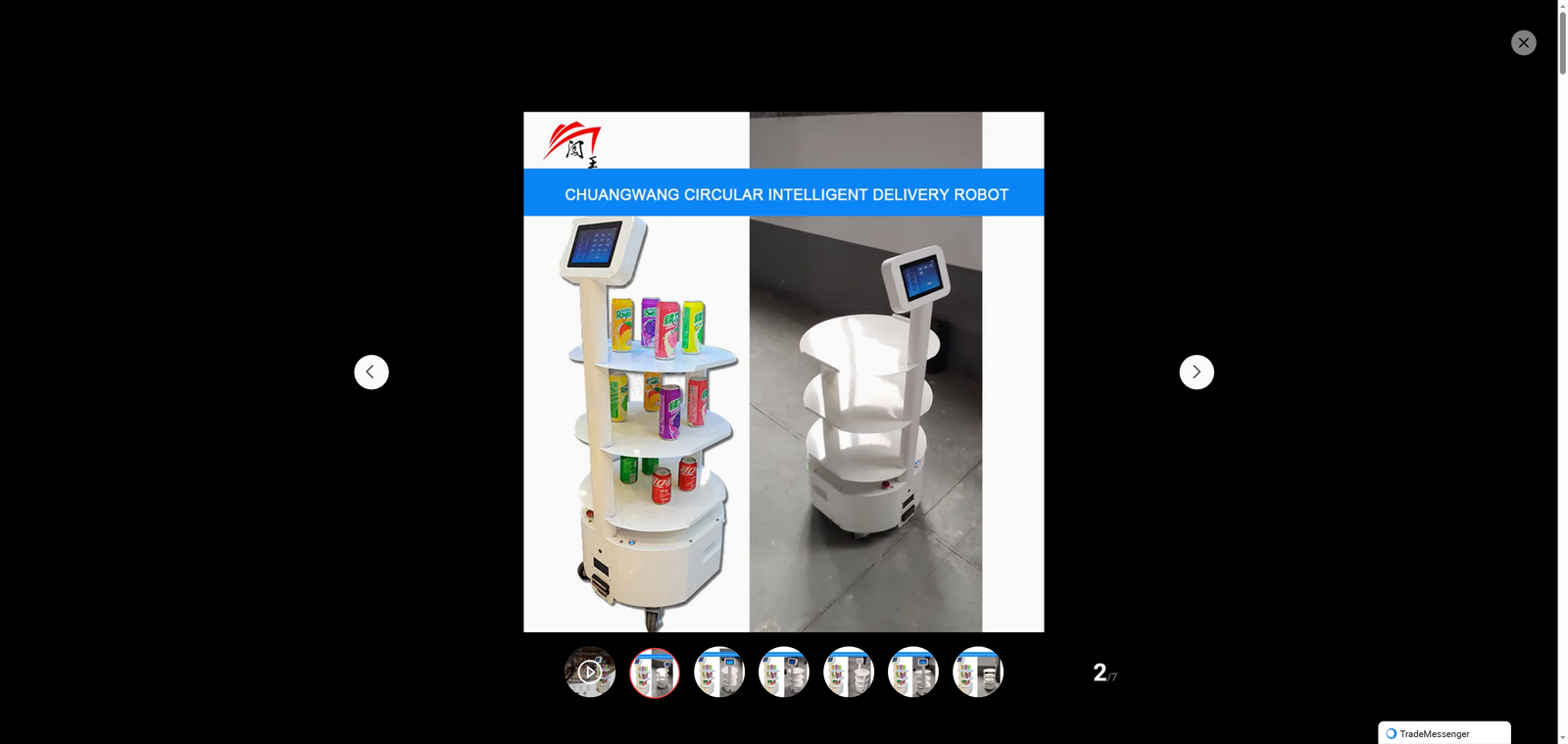
In the wave of global intelligent transformation, the commercial service industry is undergoing a profound revolution driven by technological innovation. Among them, smart robots with advanced navigation and obstacle avoidance technologies have gradually become the new backbone of service scenarios such as restaurants and hotels, breaking through the limitations of traditional manual services and injecting strong momentum into the high-quality development of the industry. The Smart Food Delivery Robot with SLAM Navigation, Automatic Serving Robot for Restaurant & Hotel, and Commercial Luggage Carrying Robot with Lidar Obstacle Avoidance are typical representatives of this transformation, interpreting the new connotation of "intelligent service" with their outstanding performance.
The Smart Food Delivery Robot with SLAM Navigation and Automatic Serving Robot for Restaurant & Hotel have become a "new favorite" in the catering and hotel industries, solving the pain points of high labor costs, low service efficiency, and uneven service quality that have long plagued the industry. SLAM (Simultaneous Localization and Mapping) navigation technology is the "core brain" of the food delivery robot. It enables the robot to quickly build a 3D map of the indoor environment (such as restaurant halls, hotel corridors) in real time during movement, accurately locate its own position, and plan the optimal delivery path intelligently. Unlike traditional navigation that relies on pre-set routes, SLAM navigation allows the robot to flexibly avoid dynamic obstacles such as pedestrians, tables and chairs, and cleaning tools, ensuring that meals or items are delivered to the designated location safely and efficiently.
In restaurant scenarios, the automatic serving robot can realize a full-process intelligent service from receiving orders, picking up meals to delivering meals and returning. After the customer places an order, the robot receives the order information immediately, navigates to the kitchen window to pick up the meal, and then accurately sends the meal to the corresponding table according to the pre-built map. It can also automatically recognize the height of the dining table and adjust the height of the meal tray to facilitate customers to take meals. During the peak dining period, multiple robots can work collaboratively without interfering with each other, greatly reducing the waiting time of customers and the work pressure of waiters. In hotel scenarios, the robot can also be used as a "mobile butler" to deliver towels, mineral water, express packages and other items to guest rooms, 24 hours a day without interruption, improving the quality of hotel service and enhancing customer experience.
The Commercial Luggage Carrying Robot with Lidar Obstacle Avoidance, another star product in the field of commercial intelligent robots, has brought a new upgrade to the luggage handling service in hotels, airports, high-speed rail stations and other scenarios. Lidar obstacle avoidance technology, as the "sharp eyes" of the luggage carrying robot, uses laser scanning to detect the surrounding environment in real time, with high detection accuracy and long detection distance. It can accurately identify obstacles of different sizes, shapes and materials, including fixed obstacles such as pillars and flower beds, and dynamic obstacles such as pedestrians and luggage carts. Based on the detected information, the robot can quickly make avoidance decisions, adjust the movement direction and speed in time, and ensure the safety of the luggage being carried and the surrounding environment.
For hotels, the commercial luggage carrying robot can provide guests with intimate luggage handling services from the lobby to the guest room. When guests arrive at the hotel with heavy luggage, they only need to place the luggage on the robot's carrying platform, and the robot will automatically follow the guest or navigate to the designated guest room according to the guest's instructions. The carrying platform of the robot is designed with a anti-slip and shock-absorbing structure, which can stably carry luggage of different weights and sizes, avoiding the damage of luggage during transportation. In airports and high-speed rail stations, the robot can also help passengers transport luggage between the terminal building, parking lot and boarding gate, reducing the burden of passengers carrying luggage and improving the travel experience.
The popularization and application of these two types of smart robots not only optimizes the service process of the commercial service industry, but also promotes the transformation and upgrading of the industry towards intelligence, refinement and low-carbonization. From the perspective of cost control, smart robots can work continuously for a long time, reducing the cost of labor recruitment, training and management for enterprises; from the perspective of service quality, robots can provide standardized and consistent services, avoiding the impact of human factors on service quality; from the perspective of development trends, with the continuous progress of artificial intelligence, navigation and sensor technology, smart robots will have more powerful functions, such as voice interaction, face recognition, and intelligent prediction, and will be applied in more commercial service scenarios.
In the future, with the deep integration of intelligent technology and the commercial service industry, Smart Food Delivery Robots with SLAM Navigation, Commercial Luggage Carrying Robots with Lidar Obstacle Avoidance and other intelligent equipment will become an indispensable part of the commercial service system. They will not only replace manual labor in some repetitive and heavy work, but also work with humans to create a more efficient, convenient and high-quality service environment. It is believed that under the drive of technological innovation, the commercial service industry will usher in a new era of intelligence, and smart robots will continue to write a new chapter in the development of the industry.