
Autonomous Navigation Catering and Hotel Customized Commercial Service Delivery Robot: Reshaping the New Ecology of Service Industry
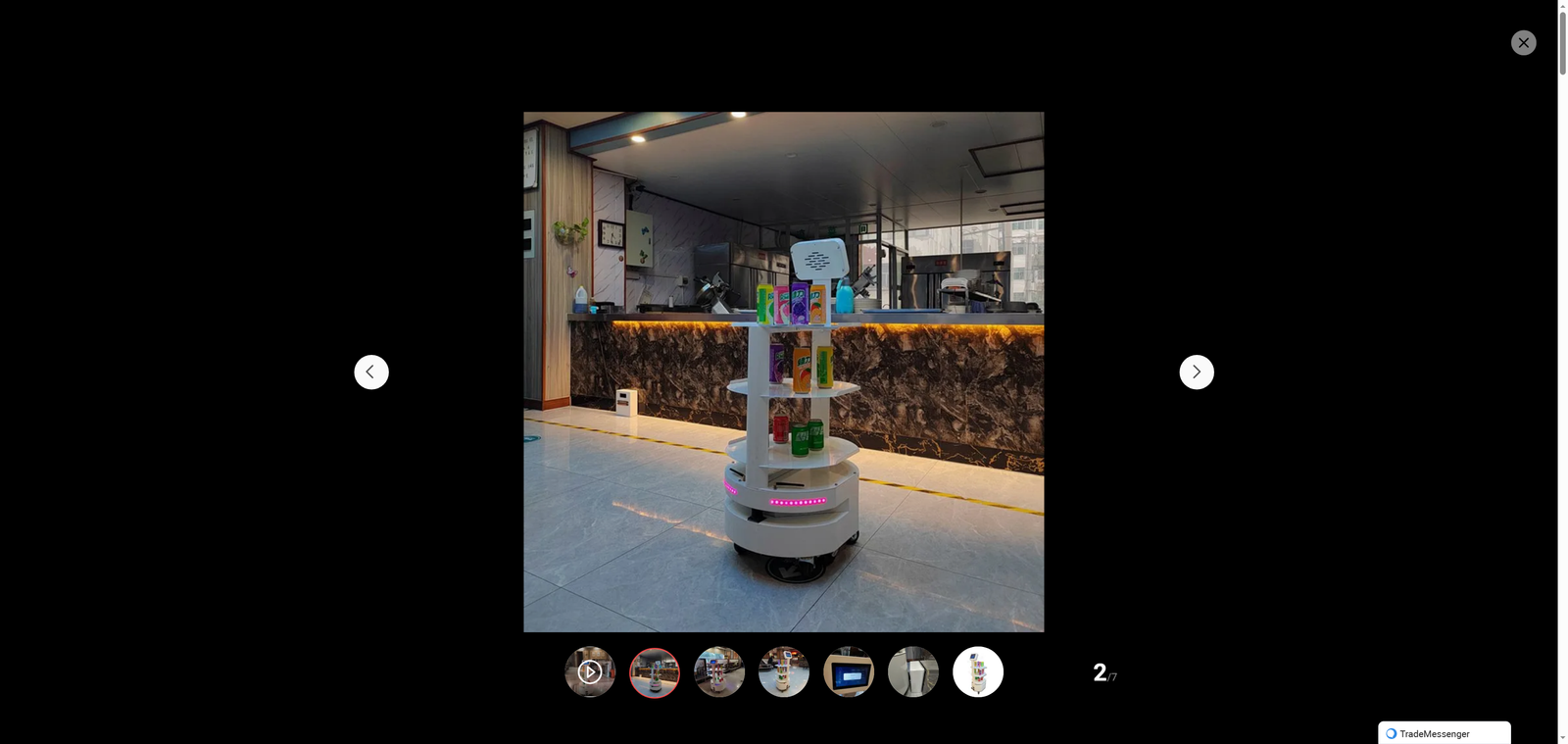
With the rapid development of artificial intelligence, autonomous driving and Internet of Things technologies, the service industry is ushering in a profound transformation driven by intelligence. Among them, the autonomous navigation catering and hotel customized commercial service delivery robot (hereinafter referred to as "service delivery robot") has emerged as a key carrier of intelligent upgrading. It breaks through the limitations of traditional manual service, with autonomous navigation, customized service and efficient delivery as core advantages, and is gradually penetrating into every link of catering and hotel services, redefining the service experience and industrial operation mode.
The core competitiveness of service delivery robots lies in their mature autonomous navigation technology, which is the foundation for realizing "unmanned delivery" and "intelligent service". Different from the fixed-path robots in the early stage, the current service delivery robots integrate multiple advanced technologies such as laser radar, visual navigation, SLAM (simultaneous localization and mapping) and AI algorithm. They can quickly build environmental maps in complex spaces such as catering halls with dense people and hotel corridors with many rooms, accurately locate their own positions, and flexibly avoid obstacles such as pedestrians, tables and chairs. Whether it is a narrow passage in a restaurant, a sudden running child, or a cleaning cart in a hotel corridor, the robot can make real-time judgments and adjust the movement path, ensuring that the delivery process is efficient, safe and stable. This kind of autonomous navigation capability that adapts to complex scenarios has solved the biggest technical bottleneck of service robots in commercial application, making large-scale promotion possible.
The "customized service" feature of service delivery robots perfectly matches the diversified needs of the catering and hotel industries, and has become a key factor in improving customer experience and brand competitiveness. In the catering industry, different restaurants have different service scenarios and needs: high-end Western restaurants pay attention to the elegance and orderliness of service, and the robot can complete the delivery of dishes in a quiet and stable manner, matching the high-end atmosphere of the restaurant; hot pot restaurants and food courts have the characteristics of fast turnover and many orders, and the robot can realize batch delivery, reduce the waiting time of customers, and alleviate the pressure of waiters; for takeout scenarios, the robot can connect with the takeout platform, complete the automatic pickup and delivery of meals in the store, improving the efficiency of takeout distribution. In the hotel industry, the customization of robots is more prominent: they can not only deliver daily necessities such as mineral water, towels and toothbrushes to the guest room according to the guest's request, but also provide services such as meal delivery, laundry delivery and document delivery. Some high-end hotels even customize the appearance, voice and service process of robots according to their own brand positioning, making the robot a part of the hotel's brand image. For example, the robot can greet guests in a friendly manner according to the guest's check-in information, and guide guests to the elevator, which greatly enhances the sense of technology and humanization of the hotel service.
The popularization and application of service delivery robots have brought profound changes to the operation and management of catering and hotel industries, and have significant economic and social value. From the perspective of cost control, the service industry has always faced the problems of high labor cost and high staff turnover. The one-time investment of service robots can replace the work of multiple waiters or hotel attendants, and the later operation and maintenance cost is low, which can effectively reduce the long-term labor cost of enterprises. Especially in the post-epidemic era, consumers pay more attention to contactless service, and service robots can reduce direct contact between people, reduce the risk of cross-infection, and meet the health needs of consumers. From the perspective of operation efficiency, robots can work 24 hours a day without fatigue, and the delivery accuracy is high, which can avoid the mistakes caused by manual service due to fatigue. In catering stores, robots can reduce the time for waiters to run back and forth, allowing them to focus on more high-value services such as customer communication and dish introduction, improving the overall service quality. In hotels, robots can handle tedious and repetitive delivery tasks, freeing up hotel staff to provide more intimate and personalized services for guests, and improving the guest satisfaction. In addition, the service robots can collect a large amount of service data in the working process, such as the peak period of customer orders, the favorite dishes of customers, the frequency of guests asking for daily necessities, etc. Enterprises can analyze these data to optimize the menu design, adjust the staffing, and improve the operation and management level, realizing the data-driven upgrading of the industry.
Of course, the development of service delivery robots is still facing some challenges. For example, the cost of high-end navigation components is relatively high, which affects the popularization of robots in small and medium-sized catering and hotel enterprises; in some extremely complex scenarios, such as the environment with strong light interference and extremely narrow passages, the navigation accuracy of robots still needs to be improved; in addition, some consumers still have a sense of strangeness and resistance to robot services, and need a certain adaptation period. However, with the continuous progress of technology and the continuous reduction of component costs, these problems will be gradually solved. At the same time, with the continuous improvement of consumers' acceptance of intelligent services, the market demand for service delivery robots will continue to expand.
Looking forward to the future, the autonomous navigation catering and hotel customized commercial service delivery robot will move towards a more intelligent, humanized and integrated direction. With the development of 5G, edge computing and big data technologies, the robot will have stronger data processing capabilities and faster response speed, and can realize more complex service scenarios such as intelligent recommendation and active service. At the same time, the integration of robots with other intelligent devices in the catering and hotel industries, such as intelligent ordering systems, intelligent access control and intelligent room control, will build a more comprehensive intelligent service ecosystem. It is foreseeable that service delivery robots will not only be a tool to improve service efficiency, but also become an important part of the service industry's digital transformation, promoting the service industry to enter a new era of intelligence and high quality.
In conclusion, the autonomous navigation catering and hotel customized commercial service delivery robot, relying on its advanced autonomous navigation technology and personalized customized service capabilities, is profoundly changing the operation mode and service experience of the catering and hotel industries. It not only solves the pain points of high labor cost and low efficiency in the traditional service industry, but also meets the new needs of consumers for intelligent and contactless services. With the continuous advancement of technology and the expansion of market demand, service delivery robots will surely play a more important role in the development of the service industry, contributing more power to the high-quality development of the service industry.