
Slim-Profile, Narrow-Aisle & Space-Saving Delivery Robots: Redefining Efficiency in Confined Spaces
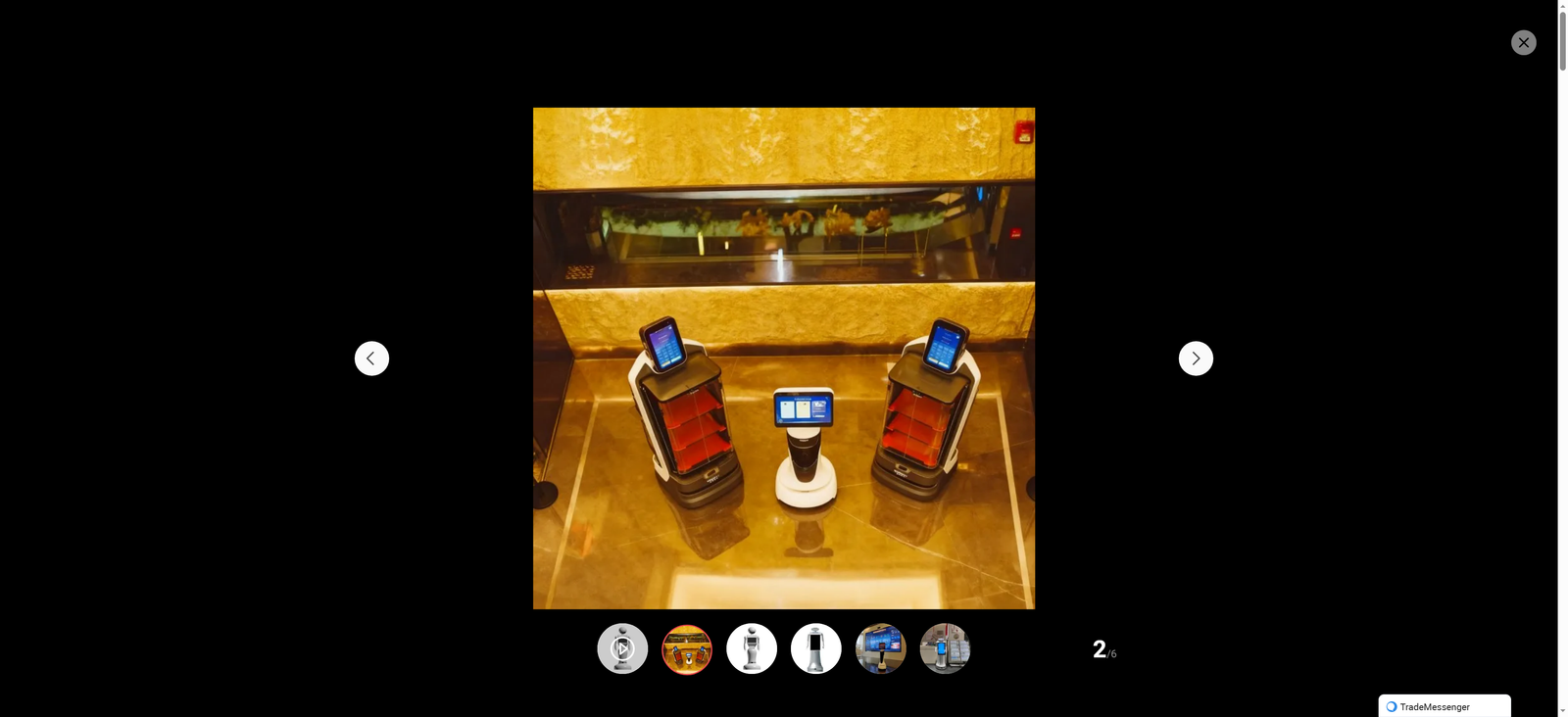
In the era of intelligent automation, the demand for efficient material handling and delivery solutions in confined spaces has spurred a new wave of innovation—slim-profile, narrow-aisle, and space-saving delivery robots. These compact powerhouses are breaking the bottleneck of traditional delivery methods, which are often constrained by limited space, narrow passages, and low space utilization. By integrating sleek design, advanced navigation, and flexible maneuverability, they are reshaping operational efficiency across multiple industries, from catering and hospitality to warehousing and logistics.
The Core Design Philosophy: Balancing Compactness and Performance
At the heart of these robots lies a precision-engineered design that prioritizes slim profiles without compromising functionality. Unlike conventional delivery equipment, which requires wide pathways for operation, these robots boast ultra-compact dimensions that enable seamless traversal through narrow aisles while maximizing load capacity—a key breakthrough in resolving the long-standing industry conflict between space-saving and operational capability.
Leading products in this category exemplify this balance. The OrionStar Leopard Slim, for instance, features a streamlined body measuring only 490mm in length and 450mm in width, equivalent to the shoulder width of an adult, allowing it to glide through 55cm narrow corridors and coexist smoothly with guests or cleaning carts in elevators without occupying excess space . Similarly, Reeman’s Flash Food Delivery Robot adopts an ultra-thin design that navigates 55cm passages with ease, making it ideal for small catering venues where space is at a premium . For warehouse scenarios, Tarqan’s fulfillment robot sets a new standard with a mere 194mm height, enabling it to access under narrow racks and increase storage capacity by 10% compared to conventional equipment .
Beyond slim dimensions, space-saving is further optimized through intelligent structural design. The Leopard Slim incorporates a dual-compartment layout with a total capacity of 64L, utilizing vertical space efficiently to carry up to 20KG of goods, from mineral water crates to beer cases . Qinglang Intelligent’s T10 robot, winner of the 2025 German iF Design Award, features a four-layer tray structure with a 40KG load capacity, achieving the industry’s unique balance of narrow-aisle passage (59cm) and large delivery volume . These designs transform every inch of the robot’s structure into functional space, eliminating waste and enhancing operational efficiency.
Technological Backbone: Enabling Precision and Safety in Confined Spaces
The seamless operation of slim-profile delivery robots in narrow environments relies on cutting-edge navigation, obstacle avoidance, and control technologies. These systems ensure that the robots can navigate complex, dynamic spaces with centimeter-level precision, avoiding collisions and optimizing routes—critical capabilities for confined-area operations.
Navigation technology is a cornerstone of their performance. Most models integrate SLAM (Simultaneous Localization and Mapping) and visual positioning systems to achieve accurate navigation without the need for QR code stickers, preserving the integrity of the operating environment while reducing deployment costs . The T10 robot combines SLAM with Vslam intelligent positioning, using top visual sensors to identify environmental features and realize centimeter-level positioning, significantly improving deployment efficiency . For warehouse robots like KARLSTADT’s VFR series, multi-modal positioning (laser radar 3D camera) ensures stable operation even in environments with frequent changes in stack positions and personnel movement, reducing positioning errors to near zero .
Safety and obstacle avoidance are equally paramount in narrow spaces. A 360° panoramic perception system, integrating laser radar, 3D cameras, and RGB sensors, provides comprehensive environmental awareness. The T10 robot is equipped with 4 stereo vision sensors, 1 laser radar, and 1 RGB camera, covering a 300° dynamic obstacle detection range to accurately distinguish between humans and objects and prevent collisions or foot crushing . The Leopard Slim employs autonomous driving-level visual navigation to adjust speed intelligently and avoid guests proactively, while its automatic smart password lock ensures the privacy and safety of delivered items . For high-altitude warehouse operations, KARLSTADT’s VFR-CS1 uses a "three-eye" recognition system (dual 3D cameras laser radar) to achieve ground picking of field-shaped pallets and trigger emergency stops within 0.3 seconds if high-altitude obstacles are detected .
Intelligent scheduling systems further amplify efficiency in multi-robot operations. Reeman’s proprietary autonomous dispatch system supports multi-point delivery tasks, automatically planning optimal routes and avoiding congestion among multiple robots . KARLSTADT’s VFR series adopts a "large and small vehicle collaboration" solution, where high-lift robots handle upper shelf operations and slim robots manage low-level access, creating a seamless, efficient warehouse workflow .
Cross-Industry Applications: Transforming Operations Across Sectors
The versatility of slim-profile, narrow-aisle, and space-saving delivery robots makes them indispensable across a wide range of industries, addressing unique space and efficiency challenges in each sector.
In the catering and hospitality industry, these robots have become mainstream solutions for indoor delivery. The T10 robot serves in restaurants, hotels, and gyms, delivering meals, beverages, and supplies with stable performance—its shock absorption system ensures drinks remain spill-proof even on rough surfaces . The Leopard Slim excels in hotels, integrating with cloud management platforms for one-click control and supporting takeout order connection, where riders scan a QR code to link room numbers for seamless delivery . Its 15° ergonomic angle design and customizable appearance stickers allow it to blend naturally into hotel environments while enhancing guest interaction.
Warehousing and logistics benefit most from the space-saving capabilities of these robots. KARLSTADT’s VFR series has redefined high-density storage by reducing aisle width from the traditional 2.5m to 1.65m, boosting space utilization from less than 50% to over 70% . The VFR-CC model, nicknamed "Giant Spirit God," achieves a lifting height of 6.8m and maintains a 1-ton load at 5m, perfectly meeting the heavy-load needs of high-rise warehouses . Tarqan’s robot increases picking efficiency by 300% compared to manual labor, handling 400-500 products per hour with 99.99% accuracy, significantly reducing order delays and errors .
Beyond these core sectors, the robots are expanding into community delivery, healthcare, and manufacturing. Yuefan Innovation’s Xiangdi Ultra realizes seamless indoor-outdoor operation, serving as a mobile service node connecting community buildings and meeting multi-point delivery needs . In healthcare settings, their slim profiles allow navigation through crowded hospital corridors to deliver medications and supplies, reducing cross-contamination risks through contactless delivery. In manufacturing workshops, they shuttle between compact production lines to transport materials, ensuring continuous workflow without occupying valuable floor space.
Future Trends: Toward More Adaptive and Integrated Solutions
As technology advances, slim-profile, narrow-aisle, and space-saving delivery robots are evolving toward greater adaptability, intelligence, and integration. Future models will feature even more compact designs with enhanced load capacity, powered by energy-efficient lithium batteries for longer续航 and faster charging—such as the Leopard Slim’s 2-hour charge for a full day of service . AI and IoT integration will enable seamless connectivity with smart buildings, elevators, and warehouse management systems, creating fully automated ecosystems.
Personalization and scenario-specific optimization will also become key trends. Robots will be customized for cold chain logistics, high-cleanliness environments, and cross-border warehouses with multi-standard pallet compatibility . The integration of marketing functions, such as the T10’s 23.8-inch HD display and the Flash robot’s 15.6-inch advertising screen, will turn delivery robots into mobile marketing platforms, adding new value to businesses.
In conclusion, slim-profile, narrow-aisle, and space-saving delivery robots are not just tools for efficiency—they are catalysts for reimagining how operations are conducted in confined spaces. By resolving the tension between space constraints and performance, they are driving productivity gains, cost reductions, and service upgrades across industries. As innovation continues, these compact robots will play an increasingly central role in the global shift toward intelligent automation, proving that great efficiency often comes in small packages.