
Cut Labor Costs with Robotic Food Servers: Commercial Models Reshaping the Catering Industry
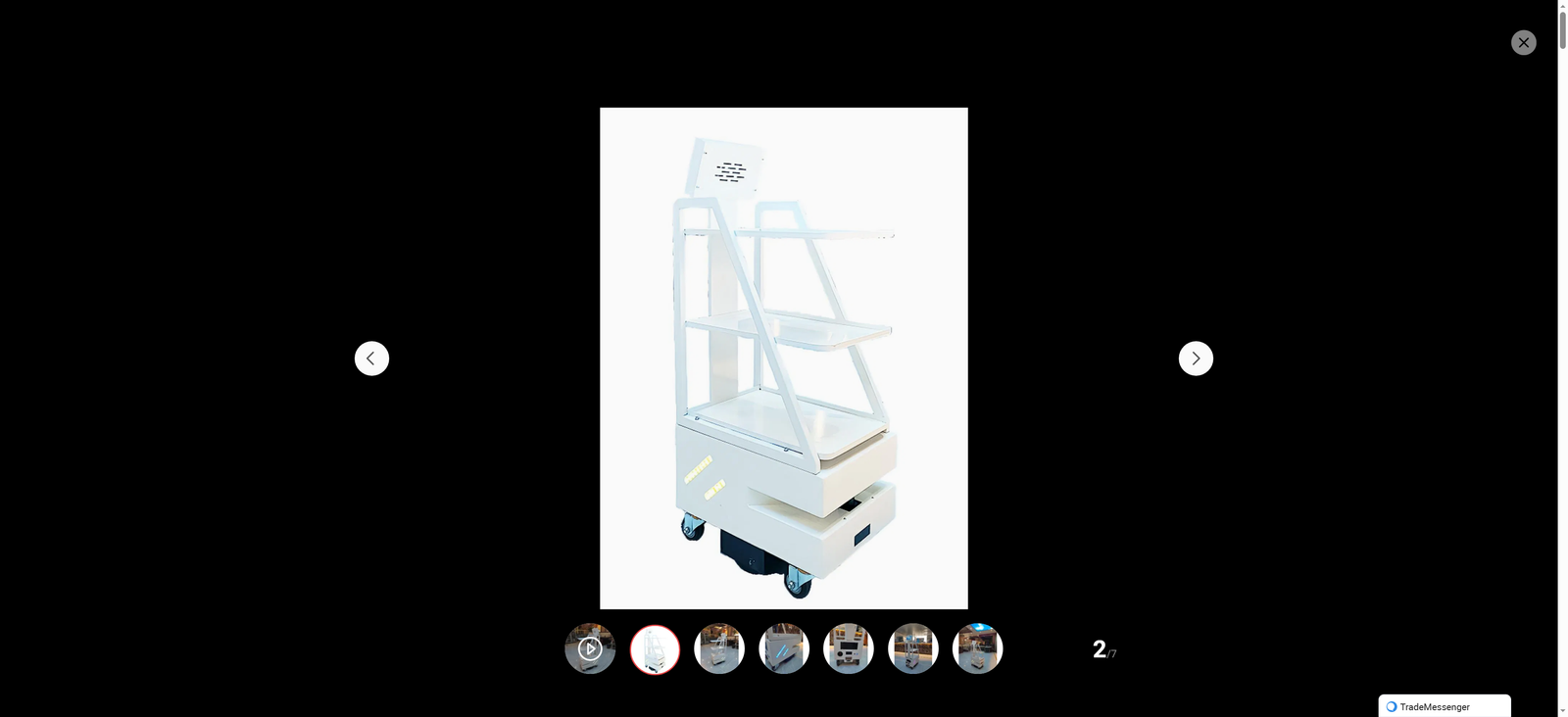
The global catering industry has long grappled with soaring labor costs, high staff turnover rates, and persistent workforce shortages. As labor expenses account for nearly a quarter of total operational costs for most restaurants, business owners are increasingly turning to technological solutions to optimize efficiency and reduce financial burdens . Commercial robotic food servers have emerged as a game-changing tool, seamlessly integrating into front-of-house and back-of-house operations to cut labor costs while enhancing service quality. With a diverse range of commercial models now available, these service robots are no longer a futuristic concept but a practical investment for restaurants, cafes, and food chains worldwide.
The Labor Crisis Driving Robotic Adoption
The catering sector faces an unprecedented labor dilemma. In many countries, the industry struggles with chronic understaffing—for instance, the U.S. restaurant industry alone had over 2 million open positions in 2025, with a shortage of 500,000 employees compared to pre-pandemic levels . Compounding this issue is the high turnover rate, as workers seek more stable roles with better work-life balance. For restaurant operators, the cost of recruiting, training, and retaining staff—especially skilled chefs—continues to rise: a qualified sauté chef can command a monthly salary of $1,000 to $1,800, and even then, finding reliable talent remains a challenge . This labor pressure has forced businesses to explore automation, with robotic food servers emerging as a cost-effective alternative to manual labor.
Commercial Robotic Food Servers: Versatile Models for Every Need
Today’s commercial service robots are designed to handle a wide spectrum of food service tasks, from cooking and delivery to cleaning and food preparation. These models are engineered for durability, efficiency, and seamless integration into existing operations, catering to diverse business scales and cuisines.
Back-of-House Cooking Robots
Cooking robots have become the backbone of cost reduction in commercial kitchens, replacing or augmenting skilled chefs to cut labor costs by up to 40% . Leading commercial models such as the Youte Intelligent Cooking Robot series offer full-stack self-developed technology, including precision temperature control (±1℃ accuracy), automatic ingredient dosing (±0.3g precision), and cloud-based recipe management . These robots can replicate the skills of master chefs across eight major Chinese cuisines, ensuring consistent taste while eliminating human error. For example, Hunan-style fast-food chain Ba Wan equips each store with three cooking robots, requiring only one staff member to prepare ingredients—replacing 3-4 chefs and slashing monthly labor costs by $6,000 to $8,000 . Similarly, Chinese chain restaurant Xiaocaiyuan plans to invest $15 million in 2,000 commercial cooking robots to standardize operations across its 660 stores .
Other specialized cooking robots cater to niche needs: AI coffee robots, like the one deployed at Xiamen University Tan Kah Kee College, can complete a customized coffee in 90 seconds with 50 flavor options, operating 24 hours a day without breaks . Pancake-making robots, such as the Jiubing model in Beijing subway stations, produce up to 200 servings daily with AI visual recognition and high-precision robotic arms, reducing the need for on-site chefs .
Front-of-House Delivery and Service Robots
Front-of-house service robots streamline food delivery, table bussing, and guest guidance, freeing up staff to focus on high-value customer interactions. Commercial models like SoftBank Robotics’ X1 autonomously navigate dining areas to deliver food, collect dirty dishes, and transport items between the kitchen and tables . These robots use SLAM algorithm for path planning, avoiding obstacles and adapting to crowded spaces, reducing the need for waitstaff by 2-3 per shift. In large restaurants and buffets, floor-scrubbing robots (e.g., Ecovacs Winbot CC1) and disinfection robots (e.g., Orion Star Disinfection Leopard) handle repetitive cleaning tasks, cutting labor hours spent on sanitization by 50% while ensuring compliance with health regulations .
All-in-One Solution Robots
Advanced humanoid service robots are breaking into complex scenarios. The "Tianwen" humanoid robot, developed by Wuhan University, stands 1.8 meters tall and features dexterous hands with haptic sensors, enabling it to handle delicate tasks like pouring coffee and serving food . Equipped with a large language model, it can engage in basic customer interactions, adding a tech-savvy touch to the dining experience. While still in the pilot phase, such models represent the future of integrated food service, combining multiple functions to maximize labor cost savings.
Beyond Cost Cutting: Additional Benefits of Commercial Service Robots
While labor cost reduction is the primary driver, commercial robotic food servers offer a suite of secondary benefits that enhance long-term profitability. First, they ensure unparalleled consistency: robots follow pre-programmed recipes with precise ingredient dosing and cooking parameters, eliminating taste variations caused by human factors . This standardization is critical for chain restaurants aiming to replicate success across multiple locations. Second, they boost operational efficiency: cooking robots reduce meal preparation time by 50%, with some models delivering dishes in 2-3 minutes compared to 5-10 minutes for manual cooking . Faster service increases table turnover rates, directly boosting revenue.
Additionally, robotic servers improve food safety. Models with automatic cleaning and disinfection functions, such as the Jiubing pancake robot, ensure hygiene compliance by sanitizing equipment between uses . Precision dosing also reduces ingredient waste, cutting raw material costs by up to 30% . For customers, the presence of robots creates a novel, tech-forward dining experience, attracting younger patrons and enhancing brand appeal .
Investment Value: Short-Term Costs vs. Long-Term Savings
While commercial robotic food servers require an initial investment—ranging from $1,500 for basic models to $7,500 for advanced cooking robots—the return on investment (ROI) is typically achieved within 6 to 18 months . For example, a medium-sized restaurant using three cooking robots can save $72,000 to $96,000 annually in labor costs, offsetting the initial purchase price quickly . Moreover, maintenance costs for commercial models are relatively low, with most manufacturers offering comprehensive after-sales service and software updates to extend robot lifespan.
The Future of Food Service: Humans and Robots Working in Tandem
Commercial robotic food servers are not replacing human staff entirely but reshaping their roles. By handling repetitive, labor-intensive tasks, robots free up employees to focus on customer service, menu innovation, and quality control—areas where human interaction and creativity are irreplaceable . For instance, some chefs previously confined to cooking are now transitioned to recipe development teams, programming robots to replicate new dishes . This synergy between humans and robots creates a more efficient, sustainable, and customer-centric food service ecosystem.
As technology advances and commercial models become more affordable and versatile, robotic food servers will become a staple in the catering industry. For business owners looking to cut labor costs, improve efficiency, and stay competitive in a challenging market, investing in these service robots is no longer an option but a strategic necessity. The era of intelligent food service is here, and robots are leading the way to a more profitable future.