
2025: Robots Reshape Production and Lifestyle Across Diverse Scenarios
The year 2025 marks a pivotal era for humanoid and service robots, as they transition from experimental prototypes to indispensable tools deeply integrated into industrial production and daily services. No longer confined to exhibition halls, robots have marched into factories, restaurants, hospitals, KTVs, and libraries, with specialized roles such as robot waiters, food parcel delivery robots, and service robot assistants redefining efficiency, precision, and user experience across diverse sectors. This wave of intelligent transformation is driven by technological breakthroughs in embodied intelligence, cost reduction, and policy support, painting a vivid picture of a "robot-assisted society".
Factories: The Core Battleground for Large-Scale Robot Deployment
In 2025, factories have become the primary stage for industrial robots to showcase their capabilities, breaking free from single-point demonstrations to achieve mass application. Structured production lines and rigid demand for precision have made manufacturing the first sector to embrace robotization on a large scale. Leading enterprises have witnessed explosive growth in orders: UBTECH delivered over 500 Walker S2 industrial humanoid robots, which are now accurately performing bin handling and material transfer tasks in Foton Cummins factories . Zhiyuan Robot rolled out its 5,000th general-purpose embodied robot, building a stable supply chain with annual sales exceeding 1 billion yuan, while Leju robots have been deployed in batches at FAW Hongqi factories, achieving 8 hours of high-stability continuous operation .
These industrial robots are no longer limited to simple repetitive tasks; they now excel at complex operations such as screw tightening, flexible component assembly, and cable plugging. Proluos Universe's dexterous hands, equipped with self-developed grasping algorithms, have reduced defect rates by 25% compared to manual work in 3C manufacturing quality inspection . The industrial robot market has formed a clear "scale-driven cost reduction" cycle, with prices dropping to the 100,000-yuan level, laying a solid foundation for widespread adoption in automobile manufacturing, new energy, and 3C electronics industries . It is predicted that the initial market size for core industrial scenarios alone will exceed 1 million units, making factories the "ballast stone" for the robot industry's large-scale development.
Restaurants & KTVs: Robot Waiters Elevate Service Efficiency and Experience
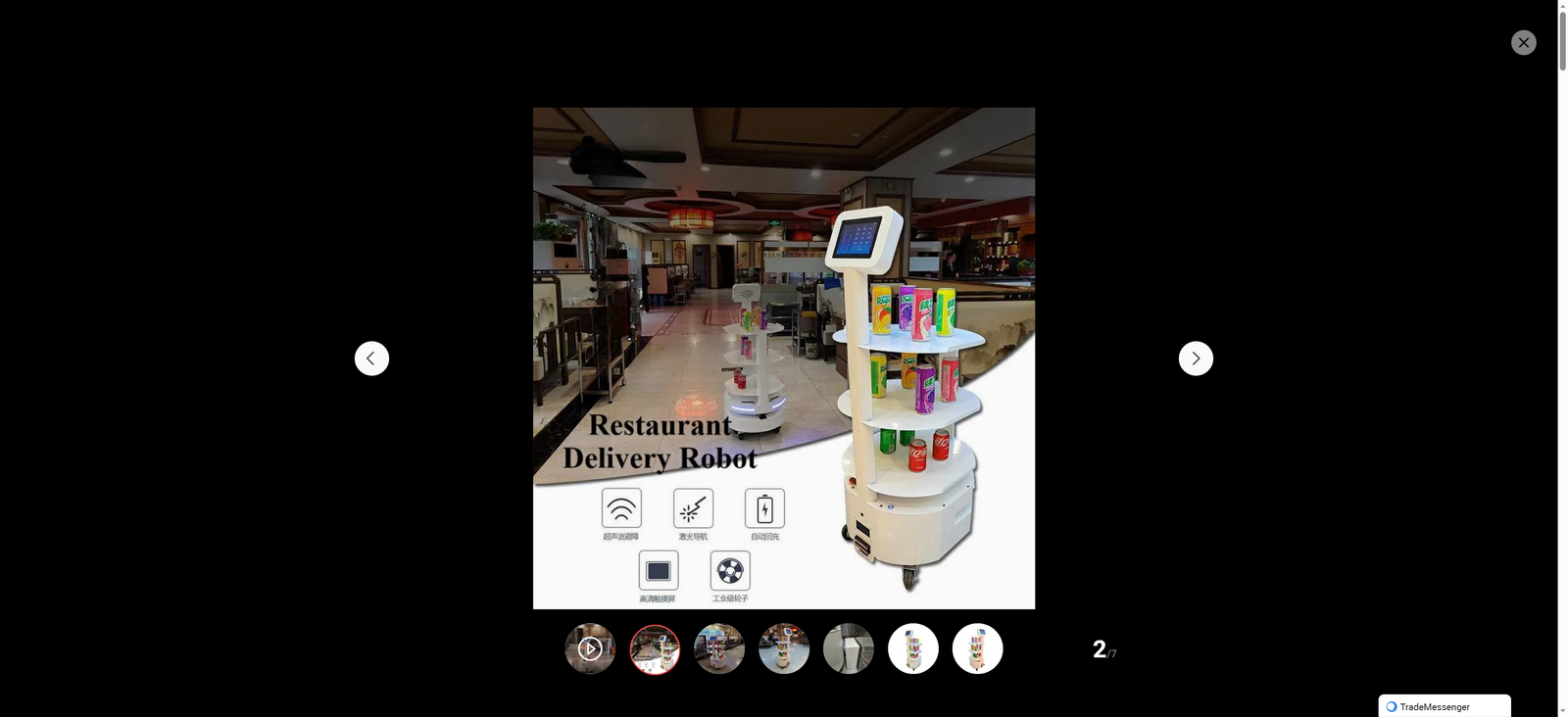
The catering and entertainment industries, long plagued by labor shortages during peak hours, have been revitalized by robot waiters in 2025. These intelligent servers not only alleviate staffing pressures but also inject novelty into the consumer experience. Take the "Panda" delivery robot adopted by Suzhou Tongji Hotel as an example: it can automatically pick up meals after customers place orders, deliver them accurately to designated tables, and even introduce dish features and flavors through voice or screen displays . During leisure time, it functions as a greeter at the door, displaying menus and greeting customers to attract foot traffic, becoming a unique "traffic magnet" for the restaurant .
In KTVs, robot waiters have become reliable partners for service teams. They seamlessly navigate through crowded corridors, avoiding obstacles with high-precision sensors, to deliver drinks, snacks, and disposable tableware to private rooms. This not only reduces the workload of human staff—who can then focus on improving customer experience through personalized interactions—but also minimizes human errors such as wrong orders or delayed deliveries . Advanced models equipped with self-developed large language models can engage in natural conversations with customers, answering questions about song lists or promotions, and even performing simple interactive shows to enhance the entertainment atmosphere . The application of robot waiters has realized a win-win situation for businesses: reducing labor costs by 30%-50% while improving customer satisfaction through efficient and interesting services .
Food Parcel Delivery: Robots Optimize the "Last Mile" Logistics
2025 has seen food parcel delivery robots evolve into a key component of the instant logistics ecosystem, addressing the pain points of inefficient manual delivery and high error rates. Driven by IoT infrastructure improvement and AI algorithm optimization, these robots have achieved breakthroughs in dynamic environment adaptation and group collaboration . On the ground, JD's delivery robots serve 127 universities nationwide, handling 4,300 orders daily with a scan-and-pickup time of only 11 seconds per customer . Ele.me's "swarm mode" pilot in Hangzhou deploys 30 robots to cover a 3-square-kilometer area, reducing the average delivery time during lunch peaks to 19 minutes .
Aerial delivery robots have also opened up new horizons for food logistics. Meituan has launched 64 drone routes in Shenzhen, with the fourth-generation model capable of carrying 13.6kg and withstanding level-6 winds and moderate rain . It completes 3-kilometer deliveries in just 8 minutes, 50% faster than electric vehicles, and the unit cost has dropped to 4.2 yuan—32% lower than manual delivery . Combined with pre-positioned warehouses and AI-driven inventory management, food parcel delivery robots have built a "30-minute delivery circle" in core urban areas, ensuring that hot meals and fresh ingredients reach customers in a timely manner while reducing carbon emissions from traditional delivery vehicles .
Hospitals & Libraries: Robot Assistants Empower Professional Services
In hospitals, robot assistants have become critical enablers of smart medical services, enhancing accuracy, efficiency, and safety. AMR composite robots equipped with medical-grade stainless steel bodies and UV disinfection modules operate in pharmacies, using robotic arms with 0.02mm repeat positioning accuracy to sort, verify, and deliver drugs, reducing dispensing errors to below 0.001% and improving efficiency by over 50% . In outpatient halls, intelligent guidance robots integrate professional medical knowledge graphs, accurately understanding patient inquiries to recommend appropriate departments and answer basic health questions, boosting clinic efficiency by 30% . During public health events, they also perform contactless temperature checks and health code verification, minimizing cross-infection risks .
Libraries have also embraced robot assistants to transform knowledge services. AMR robots equipped with high-precision RFID scanning systems can inventory 3,000 books per hour with ±1cm positioning accuracy, reducing misfiling rates to below 0.1% . Their multi-degree-of-freedom robotic arms handle sorting and shelving tasks five times faster than humans, freeing librarians from tedious physical work . Advanced "AI librarians" connected to multiple large language models (DeepSeek, Kimi, Doubao, etc.) provide 24/7 services, assisting with book borrowing and returning, database navigation, and personalized reading recommendations . By analyzing book circulation data, they generate heatmaps of reader preferences, supporting data-driven procurement decisions .
The Future of Robot Integration
The widespread application of robots across factories, restaurants, hospitals, KTVs, and libraries in 2025 is not just a technological phenomenon but a testament to the industry's shift from "being usable" to "being useful" . Supported by policies such as Beijing's "Ten Measures for Embodied Intelligent Robots" and industrial clusters in the Yangtze River Delta and Pearl River Delta, the robot industry has formed a collaborative ecosystem of hardware manufacturers, algorithm service providers, and scenario operators . While challenges remain—such as improving emotional interaction capabilities and adapting to unstructured environments—the path of "industrial leadership and multi-scenario synergy" is clear .
As we move forward, robots will continue to evolve from mere tools to intelligent partners, deeply integrating into more aspects of production and life. The year 2025 is just the beginning; the robot revolution is reshaping social operation models and human lifestyles, paving the way for a more efficient, intelligent, and inclusive future.