
Premium AI Delivery Robot: Redefining Global Catering with Laser SLAM, IP67 Protection and Intelligent Obstacle Avoidance
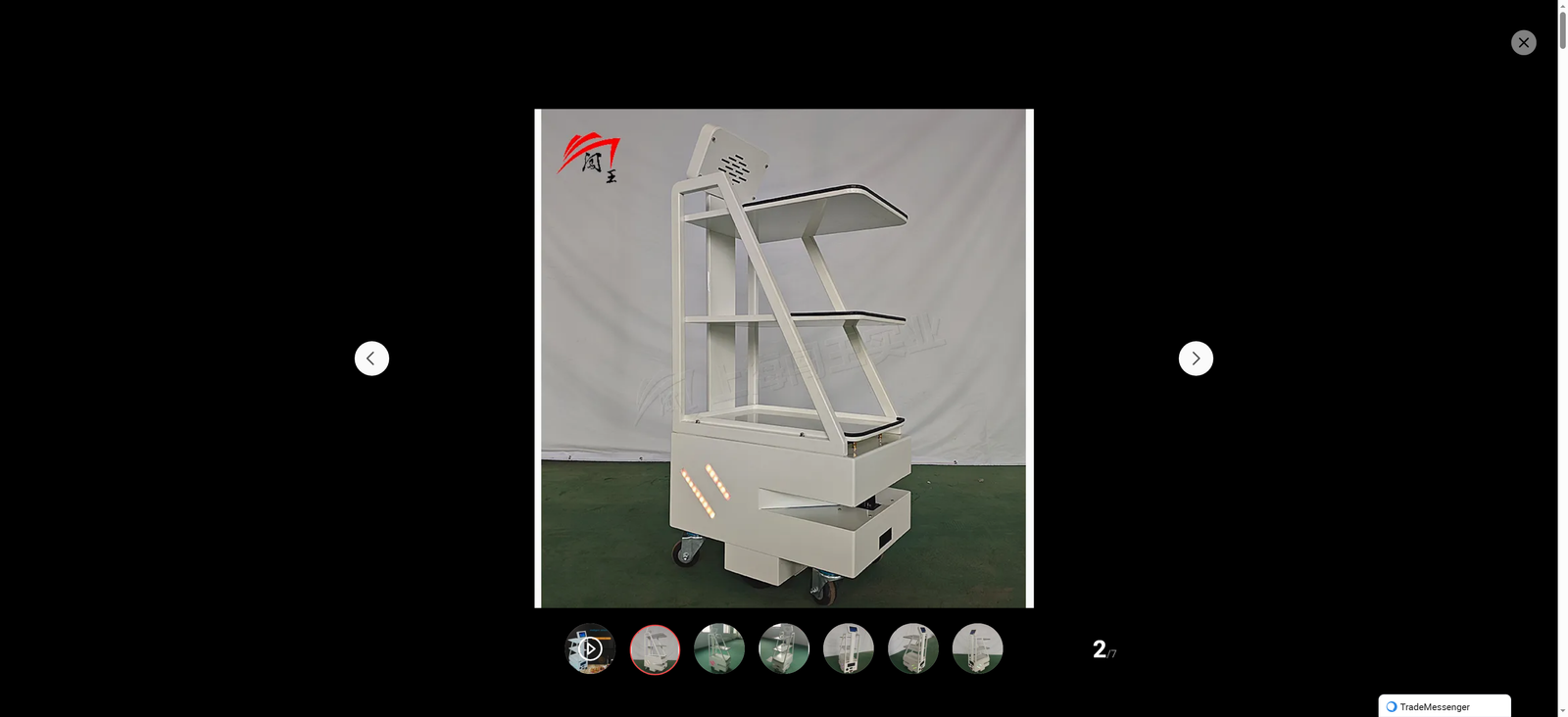
The global catering industry is undergoing a profound digital transformation, driven by the dual pressures of labor shortages and rising operational costs, as well as the growing demand for efficient and contactless services. In this context, premium AI delivery robots equipped with core technologies such as Laser SLAM, IP67 protection, and intelligent obstacle avoidance have emerged as game-changers. These advanced devices are no longer just auxiliary tools but core assets that optimize service efficiency, enhance operational stability, and reshape the competitive landscape of the global catering market.
Laser SLAM: The Core Navigation Engine for Precision Movement
Navigation accuracy is the cornerstone of AI delivery robots, and Laser SLAM (Simultaneous Localization and Mapping) technology serves as the "eyes and brain" that enable robots to move freely in complex environments. Unlike traditional camera-based navigation systems that are susceptible to light changes, Laser SLAM achieves 8mm-level positioning precision by emitting pulsed lasers and measuring reflection time to generate 3D point cloud data, enabling real-time environment mapping and precise self-localization . This technology excels in dynamic and complex catering scenarios, whether it is a crowded restaurant hall, a narrow kitchen passage, or a large-scale catering venue with frequent personnel movements.
In practical applications, Laser SLAM-equipped robots can quickly identify tables, chairs, waiters, and even small obstacles such as children and pets, constructing a "digital twin" map of the catering space . For global catering businesses with diverse store layouts—from compact Asian restaurants to spacious Western buffets—this technology eliminates the need for complex environmental modifications during deployment, adapting to different spatial structures with high flexibility. Moreover, when combined with depth cameras, inertial measurement units (IMU), and odometers, Laser SLAM forms a multi-sensor fusion navigation system that effectively solves positioning drift problems caused by glass partitions, highly reflective floors, and empty corridors, ensuring stable operation even in challenging environments .
IP67 Protection: Unlocking 24/7 Operation in Diverse Environments
The global catering industry spans a wide range of climates and operating conditions, from humid tropical regions to dusty outdoor dining areas, placing high demands on the environmental adaptability of delivery robots. The IP67 protection rating has become a key indicator of premium robots, providing comprehensive defense against dust and water to ensure reliable operation in harsh environments. IP67-rated robots are fully protected against dust ingress and can withstand immersion in 1-meter deep water for 30 minutes, making them suitable for both indoor and semi-outdoor catering scenarios .
For outdoor catering events, food truck operations, or open-air dining areas commonly seen in European and American markets, IP67 protection prevents system failures caused by rain, dust, or accidental spills of food and beverages. In high-temperature and high-humidity regions such as Southeast Asia, this protection level, combined with wide-temperature components (-20°C to %0°C), ensures the robot's internal circuits and sensors remain stable despite extreme temperature fluctuations . Additionally, IP67-rated waterproof connectors and sealed cable entries reduce maintenance costs associated with weather-related issues, enabling 24/7 unattended operation—a critical advantage for global catering chains seeking to maximize operational efficiency .
Intelligent Obstacle Avoidance: From Passive Avoidance to Predictive Navigation
Catering environments are characterized by high dynamics, where waiters shuttling between tables, customers standing up suddenly, and temporarily placed food carts all pose potential collision risks. Premium AI delivery robots go beyond basic passive obstacle avoidance, integrating advanced algorithms and multi-sensor fusion to achieve predictive and intelligent obstacle avoidance. By combining Laser SLAM's real-time distance measurement with visual tracking technology, these robots can analyze the movement trajectory and speed of pedestrians, predicting their positions in the next few seconds and making proactive deceleration or detour decisions 0.5 seconds in advance .
Advanced algorithms such as RRT (Rapidly-exploring Random Tree) and PRM (Probabilistic Roadmap) further optimize path planning, allowing robots to generate multiple alternative routes in real time and select the optimal solution in emergency situations—such as when a customer suddenly steps into the passage . In multi-robot collaboration scenarios, a decentralized scheduling system enables dozens of robots to negotiate right-of-way autonomously, avoiding traffic jams at intersections and improving overall delivery efficiency . Real-world data shows that robots with intelligent obstacle avoidance technology maintain a 98% delivery success rate even during peak hours with a pedestrian density of 0.8 people per square meter, reducing average delivery time to one-third of manual delivery .
Driving the Global Catering Industry Toward Intelligent Transformation
The integration of Laser SLAM, IP67 protection, and intelligent obstacle avoidance technologies has addressed the core pain points of the global catering industry, driving its transformation toward automation and intelligence. As labor costs continue to rise worldwide and the demand for contactless services persists post-pandemic, these premium AI delivery robots have become a strategic choice for catering businesses . The global restaurant delivery robot market is projected to grow at a CAGR of 23.84% from 2024 to 2032, reaching USD 95.0 billion by 2032, with Asia-Pacific emerging as the largest market due to its high adoption rate of smart technologies .
For global catering chains, these robots not only reduce labor costs and improve delivery efficiency but also enhance brand image through intelligent services. In high-end dining establishments, they ensure stable delivery of delicate dishes without spills, thanks to their precise navigation and shock-absorbing chassis; in fast-food restaurants, they handle high-volume delivery tasks efficiently, reducing customer waiting time. Looking ahead, with the integration of semantic SLAM and group collaboration technologies, premium AI delivery robots will evolve from simple delivery tools to intelligent partners that integrate with restaurant management systems, participating in order allocation, customer interaction, and data analysis .
In conclusion, premium AI delivery robots equipped with Laser SLAM, IP67 protection, and intelligent obstacle avoidance are reshaping the global catering industry. By combining high precision, environmental adaptability, and intelligent decision-making, they provide a scalable solution for catering businesses worldwide, driving the industry toward a more efficient, stable, and intelligent future.