
Automated Food Delivery Robots: Transforming the Future of Catering Services
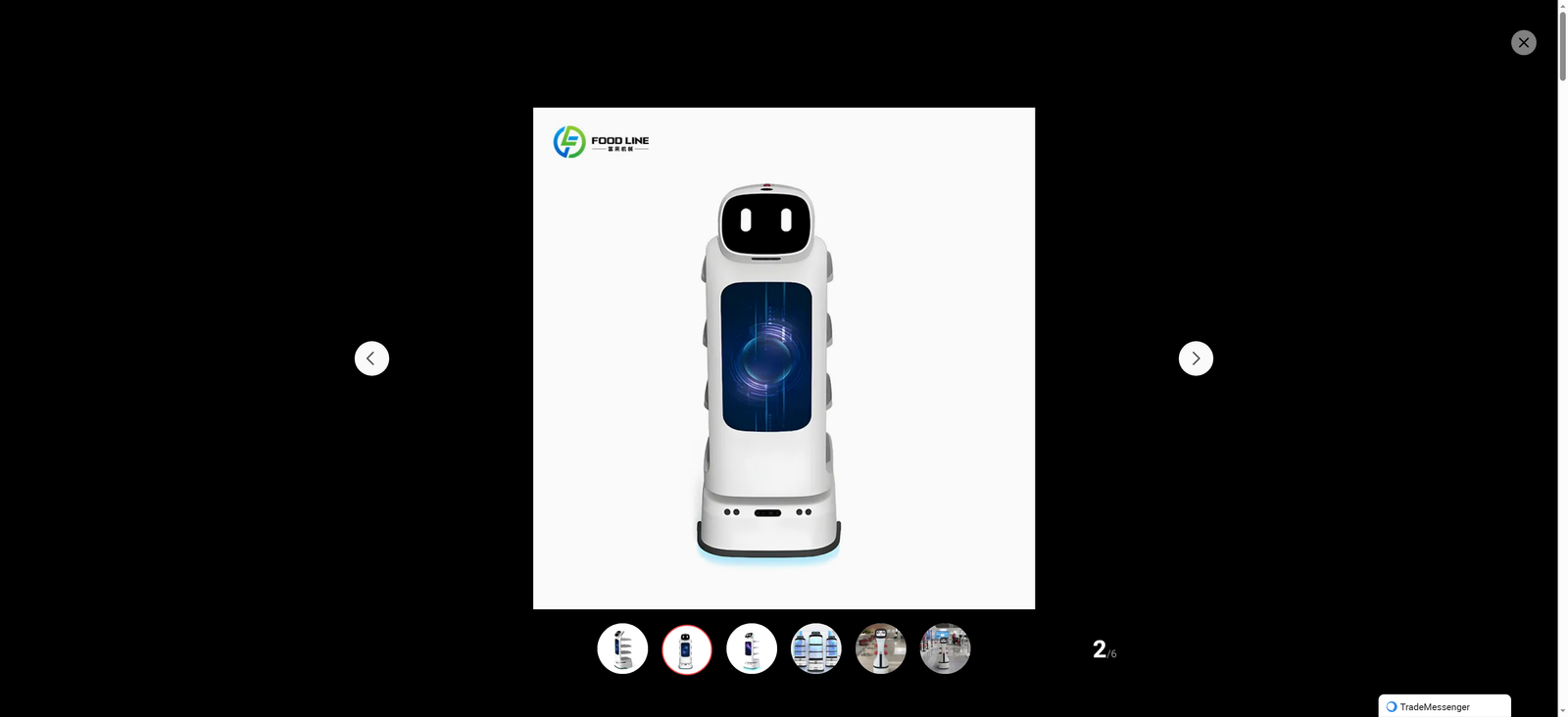
In the wave of intelligent transformation, automated food delivery robots have evolved from experimental prototypes to indispensable tools in the catering industry. These service robots, integrating cutting-edge technologies such as artificial intelligence, sensor fusion, and autonomous navigation, are reshaping the operational efficiency of catering businesses and redefining customer service experiences. From bustling restaurants to crowded airports, they are quietly changing the way food is delivered in various scenarios.
The core competitiveness of automated food delivery robots lies in their sophisticated technical system, which enables them to adapt to complex and dynamic environments. At the heart of their operation is the multi-sensor fusion SLAM (Simultaneous Localization and Mapping) navigation technology. Unlike traditional single-sensor solutions that struggle with glass partitions, reflective surfaces, or empty corridors, modern robots combine laser radar, RGB-D cameras, inertial measurement units (IMU), and odometers to achieve centimeter-level positioning accuracy. This fusion allows them to stably navigate through crowded dining halls, accurately dock at tables, and avoid getting lost even in spaces with frequent layout changes . Complemented by predictive obstacle avoidance algorithms, they can analyze pedestrians' movement trajectories in real time, make advance detour or deceleration decisions, and even coordinate with multiple robots to avoid congestion in large venues, significantly improving passage efficiency.
Another technological breakthrough is the integration of large language models (LLMs) into human-robot interaction. Early robots could only respond to preset keywords, but today's intelligent models enable natural multi-round conversations. These robots can answer customer inquiries about dish ingredients, tastes, and promotions, and even generate personalized marketing scripts to attract customers during idle hours. Combined with car-grade chassis suspension systems, they ensure stable delivery of soups and beverages without spilling, addressing a key pain point in food delivery services . Such technological iterations have elevated robots from simple "delivery tools" to comprehensive service terminals that integrate delivery, consultation, and marketing functions.
The application scenarios of automated food delivery robots are expanding rapidly, breaking through the boundaries of traditional restaurants. In the catering sector, they have become a powerful weapon for businesses to tackle the "three highs and one low" dilemma—high rent, high labor costs, high food costs, and low profit margins. Data shows that a mature delivery robot can complete 400 to 600 orders per day, double the efficiency of human servers, while reducing long-term operational costs. Leading brands like Orion Star, Keenon, and Pudu Robotics have launched targeted products: Orion Star's Zhaocai Leopard series excels in AI interaction and navigation stability, Keenon's T5/T8 series is favored by chain brands for its durability, and Pudu's BellaBot wins young customers with its bionic design .
Beyond restaurants, these robots are making inroads into more public spaces. At Shenzhen Bao'an Airport, Meituan's self-developed "Little Yellow Bee" robot delivers food and drinks directly to passengers' boarding gates, eliminating the need for travelers to rush between restaurants and boarding areas . On college campuses in the United States and the United Kingdom, companies like Starship Technologies and Kiwibot have deployed fleets to provide on-demand food delivery services, which saw surging demand during the pandemic . In medical settings, robots developed by CloudMinds have entered over 320 Grade A tertiary hospitals in China, delivering meals and medical supplies to wards efficiently and hygienically .
The global market for automated food delivery robots is witnessing robust growth, driven by technological advancements and policy support. In China alone, the market size reached 4.87 billion yuan in 2024, with a year-on-year increase of 36.2%, and is expected to exceed 6.63 billion yuan in 2025 . The declining cost of core components and shortened investment return cycles (from 28 months to 14.7 months) have further boosted adoption among catering businesses. Internationally, partnerships between tech giants and robotics companies are accelerating market expansion—Serve Robotics, for instance, has achieved a 99.8% delivery success rate through collaboration with NVIDIA, completing over 100,000 deliveries across five U.S. cities via the Uber Eats platform .
Despite their remarkable progress, automated food delivery robots still face challenges. Adapting to extremely crowded spaces, handling special delivery requests, and ensuring long-term maintenance stability remain areas for improvement. However, the future outlook is promising. With the deep integration of 5G, embodied intelligence, and LLM, robots will gain stronger scene understanding and decision-making capabilities. The popularization of the Robot-as-a-Service (RaaS) model will lower the threshold for small and medium-sized businesses to adopt the technology, while the expansion into emerging scenarios like nursing homes and exhibition halls will unlock new growth opportunities.
Automated food delivery robots are not replacing human servers but building a "human-robot collaboration" ecosystem. They take over repetitive delivery tasks, allowing human staff to focus on high-value services such as customer communication and dish presentation. As technology continues to iterate and market demand matures, these intelligent service robots will undoubtedly become a cornerstone of the smart catering industry, bringing more efficient, convenient, and personalized experiences to businesses and consumers alike.