
Automatic Intelligent Delivery Service Robots: Transforming Daily Life Across Scenarios
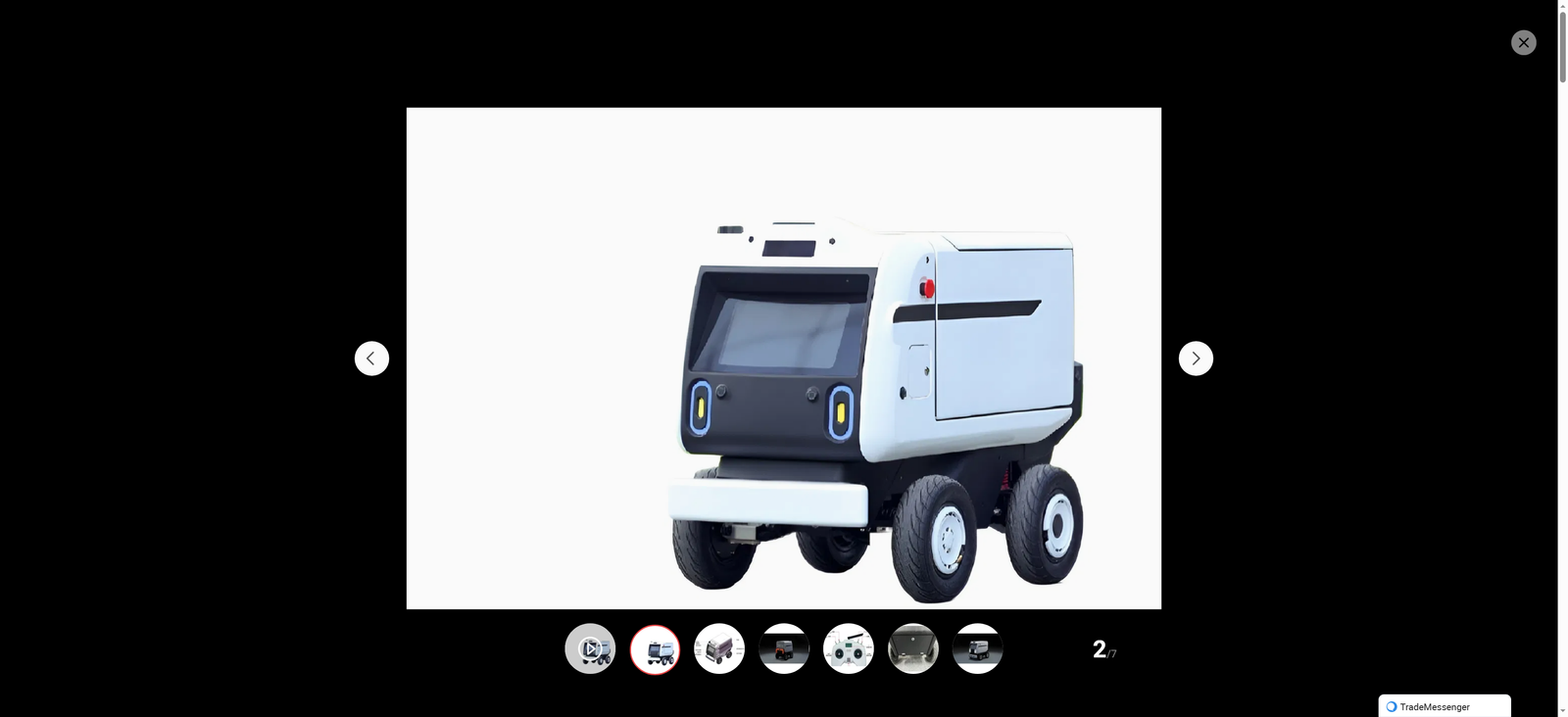
In the era of rapid technological advancement, automatic intelligent delivery service robots have emerged as a disruptive force, reshaping the way we receive goods and services in various core scenarios. From busy schools to crowded hospitals, from bustling shopping malls to quiet residential buildings, and from efficient office buildings to welcoming hotels and restaurants, these robots are no longer just a novelty—they have become reliable assistants, optimizing efficiency, reducing labor costs, and enhancing user experience with their precision, intelligence, and 24/7 availability.
Schools, as places with dense populations of students and teachers, have unique delivery needs that intelligent robots perfectly address. Every day, campuses generate a steady flow of items: textbooks and teaching materials between classrooms and offices, stationery and snacks from campus stores to dormitories, and even documents and parcels for faculty and students. Traditional manual delivery often faces challenges such as inefficiency, delays, and difficulty in navigating crowded hallways during break times. Automatic intelligent delivery robots solve these pain points by utilizing advanced path planning algorithms and obstacle avoidance technology. They can seamlessly navigate through crowded corridors, climb ramps, and even take elevators independently, ensuring that textbooks reach classrooms on time, snacks are delivered to dormitory doors without delay, and parcels are safely handed over to recipients with verification—freeing up teachers and campus staff to focus on more important tasks, while also bringing convenience to students’ daily lives.
Hospitals, where time is closely linked to life and efficiency is paramount, are another key scenario where automatic intelligent delivery robots shine. Hospitals handle a large number of urgent and regular deliveries every day, including medical supplies (such as bandages, medicines, and test tubes), medical records, meal deliveries for patients, and even laundry and linen. In the past, these tasks relied heavily on nurses and logistics staff, who were already burdened with heavy clinical work. Intelligent delivery robots not only reduce the workload of medical personnel but also minimize the risk of cross-infection. Equipped with disinfection functions and sealed compartments, they can safely transport sterile medical supplies and test samples between departments, avoiding human contact. For patients, the robots can deliver meals, water, and daily necessities to their bedsides at scheduled times, reducing the need for patients to move around and improving their recovery experience. In emergency situations, the robots can quickly deliver emergency medicines and equipment to operating rooms or wards, buying precious time for treatment.
Shopping malls, the hubs of consumption and leisure, have also embraced automatic intelligent delivery robots to enhance customer experience and operational efficiency. In large shopping malls, customers often face the trouble of carrying heavy shopping bags after a day of shopping, or having to wait in long lines to pick up online orders. Intelligent delivery robots offer a convenient solution: customers can place orders through the mall’s app, and the robot will pick up the goods from the corresponding store and deliver them directly to the mall’s exit, parking lot, or even the customer’s home (for nearby areas). For mall operators, the robots can also deliver goods between stores, transfer inventory, and distribute promotional materials, reducing the labor intensity of mall staff and improving the overall operational efficiency. Additionally, the cute and intelligent appearance of the robots also becomes a unique landscape in the mall, attracting customers to interact and take photos, enhancing the mall’s brand image.
Residential buildings, as people’s daily living spaces, are witnessing the integration of automatic intelligent delivery robots into community life, solving the “last 100 meters” delivery problem that has long plagued residents and couriers. With the rise of e-commerce, the number of express deliveries in communities has surged, leading to problems such as courier backlogs at community entrances, difficulty in delivering to doorsteps, and security risks of lost or stolen packages. Intelligent delivery robots can enter the community, navigate through residential buildings, take elevators, and deliver packages directly to the resident’s door. Residents can receive notifications on their mobile phones and unlock the robot’s compartment with a code or fingerprint, ensuring the safety and timeliness of deliveries. Moreover, the robots can also provide additional services for residents, such as delivering takeout, purchasing daily necessities from community convenience stores, and even sending small items between neighbors, making community life more convenient and harmonious.
Office buildings, where efficiency and professionalism are the core demands, are also leveraging the advantages of automatic intelligent delivery robots to optimize office workflows. In large office buildings with dozens of floors and hundreds of companies, daily deliveries include documents, office supplies, takeout, and packages. Manual delivery often requires staff to take time out of their busy work to pick up items from the lobby, affecting work efficiency. Intelligent delivery robots can receive delivery tasks through the office building’s management system, navigate to the designated floor and office, and notify the recipient to pick up the item. They can work 24 hours a day, ensuring that urgent documents are delivered in a timely manner and office supplies are replenished quickly, helping enterprises improve work efficiency and reduce administrative costs. Additionally, the robots can also be integrated with the office building’s intelligent management system, providing data support for building operation and management, such as statistics on delivery volume and peak delivery times.
Hotels and restaurants, which focus on customer service quality, are using automatic intelligent delivery robots to upgrade their service standards and create a more comfortable and convenient experience for guests. In hotels, robots can deliver room service items (such as water, towels, and toiletries) to guests’ rooms, take luggage for guests, and even guide guests to their rooms. This not only reduces the workload of hotel staff but also avoids disturbances to guests caused by frequent staff visits, especially during late hours. In restaurants, robots can deliver food and drinks from the kitchen to the dining table accurately and quickly, reducing the waiting time of customers and improving the dining experience. They can also be used to collect empty plates and tableware after meals, reducing the labor intensity of restaurant staff and improving the efficiency of table turnover. For guests, interacting with intelligent delivery robots also adds a sense of novelty and technology to their stay or dining experience, enhancing their satisfaction with the hotel or restaurant.
The wide application of automatic intelligent delivery service robots in schools, hospitals, shopping malls, residential buildings, office buildings, hotels, and restaurants is not an accident—it is the result of the continuous advancement of artificial intelligence, Internet of Things, and robotics technology, as well as the growing demand for efficiency, convenience, and safety in various scenarios. These robots are not replacing human labor, but rather complementing it, freeing up humans from tedious and repetitive delivery tasks to focus on more creative and value-added work.
Looking to the future, with the continuous iteration of technology, automatic intelligent delivery service robots will become more intelligent, flexible, and versatile. They will be able to adapt to more complex scenarios, provide more personalized services, and integrate more closely with people’s daily lives. Whether it is in education, medical care, consumption, residence, work, or catering, these robots will continue to play an important role, transforming the way we live and work, and building a more intelligent, efficient, and convenient future for all.