
Intelligent Driving Exchange Distribution Service Robots: Transforming Daily Scenarios with Technology
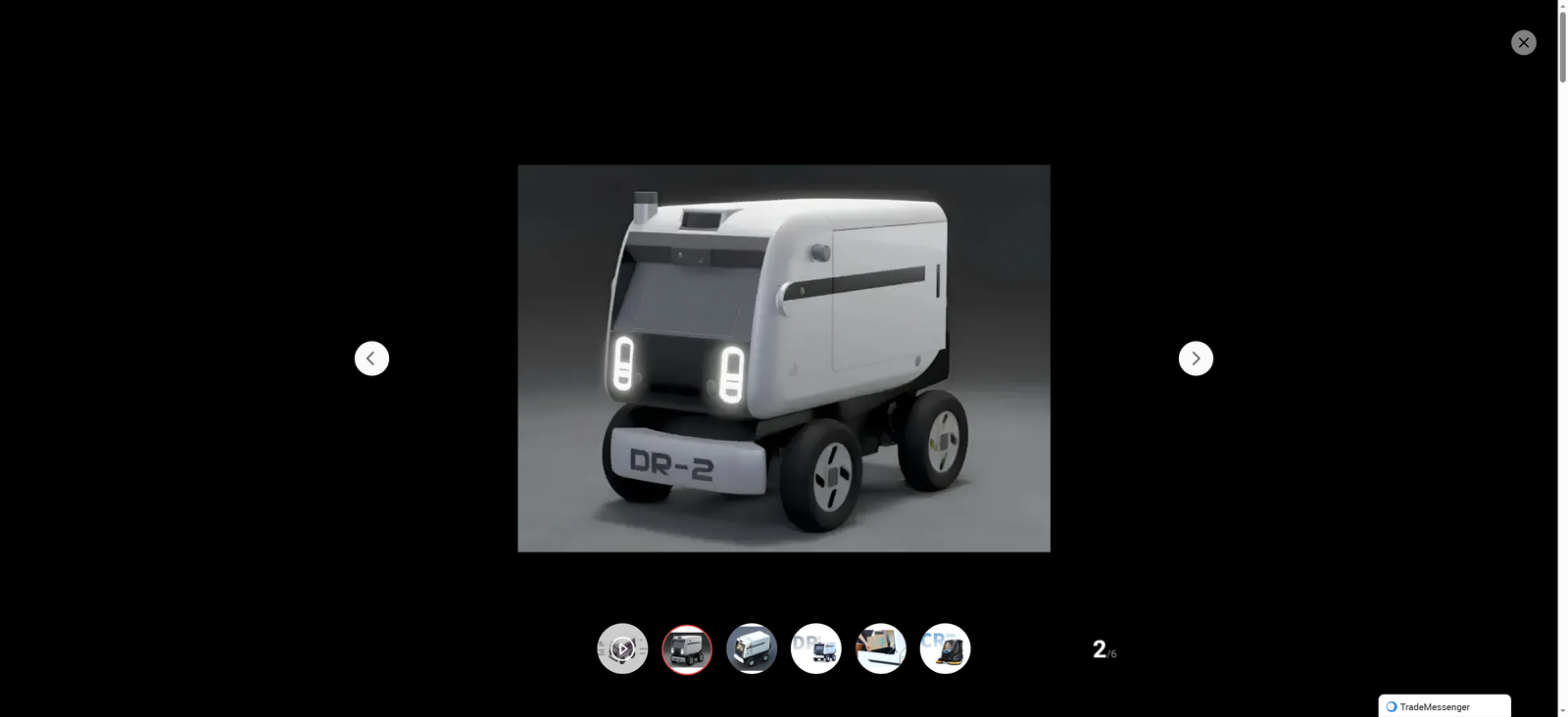
With the rapid advancement of artificial intelligence, Internet of Things, and autonomous driving technologies, intelligent service robots have gradually stepped out of laboratories and integrated into various aspects of human life. Among them, the Airport, Hotel, Home, Supermarket, and School — five core scenarios closely related to daily travel, living, and study — have become the key battlefields for the application and popularization of intelligent driving exchange and distribution service robots. These robots, equipped with advanced autonomous navigation, intelligent recognition, and efficient distribution capabilities, are breaking the limitations of traditional manual services, optimizing resource allocation, and bringing a more convenient, efficient, and intelligent experience to people’s lives and work.
Airport: Efficient Connection, Easing Travel Tensions
Airports are busy transportation hubs with large passenger flows, complex spatial structures, and diverse service needs, making them an ideal scenario for intelligent driving exchange and distribution service robots. In large airports around the world, these robots have been gradually put into use, undertaking multiple tasks such as passenger guidance, luggage transportation, and document delivery, effectively alleviating the pressure of manual services.
For passengers, after arriving at an unfamiliar airport, it is often time-consuming to find boarding gates, luggage claim areas, or service desks. Intelligent driving robots equipped with high-precision navigation and voice interaction functions can quickly respond to passenger inquiries, provide real-time route guidance, and even accompany passengers to their destinations. For luggage transportation, robots can automatically identify luggage tags, connect with check-in systems, and transport luggage from check-in counters to aircraft cargo holds, or from arrival halls to airport shuttle buses or passenger vehicles, reducing the risk of luggage loss and improving transportation efficiency. In addition, these robots can also deliver documents, medical supplies, or catering supplies between airport departments, ensuring the smooth operation of airport services and saving a lot of manual labor costs.
Hotel: Personalized Service, Enhancing Accommodation Experience
The hotel industry has always pursued high-quality and personalized services, and intelligent driving exchange and distribution service robots are becoming a new "service benchmark" for hotels, helping to upgrade the accommodation experience. Different from traditional manual room service, these robots can work 24 hours a day without interruption, providing fast and accurate distribution services while avoiding unnecessary interactions, meeting the needs of passengers for privacy and efficiency.
Guests can order water, snacks, towels, or other daily necessities through the hotel app or room phone, and the intelligent driving robot will receive the order immediately, plan the optimal route autonomously, avoid obstacles such as elevators, corridors, and pedestrians, and accurately deliver the items to the designated room door. After delivering the items, the robot will automatically return to the charging station for energy supplement, waiting for the next order. In addition, some high-end hotels also use these robots to undertake tasks such as welcome guidance, room key delivery, and laundry delivery. The cute appearance and intelligent interaction of the robots not only enhance the fun of accommodation but also leave a deep impression on guests, helping hotels improve their brand image and competitiveness.
Home: Intelligent Companion, Simplifying Family Life
With the popularization of smart homes, intelligent driving exchange and distribution service robots have gradually entered ordinary families, becoming an important part of family life, undertaking daily distribution, elderly and child care, and home security auxiliary tasks, bringing great convenience to family life.
In family scenarios, these robots can realize intelligent distribution of daily necessities: for example, delivering water cups, medicines, and snacks to family members in different rooms, or transporting laundry, garbage, and other items to designated locations. For elderly families or families with children, the robot can also play the role of a "companion assistant": it can remind the elderly to take medicine on time, monitor their physical signs in real time, and send an alarm to their children in case of an emergency; it can accompany children to read, play games, and popularize knowledge, relieving the pressure of parents' care. In addition, the robot is also equipped with a high-definition camera and intelligent sensing system, which can monitor the home environment in real time when family members are not at home, detect abnormal situations such as gas leaks and burglaries, and send alerts to mobile phones in a timely manner, ensuring home safety.
Supermarket: Efficient Handling, Optimizing Shopping Experience
Supermarkets are places with large passenger flows and frequent goods circulation. The traditional manual handling and distribution mode has problems such as low efficiency, high labor costs, and easy errors. Intelligent driving exchange and distribution service robots can effectively solve these problems, optimizing the entire process from goods warehousing to shelf replenishment and customer checkout.
In the warehouse area of the supermarket, the robot can automatically identify goods information, sort and stack goods according to the order, and transport goods from the warehouse to the corresponding sales area, greatly improving the efficiency of goods handling and reducing manual labor intensity. On the sales floor, the robot can help customers find the location of goods, recommend related products according to customer needs, and even assist customers in carrying shopping bags, especially for the elderly, pregnant women, and other groups, providing humanized services. After customers check out, the robot can also deliver the purchased goods to the customer's vehicle or the supermarket's home delivery pick-up point, realizing seamless connection between in-store shopping and home delivery, and enhancing the convenience of shopping. In addition, the robot can also collect real-time data on goods sales and shelf inventory, providing data support for supermarket operation and management, helping supermarkets optimize goods allocation and reduce inventory backlogs.
School: Intelligent Auxiliary, Assisting Education and Teaching
Schools, as places for education and teaching, have diverse service needs such as teaching materials distribution, campus logistics, and student care. Intelligent driving exchange and distribution service robots can integrate into the campus environment, undertake auxiliary tasks, reduce the workload of teachers and logistics personnel, and create a more focused and efficient education and teaching environment.
In terms of teaching materials distribution, the robot can automatically receive the teaching materials distribution task from the school, transport teaching materials, exercise books, and other items to each classroom, office, and library according to the designated time and location, avoiding the trouble of manual transportation and ensuring that teaching materials are delivered in place on time. In campus logistics, the robot can undertake tasks such as delivering drinking water, office supplies, and meals to classrooms, dormitories, and offices, and cleaning and disinfecting public areas such as corridors and playgrounds, ensuring the cleanliness and safety of the campus environment. For students, the robot can be used as an auxiliary teaching tool: it can answer common knowledge questions for students, provide after-class tutoring, and even accompany students to do sports and extracurricular activities. In addition, the robot can also monitor the campus safety in real time, detect abnormal situations such as student fights and perimeter intrusions, and send alerts to the school security department in a timely manner, ensuring campus safety.
Future Outlook: Integrating Technology and Scenarios, Creating a Better Life
From airports to homes, from supermarkets to schools, intelligent driving exchange and distribution service robots are constantly integrating into various core scenarios of human life, showing huge application value and development potential. With the continuous iteration and upgrading of technology, these robots will become more intelligent, flexible, and humanized: their autonomous driving accuracy will be further improved, they will be able to adapt to more complex environmental changes, their interaction methods will be more natural and smooth, and they will be able to better understand and meet human needs.
However, the popularization and application of intelligent driving exchange and distribution service robots also face some challenges, such as high research and development costs, imperfect relevant laws and regulations, and public concerns about safety and privacy. In the future, it is necessary for governments, enterprises, and scientific research institutions to work together to increase investment in scientific research, improve relevant supporting policies, strengthen safety supervision, and promote the healthy and sustainable development of the industry.
In conclusion, intelligent driving exchange and distribution service robots are reshaping people’s lifestyles and service models with their unique advantages. In the Airport, Hotel, Home, Supermarket, School and other scenarios, they are becoming an important force to improve service efficiency, optimize user experience, and promote social progress. With the continuous advancement of technology, we have reason to believe that these intelligent robots will integrate more closely with human life in the future, bringing more surprises and convenience to our lives and creating a more intelligent and better future.