
Service Robot Chassis with Open SDK and Standard Interfaces: Unlocking Innovation in Intelligent Services
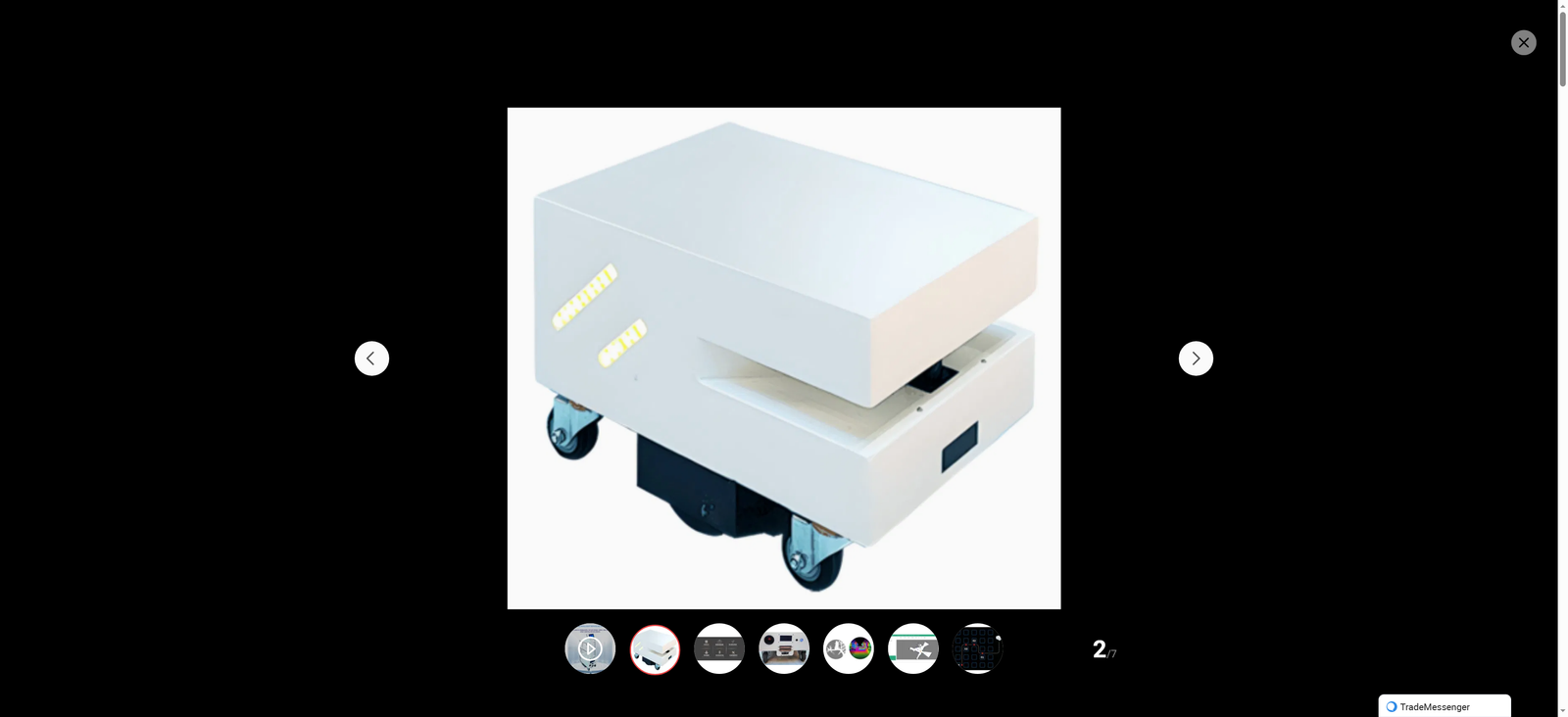
In the era of intelligent transformation, service robots have become indispensable tools across industries, from restaurants and hospitals to shopping malls and government service centers. At the core of every high-performance service robot lies its chassis—the "feet" that enable movement, positioning, and navigation, and the "bridge" that connects hardware and software. Among the key drivers accelerating the adoption and innovation of service robots is the emergence of service robot chassis equipped with an Open Software Development Kit (SDK) and standard interfaces. These features break down technical barriers, lower development thresholds, and foster a collaborative ecosystem that empowers developers, enterprises, and researchers to turn creative ideas into practical solutions.
The service robot chassis serves as the foundational platform for all upper-layer functions, bearing the responsibility of autonomous movement, environmental perception, and load bearing. Unlike traditional closed chassis that restrict customization, modern chassis with open SDK and standard interfaces redefine flexibility and scalability. An Open SDK provides developers with access to the chassis’s core control logic, including motion control, navigation algorithms, and sensor data, allowing them to customize and extend functions according to specific application needs without having to rebuild the entire system from scratch. Standard interfaces, meanwhile, ensure seamless compatibility with a wide range of external devices—such as laser radars, depth cameras, mechanical arms, disinfection modules, and voice interaction systems—eliminating compatibility issues that often plague custom development projects.
The combination of an Open SDK and standard interfaces delivers multifaceted value that transforms the service robot development landscape. For enterprises and developers, the most significant benefit is cost and time savings. Developing a service robot chassis from scratch requires massive investment in R&D personnel, time, and resources, often taking months or even years to achieve mature performance. With an open SDK, developers can leverage pre-built, validated core functions—such as SLAM 2.0 autonomous positioning and navigation, 270° ultra-wide angle obstacle avoidance, and automatic return-to-charge—and focus their efforts on optimizing upper-layer applications and differentiated features. For example, a team developing a medical disinfection robot can use the open SDK of a mature chassis to quickly integrate disinfection modules and customize navigation paths, reducing development cycles by 60% or more and cutting R&D costs significantly. Standard interfaces further enhance efficiency by enabling "plug-and-play" integration of external devices; a chassis with standard CAN bus, Ethernet, or RS232 interfaces can easily connect to different sensors or functional modules, adapting to diverse scenarios without major hardware modifications.
Beyond cost and time savings, open SDK and standard interfaces unlock unprecedented versatility in application scenarios. Service robots are no longer limited to a single function or industry; with a flexible chassis platform, they can be rapidly reconfigured to meet evolving needs. In the hospitality industry, a chassis with open SDK can be customized into a food delivery robot that navigates busy restaurant halls, avoids obstacles, and interacts with customers via voice prompts—all by integrating a delivery module and voice system through standard interfaces. In healthcare settings, the same chassis can be transformed into a medical protection robot, using the open SDK to optimize navigation in complex hospital corridors and integrating disinfection modules to achieve 360° contactless sterilization, protecting medical staff and patients alike. In government service centers or large shopping malls, the chassis can support service guide robots that provide information queries, intelligent queuing, and real-time navigation, leveraging the open SDK to customize path planning for crowded environments and standard interfaces to connect to information display screens and printing devices.
These chassis platforms also play a crucial role in promoting technological innovation and ecosystem collaboration. An Open SDK encourages knowledge sharing and collaborative development, as developers can contribute custom algorithms, application examples, and technical solutions to a shared community, enriching the ecosystem for all users. Many chassis providers offer rich teaching materials, API documentation, and technical support alongside their open SDK, lowering the learning curve for new developers and fostering a new generation of robot innovators. Standard interfaces, meanwhile, promote interoperability between different manufacturers’ products, enabling enterprises to mix and match chassis, sensors, and functional modules to create optimal solutions. This collaborative ecosystem is particularly valuable for small and medium-sized enterprises (SMEs), which often lack the resources for independent chassis development; by leveraging open SDK and standard interface chassis, SMEs can compete with larger enterprises by focusing on niche market needs and innovative applications.
Real-world applications abound, showcasing the transformative impact of these chassis platforms. For instance, Reeman’s Hussar Square Robot Chassis, equipped with an open SDK and standard interfaces, serves as a scalable general service robot platform, supporting secondary development and integrating seamlessly with various devices. Built-in SLAM 2.0 navigation, industrial-grade main control hardware, and a damping mechanism ensure stability and performance, making it suitable for robotics research, education, logistics, and indoor mobile applications.思岚科技 (Slamtec) offers chassis with fully open user interfaces and cross-platform support for Windows, Linux, and ROS, enabling developers to use programming languages like C and Python to customize navigation and positioning functions. These chassis have been used to develop送餐 robots,商超巡检 robots, and museum guide robots, adapting to environments ranging from 100-square-meter homes to 100,000-square-meter commercial spaces. In medical scenarios, chassis with open SDK have been used to develop cloud-based medical assistant robots that provide 24-hour non-contact consultation and guidance, leveraging 5G technology to process map data and algorithms efficiently.
As the service robot industry continues to evolve, the demand for open, standardized chassis will only grow. With advancements in AI, 5G, and edge computing, future chassis platforms will further enhance their openness—offering more detailed access to core algorithms, supporting more complex multi-robot collaboration, and integrating with cloud service platforms for remote deployment and monitoring. Standard interfaces will also become more unified, spanning across industries to enable even greater interoperability between devices and systems. This trend will not only accelerate the innovation and adoption of service robots but also drive the digital transformation of industries, making intelligent services more accessible, efficient, and personalized.
In conclusion, service robot chassis with open SDK and standard interfaces are the cornerstone of the modern service robot ecosystem. They break down technical barriers, lower development costs, and unlock unlimited possibilities for customization and innovation. By empowering developers to focus on creativity rather than foundational engineering, and enabling enterprises to adapt quickly to diverse market needs, these chassis are accelerating the integration of service robots into every aspect of our lives—from healthcare and hospitality to retail and public services. As the industry moves forward, the collaboration fostered by open SDK and standard interfaces will continue to drive technological progress, creating a future where intelligent robots work seamlessly alongside humans to improve efficiency, safety, and quality of life.