
More Than 90kg Intelligent Driving Exchange Distribution Service Robot: Empowering Multi-Scenario Smart Life
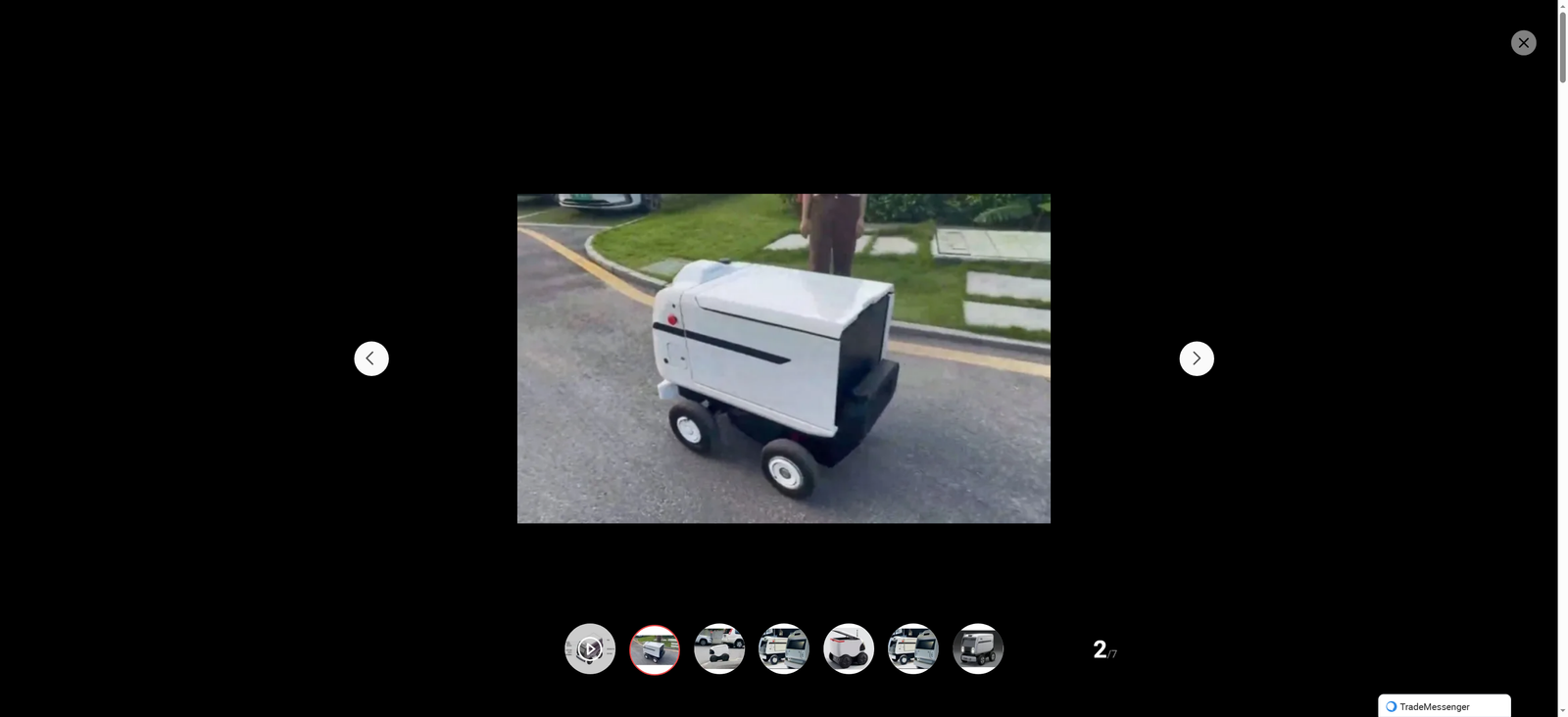
With the rapid development of artificial intelligence, intelligent driving and Internet of Things technologies, service robots have gradually stepped out of the laboratory and integrated into various corners of social life. Among them, the more than 90kg intelligent driving exchange distribution service robot, with its stable load-bearing capacity, autonomous navigation capability and flexible scenario adaptation, has become a key force in promoting the transformation of the distribution service industry, and is quietly changing the way of travel and life in airports, hotels, homes, supermarkets, schools and other scenarios.
Different from the light-weight service robots that focus on guidance and interaction, the more than 90kg intelligent driving distribution robot has a solid body structure and strong load-bearing performance, which can easily carry packages, materials, daily necessities and other items with a total weight of tens of kilograms. This core advantage makes it break through the limitations of traditional light-weight robots in distribution scenarios, and can undertake more heavy-duty and high-frequency distribution tasks, becoming a reliable "logistics assistant" in multi-scenario applications.
In the airport scenario, the more than 90kg intelligent driving distribution robot has become a new "porter" that connects passengers, luggage and various service points. Airports are often large in area, with complex passenger flows and large luggage throughput. In the past, passengers often needed to drag heavy luggage to shuttle between terminals, boarding gates and baggage claim areas, which was time-consuming and laborious. Now, this type of robot can realize autonomous path planning through advanced laser radar, visual navigation and GPS positioning technologies, avoiding obstacles such as passengers and vehicles flexibly. It can not only undertake the task of transporting luggage for passengers, but also distribute catering, mineral water, newspapers and periodicals to waiting areas, VIP lounges and other places. The stable load-bearing capacity ensures that it can carry multiple pieces of luggage or a large number of materials at one time, improving the efficiency of airport logistics services while reducing the labor pressure of airport staff. Even in the peak period of passenger flow, the robot can still operate stably and orderly, providing passengers with a more convenient and comfortable travel experience.
In hotels, the more than 90kg intelligent driving distribution robot has become an important part of building a smart hotel. For hotels, the distribution of guest luggage, room service items (such as towels, toiletries, meals) and cleaning supplies is a daily and heavy task. The traditional manual distribution method is not only inefficient, but also easy to be restricted by factors such as work shifts and human energy. The intelligent driving distribution robot can work 24 hours a day without interruption. It can accurately reach the door of any guest room according to the order information, and complete the delivery and signing of items through voice interaction and intelligent induction. For example, when a guest orders meals or needs additional toiletries through the hotel APP, the robot can quickly receive the order, pick up the items from the restaurant or service center, and then autonomously navigate to the designated room. The 90kg body weight ensures that it can carry multiple sets of room supplies or a number of meals at one time, meeting the needs of multiple guests at the same time. In addition, the robot can also undertake the task of transporting cleaning tools and linen for the hotel, reducing the labor intensity of cleaning staff and improving the overall service quality and operational efficiency of the hotel.
In the home scenario, the more than 90kg intelligent driving distribution robot is gradually becoming a "family butler" that connects families with the outside world. With the popularity of online shopping, the problem of "express delivery can't be received in time" has become a trouble for many families. This type of robot can realize door-to-door express delivery and collection services. It can automatically go to the community express cabinet or the door of the courier to pick up the express delivery according to the user's instruction, and then send it to the user's home accurately. For large items such as rice, flour, oil and household appliances that are difficult for users to carry, the robot's strong load-bearing capacity can play a huge role, solving the problem of difficult transportation of heavy items for the elderly, children and other groups. In addition, the robot can also help users complete the distribution of daily necessities at home, such as transporting fruits, drinks and other items from the kitchen to the living room or bedroom, bringing great convenience to family life. At the same time, the robot is equipped with multiple safety protection devices, which can avoid collision with furniture and family members during operation, ensuring the safety of home use.
In supermarkets, the more than 90kg intelligent driving distribution robot has become a powerful assistant for supermarket operations and customer services. Supermarkets have a wide variety of goods, large passenger flow, and heavy tasks such as goods replenishment, shelf arrangement and customer delivery. In the past, the replenishment of goods often required staff to transport goods from the warehouse to the shelves manually, which was not only labor-intensive but also low in efficiency. The intelligent driving distribution robot can carry a large number of goods at one time, and according to the inventory information of the supermarket, it can automatically transport the goods from the warehouse to the designated shelf area, greatly improving the efficiency of goods replenishment. For customers, especially those who buy a large number of goods or heavy items, the robot can provide free delivery services in the supermarket. Customers only need to place the selected goods on the robot, and the robot can send the goods to the supermarket entrance or the customer's car, solving the problem of difficult carrying of goods for customers. In addition, the robot can also carry out mobile promotion in the supermarket, displaying and introducing promotional goods to customers, which helps to improve the sales volume of goods.
In the school scenario, the more than 90kg intelligent driving distribution robot has brought new changes to campus logistics and teaching services. Schools, especially universities, have a large area, a large number of teachers and students, and the demand for the distribution of teaching materials, office supplies, daily necessities and meals is huge. The robot can undertake the task of distributing teaching materials. At the beginning of each semester, it can accurately send teaching materials to each classroom or teacher's office according to the course arrangement and teacher's needs, reducing the workload of teachers and teaching administrators. During the meal time, the robot can transport meals from the canteen to each teaching building, dormitory building and playground, providing convenient dining services for teachers and students. In addition, the robot can also transport experimental equipment, cleaning supplies and other items for the school, ensuring the normal operation of teaching and campus management. The stable and reliable performance of the robot can adapt to the complex environment of the campus, such as the flow of students during class hours and the steps and ramps in the campus, and complete the distribution task efficiently and safely.
The wide application of the more than 90kg intelligent driving exchange distribution service robot in multiple scenarios is not only due to its strong load-bearing capacity, but also relies on the continuous progress of core technologies such as intelligent driving, autonomous navigation and human-computer interaction. With the continuous iteration and upgrading of technology, this type of robot will have higher intelligence, better scenario adaptation and stronger load-bearing capacity. In the future, it may also realize inter-scenario linkage, such as connecting airports and hotels to complete the seamless transportation of passengers' luggage, or connecting supermarkets and homes to realize the one-stop distribution of daily necessities.
Of course, the popularization and application of the more than 90kg intelligent driving distribution robot also faces some challenges, such as the improvement of relevant laws and regulations, the construction of intelligent infrastructure and the reduction of manufacturing costs. However, with the strong support of national policies and the continuous investment of enterprises in technological research and development, these challenges will be gradually solved.
In conclusion, the more than 90kg intelligent driving exchange distribution service robot, with its unique advantages, is playing an increasingly important role in airports, hotels, homes, supermarkets, schools and other scenarios. It is not only changing the mode of the distribution service industry, improving service efficiency and quality, but also bringing more convenience and comfort to people's life and work. As a new force in the era of intelligent manufacturing, it will surely empower the development of various industries, promote the construction of a smarter society, and write a new chapter in the era of intelligent life.