
Versatile Food Service Robot for Efficient Restaurant Delivery Solutions
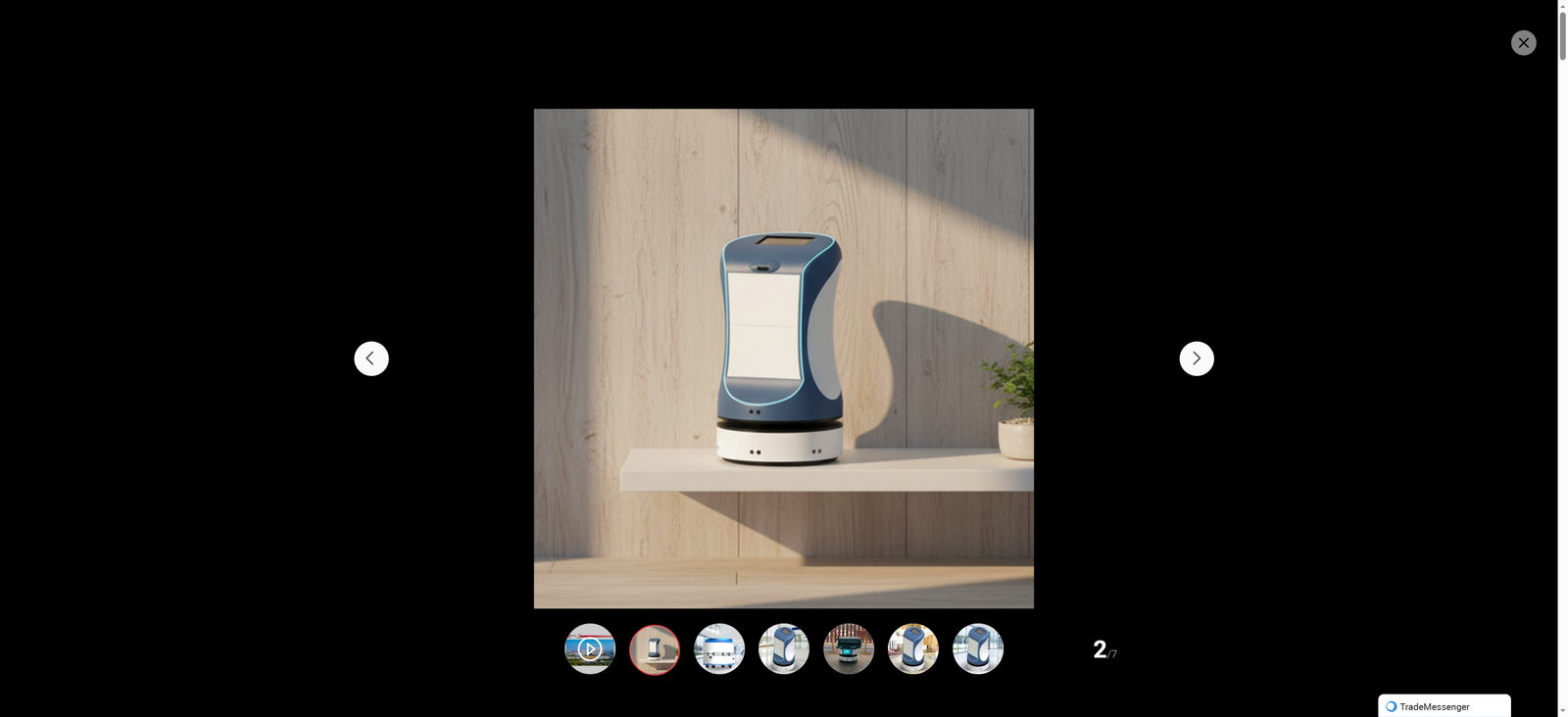
In the fast-paced evolution of the catering industry, efficiency, cost control, and customer experience have become the core pillars of business success. With the rising labor costs, increasing customer demand for quick service, and the pursuit of standardized operations, traditional manual food delivery models are gradually facing bottlenecks. Against this backdrop, versatile food service robots have emerged as a transformative force, redefining the efficiency of restaurant delivery and injecting new vitality into the catering ecosystem. These intelligent robots are not just simple "delivery tools" but comprehensive solutions that integrate multi-scenario adaptation, intelligent navigation, and human-machine collaboration, effectively solving the pain points of restaurant operations and opening up a new era of intelligent catering services.
The versatility of food service robots is the key to their wide application in various catering scenarios. Unlike single-function robots that can only operate in fixed environments, versatile models are designed to adapt to diverse restaurant layouts, crowd densities, and service needs—from small and exquisite cafes to large-scale buffets, from fast-food chains to high-end dining restaurants. Equipped with advanced environmental perception sensors and adaptive navigation algorithms, these robots can flexibly avoid obstacles such as diners, waiters, and tableware, accurately identify table numbers, and complete delivery tasks smoothly even in complex and dynamic environments. For example, in a busy fast-food restaurant during peak hours, the robot can quickly shuttle between the kitchen and dining area, delivering meals to designated tables in sequence without being affected by the chaotic flow of people; in a high-end restaurant that emphasizes quietness and elegance, the robot can adjust its movement speed and noise level to match the dining atmosphere, ensuring that the service experience is not disrupted.
Efficient delivery is the core value that versatile food service robots bring to restaurants. Compared with manual delivery, robots have obvious advantages in speed, stability, and continuity. Manual waiters often need to take care of multiple tasks such as ordering, delivering meals, and clearing tables, which easily leads to delays in delivery during peak hours, wrong delivery of meals, or even spillage of food due to hurry. In contrast, food service robots can achieve 24-hour uninterrupted work without fatigue, and through intelligent scheduling systems, multiple robots can cooperate with each other to form an efficient delivery network. The kitchen staff only needs to place the prepared meals on the robot's tray, and the robot will automatically complete the subsequent delivery process according to the pre-set route and task priority. This not only shortens the delivery time—usually reducing the average meal delivery time by 30% to 50%—but also reduces the error rate of meal delivery to nearly zero, greatly improving the efficiency of restaurant operations and customer satisfaction.
Beyond delivery, versatile food service robots also extend their functions to multiple links of restaurant operations, further optimizing the service chain. Many advanced models are equipped with interactive screens and voice recognition systems, which can provide basic services such as ordering, bill payment, and restaurant introduction for diners, reducing the workload of waiters. When diners finish their meals, the robot can automatically receive the cleaning signal, go to the table to collect used tableware and garbage, and transport them to the kitchen or recycling area, improving the efficiency of table cleaning and turning over. In addition, the robot can collect and analyze operational data in real time during the working process, such as the frequency of meal delivery, the peak hours of diners, and the preference for dishes, and feed these data back to the restaurant management system. Restaurant operators can use these data to adjust staffing, optimize menu settings, and arrange procurement plans, realizing data-driven refined management and reducing operational costs.
The popularization and application of versatile food service robots also reflect the transformation trend of the catering industry towards intelligence and digitization. In recent years, more and more catering brands have begun to deploy intelligent equipment, and food service robots have become a "standard configuration" for many new restaurants. This not only helps restaurants gain a competitive advantage in the market but also promotes the upgrading of the entire catering industry. For small and medium-sized restaurants, although the initial investment in robots may seem relatively high, the long-term cost-saving effect is obvious—robots can replace 2-3 manual waiters, saving a lot of labor costs every year, and the maintenance cost is low. For large catering chains, the unified deployment of versatile robots can realize standardized service across stores, ensuring that the service quality of each store is consistent, and enhancing the brand image.
Of course, the development of versatile food service robots is still in a stage of continuous progress and improvement. At present, some technical bottlenecks still exist, such as the adaptability to extremely narrow spaces, the recognition of special tableware, and the interaction with diners in complex scenarios. However, with the continuous breakthrough of artificial intelligence, sensor technology, and battery technology, these problems will be gradually solved. In the future, food service robots will become more intelligent, humanized, and versatile—they may be able to accurately identify the dietary needs of diners, provide personalized meal recommendations, or even cooperate with smart kitchens to complete semi-automatic meal preparation tasks.
In conclusion, versatile food service robots have become an indispensable part of efficient restaurant delivery solutions with their multi-scenario adaptation, high-efficiency delivery capabilities, and comprehensive operational support. They not only solve the practical pain points of restaurant operations such as labor shortages and low efficiency but also promote the intelligent transformation of the catering industry, bringing a better service experience to diners. As technology continues to advance, the application prospects of food service robots will be broader, and they will continue to drive the catering industry to develop in a more efficient, standardized, and intelligent direction.