
Intelligent Food Delivery Robot Waiter: A New Benchmark for Automatic Service in Public Catering and Entertainment Scenarios
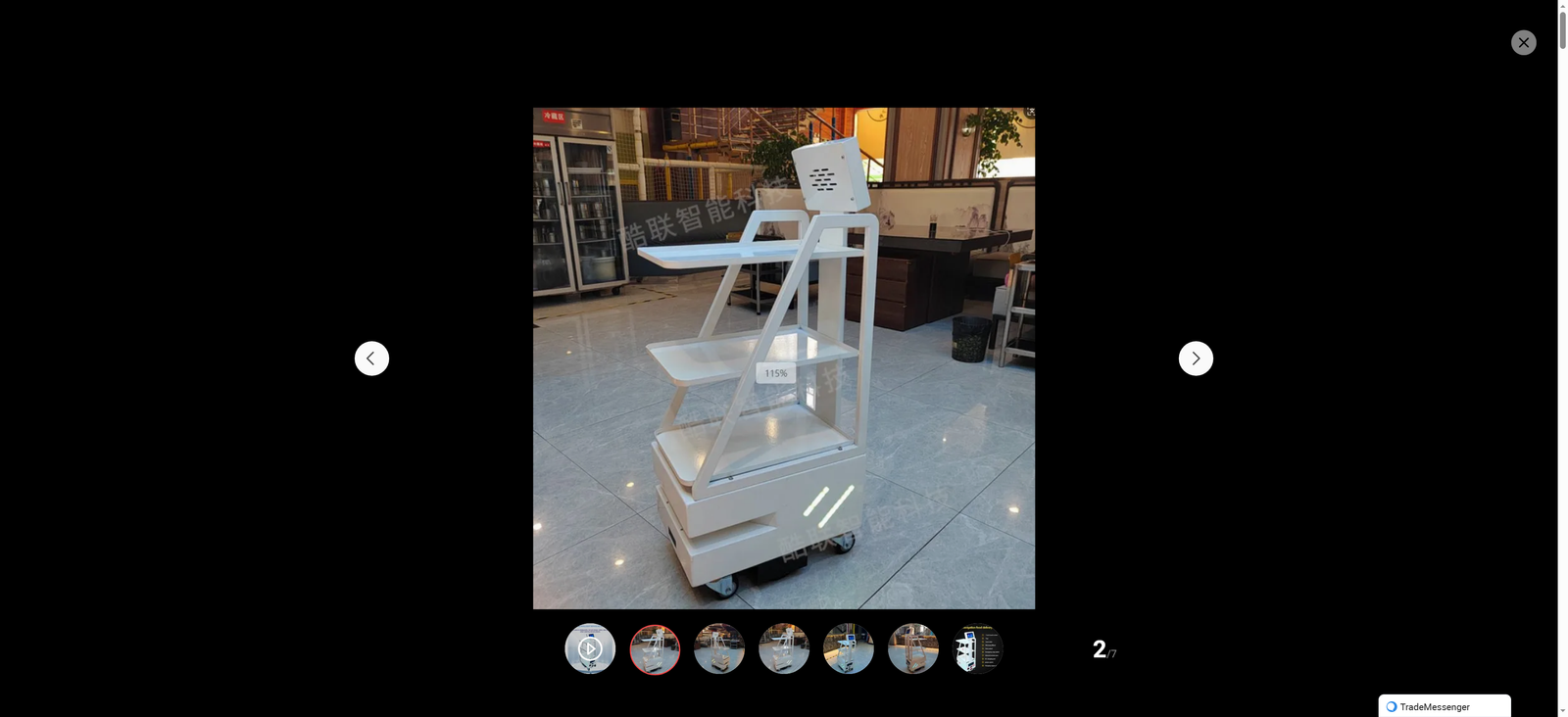
With the rapid development of artificial intelligence and intelligent manufacturing, the service industry is undergoing a profound transformation. Among them, the intelligent food delivery robot waiter, as a representative of intelligent service equipment, has gradually stepped into hotels, restaurants, malls, KTVs and other scenarios with its fully automatic item delivery and serving capabilities, breaking the traditional service mode and injecting new vitality into the service industry.
The core advantage of the intelligent food delivery robot waiter lies in its "fully automatic" service capability, which realizes a full-link intelligent operation from order receiving, food taking, delivery to return without manual intervention. Equipped with advanced sensors, visual recognition systems and path planning algorithms, the robot can accurately identify obstacles in the environment, flexibly avoid pedestrians, tables and chairs, and other objects, and plan the optimal delivery route in real time. Whether it is a crowded restaurant hall, a complex corridor in a hotel, or a busy shopping mall, it can move smoothly and efficiently complete the delivery task. Compared with traditional manual service, the intelligent food delivery robot waiter not only avoids the problems of slow delivery speed, easy error, and high labor intensity caused by human factors but also ensures the stability and standardization of service quality, bringing users a more efficient and high-quality service experience.
As a multi-scenario applicable intelligent equipment, the intelligent food delivery robot waiter shows unique value in different places. In restaurants, it can take over the heavy food delivery work, allowing waiters to focus on providing more intimate services such as order consultation and dining experience, which not only improves the overall service efficiency of the restaurant but also reduces the labor cost of the restaurant. Especially during peak dining hours, the robot can work continuously without fatigue, effectively solving the problem of insufficient manual service and shortening the waiting time of customers. In hotels, the robot can be used to deliver meals, fruits, daily necessities, and other items to guest rooms. It can work 24 hours a day, breaking the time limit of manual service, and bringing guests a more convenient and private living experience. When guests need items late at night, they only need to make a request through the room service system, and the robot can deliver the items to the door accurately, avoiding the trouble of waiting for manual delivery.
In malls, the intelligent food delivery robot waiter can not only deliver food and drinks for merchants in the food court but also undertake the task of commodity distribution and promotion. It can move around the mall with promotional leaflets or small gifts, and interact with consumers through voice broadcast, which not only enriches the promotional form of merchants but also increases the fun of shopping for consumers. In KTVs, the robot can deliver snacks, drinks, and other items to the private rooms quickly and accurately. It can avoid the embarrassment of manual entry and exit of private rooms during the singing process of consumers, and at the same time, it can reduce the workload of KTV waiters, making the service process more smooth and intimate.
In addition to fully automatic delivery and serving, the intelligent food delivery robot waiter also has a variety of humanized functions. It is equipped with a high-definition touch screen and a voice interaction system, which can realize simple voice communication and information inquiry with users. For example, customers can inquire about dish information, mall promotions, and other content through the robot, and the robot can give accurate responses. At the same time, the robot adopts a safe and environmentally friendly design, with smooth edges and corners, anti-collision and anti-fall functions, which can ensure the safety of users and the equipment itself during operation. The body of the robot is easy to clean and disinfect, which can effectively avoid cross-infection of bacteria and viruses, and meet the health and safety requirements of public service scenarios.
The popularization and application of intelligent food delivery robot waiters is not only a manifestation of the progress of science and technology but also a inevitable trend in the transformation and upgrading of the service industry. It not only solves the pain points of high labor cost, low service efficiency, and uneven service quality in the traditional service industry but also promotes the service industry to move towards a more intelligent, standardized, and high-quality direction. With the continuous innovation and improvement of technology, the functions of intelligent food delivery robot waiters will be more comprehensive, and the applicable scenarios will be more extensive. They will become an indispensable part of the service industry and create a better life experience for people.
In the era of intelligence, the intelligent food delivery robot waiter is using its own strength to change the service mode of the industry and lead a new trend of intelligent services. It is believed that in the near future, more and more intelligent food delivery robot waiters will appear in various public service scenarios, bringing more convenience and surprises to people's life and promoting the high-quality development of the service industry.