
Fast Food Delivery Robot: Redefining Catering Services with Touchscreen & 320mmx400mm Tray
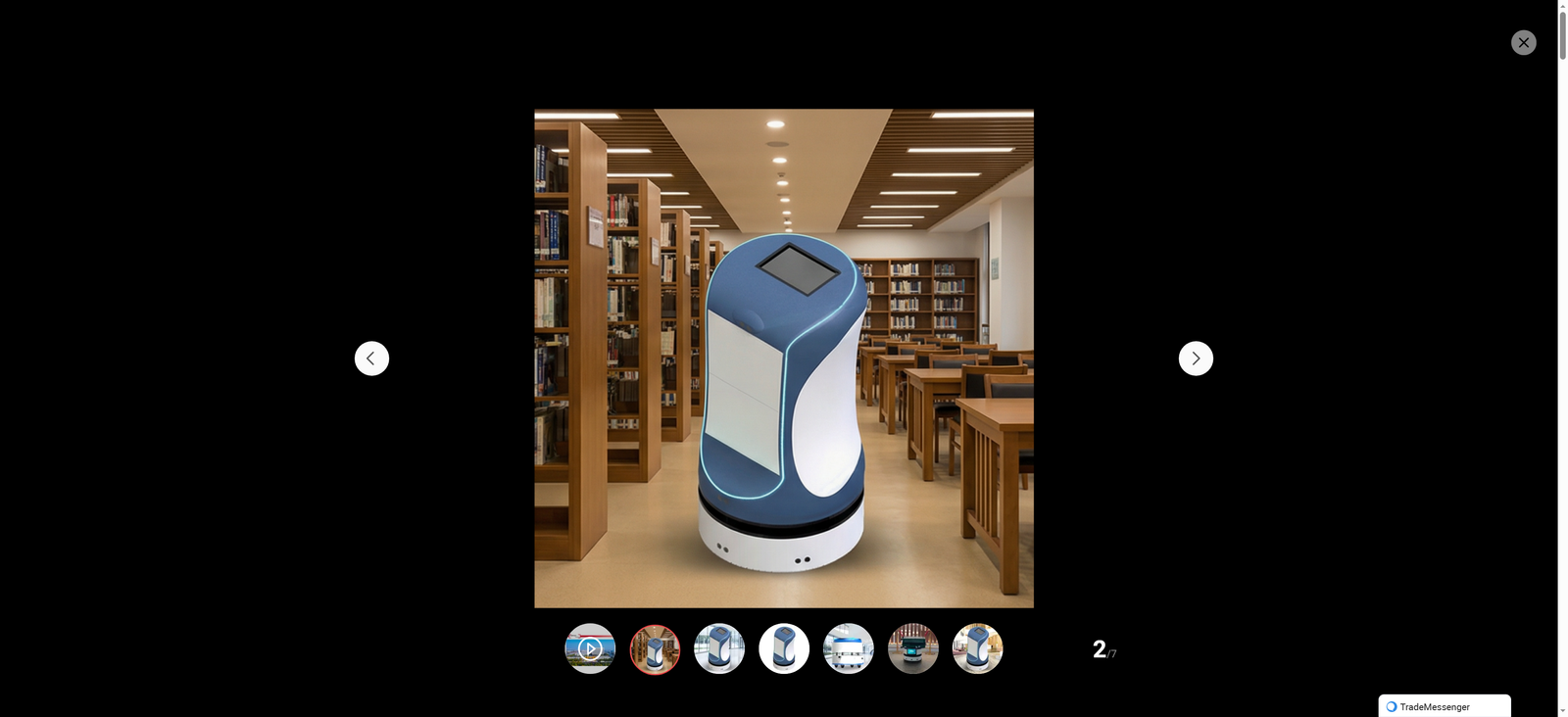
In the fast-paced catering industry, efficiency, accuracy, and user experience have become the core competitiveness for businesses to stand out. With the rapid development of intelligent technology, fast food delivery robots have gradually become a new "standard configuration" in restaurants, canteens, and food courts, breaking the limitations of traditional manual delivery. Among them, the fast food delivery robot equipped with a high-performance touchscreen and a 320mmx400mm standardized tray has emerged as a representative of intelligent catering upgrades, integrating practicality and intelligence to inject new vitality into the catering service chain.
The design of the fast food delivery robot is always based on the actual needs of catering scenarios, and the two core configurations of touchscreen and 320mmx400mm tray are precisely the result of in-depth insight into industry pain points. Unlike ordinary delivery robots with single functions, this robot takes "human-machine collaboration" and "efficient delivery" as the core, making every detail serve the needs of merchants and consumers.
The touchscreen, as the human-machine interaction core of the robot, is not just a simple operation panel but a "smart bridge" connecting merchants, robots, and consumers. For merchants, the touchscreen supports one-click order assignment, route adjustment, and status monitoring. Staff can quickly input delivery information through the high-sensitivity touch interface, set priority delivery orders according to the urgency of customer orders, and even modify the delivery route in real time when the dining area is crowded—greatly reducing the communication cost between front and back offices and improving the overall operation efficiency. For consumers, the touchscreen provides a convenient interactive experience: when the robot arrives at the table, it will automatically pop up a reminder on the screen, and consumers can confirm receipt with a light touch; at the same time, the screen can also display order details, food introduction, and merchant promotions, turning the delivery process into a new marketing channel. In addition, the touchscreen adopts a waterproof and oil-proof design, which is specially optimized for the oily and humid environment of fast food restaurants, ensuring stable operation even after long-term use.
The 320mmx400mm tray size is a carefully calculated "golden specification" that balances load capacity and flexibility. After in-depth research on the packaging specifications of fast food products—such as boxed meals, set meals, drinks, and side dishes—the robot’s tray is designed to a size that can perfectly fit 2-3 standard fast food boxes plus 2 drink cups, which is exactly the average order quantity of a single customer or a small group in fast food scenarios. This size not only avoids the waste of space caused by an overly large tray but also prevents the problem of insufficient load capacity due to an overly small tray. At the same time, the tray is made of food-grade anti-slip material, with a raised edge design around it, which can effectively prevent food boxes and drinks from slipping during delivery, ensuring that the food arrives at the table intact. Compared with traditional manual delivery that requires holding multiple plates, the standardized tray of the robot can carry a fixed quantity of food stably, reducing the risk of food spillage and improving the hygiene and quality of delivery.
Beyond the two core configurations, the fast food delivery robot also has a series of intelligent functions that complement its advantages, making it a comprehensive solution for catering services. It is equipped with advanced laser navigation and obstacle avoidance technology, which can accurately identify the dining area layout, tables, and pedestrians, and plan the shortest delivery route independently—avoiding collisions even in crowded peak hours. The robot’s battery life is optimized for long-term work, supporting 8 hours of continuous delivery on a single charge, which fully meets the business needs of fast food restaurants during peak meal times. In addition, the robot’s body is designed to be compact and lightweight, with a height that is compatible with most fast food restaurant tables, making it easy to take food without bending over, and also convenient for staff to clean and maintain.
The application of this fast food delivery robot has brought profound changes to the catering industry. For merchants, it has significantly reduced labor costs—one robot can replace 2-3 delivery staff, especially solving the problem of labor shortage during peak hours. At the same time, the standardized delivery process reduces human errors such as wrong delivery and missed delivery, improving customer satisfaction. For consumers, the intelligent delivery experience brings a sense of novelty and convenience, and the hygienic and stable delivery process also enhances their trust in the merchant. For the industry, it promotes the transformation of catering services from "labor-intensive" to "intelligent-driven", setting a new benchmark for efficient and high-quality catering services.
In the future, with the continuous iteration of intelligent technology, fast food delivery robots with touchscreen and 320mmx400mm tray will be further upgraded. The touchscreen may add more intelligent functions such as voice interaction and face recognition; the tray may be designed to be adjustable in size to adapt to more food packaging specifications; and the robot will also realize deeper integration with the merchant’s order system and membership system, creating a more personalized service experience. It is not difficult to predict that such intelligent delivery robots will become more popular in the catering industry, gradually changing the way people dine and promoting the continuous development of the catering industry in a more efficient, hygienic, and intelligent direction.
In conclusion, the fast food delivery robot with touchscreen and 320mmx400mm tray is a perfect combination of technology and catering needs. It takes the two core configurations as the starting point, solves the actual pain points of the industry, and brings tangible benefits to merchants and consumers. As a new force in the intelligent transformation of catering, it is not only changing the service mode of the catering industry but also leading a new trend of intelligent life.