
Factory Direct Commercial Delivery Robot: Empowering Smart Services in Multiple Scenarios
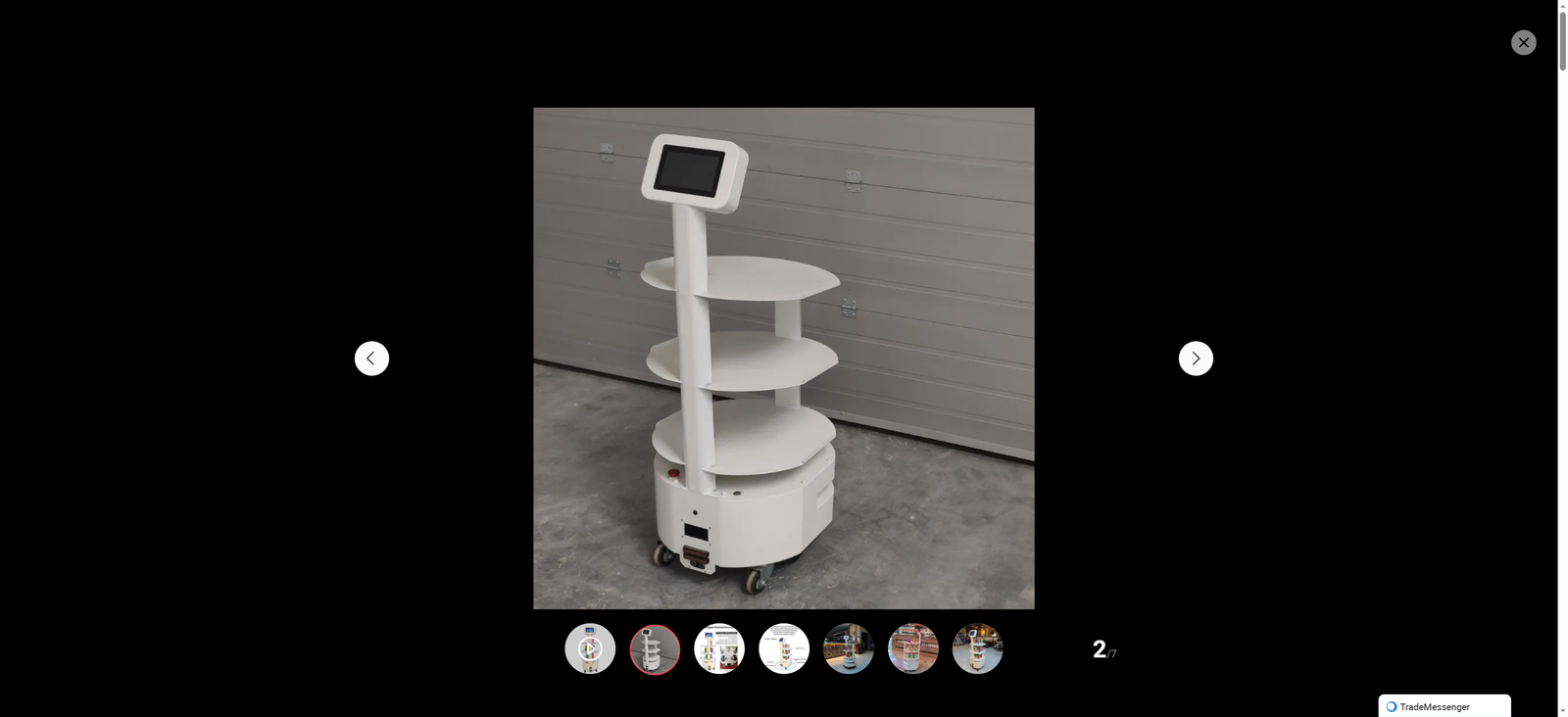
With the rapid development of intelligent technology and the continuous upgrading of the service industry, commercial delivery robots have gradually become a key force in promoting the transformation of smart services. As a high-quality product integrating multiple functions, the factory direct commercial delivery robot — which includes autonomous food serving, high-precision navigation and smart carrying capabilities — is breaking through the limitations of traditional manual services and bringing revolutionary changes to restaurants, hotels, logistics and other fields. Its factory-direct supply model not only ensures product quality and cost-effectiveness but also provides customized solutions for various industries, injecting strong momentum into the upgrading of the smart service industry.
The core competitiveness of the commercial delivery robot lies in its advanced autonomous navigation and smart carrying technology, which lays a solid foundation for its stable operation in complex scenarios. Equipped with a high-precision navigation system, the robot can quickly identify the surrounding environment through multi-sensor fusion technology, including laser radar, visual sensors and ultrasonic sensors. It can accurately map the space, plan the optimal delivery route in real time, and flexibly avoid obstacles such as pedestrians, tables and chairs, and equipment. Whether in the crowded dining area of a restaurant, the winding corridor of a hotel, or the busy logistics warehouse, the robot can complete the delivery task efficiently and safely without manual intervention. At the same time, the smart carrying module of the robot is designed with humanization and practicality in mind. It has a reasonable load-bearing capacity and a stable storage space, which can carry different items such as food and beverages, hotel supplies, and logistics packages. It can also realize automatic picking and placing of items according to preset procedures, greatly reducing the labor intensity of staff.
As a star product in the field of smart catering, the autonomous food serving robot has become a "new favorite" in restaurants of all sizes. In traditional restaurants, waiters often face heavy workloads such as ordering, serving, and clearing tables, especially during peak meal hours, which easily leads to slow service speed and poor customer experience. The application of food serving robots has effectively solved this pain point. After customers place an order, the robot can receive the order information in real time through the connection with the restaurant's intelligent system, go to the kitchen to pick up the food accurately, and then send it to the designated table according to the navigation route. During the delivery process, the robot can also send a reminder to the customer through voice broadcast, which is intimate and convenient. After the customer finishes the meal, the robot can also assist in clearing the tableware, improving the turnover rate of the restaurant. In addition, the robot's appearance is fashionable and cute, which can not only enhance the technological sense and brand image of the restaurant but also bring a novel dining experience to customers, becoming a new highlight of the restaurant's operation.
In the hotel industry, the commercial delivery robot is also playing an increasingly important role, becoming a powerful assistant for hotel services. Hotels often need to provide 24-hour services such as delivering toiletries, mineral water, and laundry to guests, which requires a lot of human resources. The smart carrying robot can realize 24-hour uninterrupted delivery services. Guests only need to place an order through the hotel's mobile app or the intercom in the room, and the robot can quickly deliver the required items to the door of the guest room. The robot can automatically call the elevator, swipe the card to enter the floor, and accurately identify the room number, which is efficient and private, avoiding the trouble of guests waiting for a long time. For hotel management, the application of robots can not only reduce the number of service staff, save labor costs but also standardize the service process, reduce the error rate of manual services, and improve the overall service quality and guest satisfaction. Whether it is a high-end hotel pursuing quality services or an economical hotel focusing on cost control, the commercial delivery robot can meet the personalized service needs of the hotel.
In the logistics field, the factory direct commercial delivery robot has also opened up a new application space with its efficient carrying capacity. In logistics warehouses, shopping malls, and other places, the sorting, transfer, and delivery of goods have always been important links that affect logistics efficiency. The smart carrying robot can realize the automatic transfer of goods between different areas. It can carry multiple boxes of goods at one time, and according to the preset route, complete the transfer task quickly and accurately, which is much more efficient than manual handling. Especially in large logistics warehouses, the robot can work continuously for a long time without fatigue, greatly improving the work efficiency of the warehouse and reducing the risk of manual handling accidents. In addition, the robot can be connected with the logistics management system to realize real-time monitoring and management of the delivery process, which is convenient for managers to grasp the information of goods in a timely manner and optimize the logistics operation process.
The factory-direct supply model of commercial delivery robots is another major advantage that attracts customers. Compared with the traditional multi-level distribution model, factory direct sales can eliminate intermediate links, reduce circulation costs, and let customers obtain high-quality robots at a more favorable price. At the same time, manufacturers can directly communicate with customers, understand the specific needs of different industries and scenarios, and provide customized modification services, such as adjusting the load-bearing capacity, storage space, and functional modules of the robot to meet the personalized needs of customers. In addition, factory direct sales also provide more comprehensive after-sales services, including installation and commissioning, technical training, and maintenance services, ensuring that customers can use the robot smoothly and solving the worries of customers in the process of use.
Looking to the future, with the continuous progress of artificial intelligence, big data, and other technologies, commercial delivery robots will have more powerful functions and broader application prospects. They will not only be limited to food serving, hotel delivery, and logistics carrying but also will be widely used in hospitals, office buildings, communities, and other fields, becoming an indispensable part of smart life. At the same time, the factory direct commercial delivery robot will also move towards a more intelligent, humanized, and miniaturized direction. It will continuously optimize the navigation system, improve the carrying capacity, and enhance the interaction experience, bringing more convenience to people's life and work.
In conclusion, the factory direct commercial delivery robot, with its autonomous navigation, smart carrying, and multi-scenario adaptation capabilities, is profoundly changing the operation mode of the service industry and the logistics industry. It not only improves work efficiency and reduces operating costs for enterprises but also brings a more high-quality and convenient experience to consumers. As a representative of smart service equipment, it will surely play a more important role in the process of digital transformation and upgrading of the industry, and create a better smart future for us.