
The New "Logistics Butler": How Automatic Intelligent Delivery Robots Reshape Urban Life Scenarios
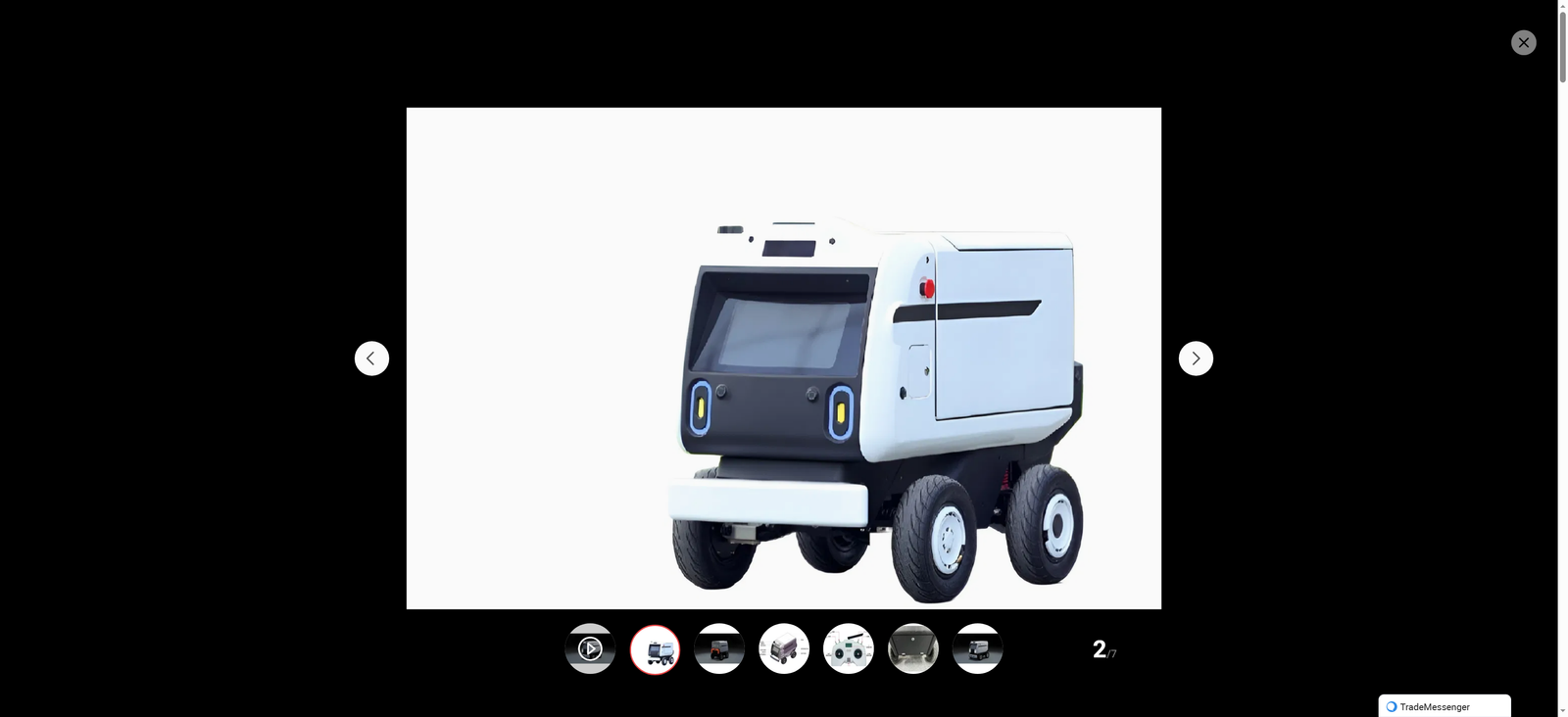
With the rapid development of artificial intelligence and intelligent logistics technology, automatic intelligent delivery service robots have gradually stepped out of laboratories and into various corners of urban life. From quiet communities to lively campuses, from bustling shopping malls to busy office buildings, from elegant hotels to crowded restaurants, these small robots with independent navigation and intelligent interaction capabilities are quietly changing the way people receive services, becoming an indispensable part of a smart city. They are no longer just cold machines, but efficient, reliable and intimate "logistics butlers" that connect people's daily needs with service scenarios.
Communities, as the core carrier of people's daily life, are the first batch of scenarios where intelligent delivery robots have been widely applied. In the past, residents often faced the trouble of missing express deliveries due to going out, or had to go downstairs to pick up packages in bad weather. Now, with automatic intelligent delivery robots, this problem has been effectively solved. Equipped with high-precision positioning systems and obstacle avoidance sensors, the robots can accurately navigate through community roads, take elevators independently, and send packages to the door of residents' homes. For the elderly who are inconvenient to move around, the robots can also complete the delivery of daily necessities such as vegetables and medicines according to the order, greatly improving the quality of life of residents. At the same time, the robots can also realize intelligent management of express deliveries, reducing the workload of property management and avoiding the loss or confusion of packages. The quiet shuttling of robots in the community has become a vivid epitome of smart community construction.
Schools, as a gathering place for students and teachers, have a large demand for material circulation such as teaching materials, office supplies and daily necessities. The application of automatic intelligent delivery robots in schools has not only improved the efficiency of logistics distribution, but also created a safer and more orderly campus environment. In primary and secondary schools, the robots can send textbooks and exercise books to each classroom on time according to the schedule, reducing the workload of teachers. For boarding schools, the robots can also deliver daily necessities such as clothes and snacks to the dormitory buildings, which is convenient for students' life. In universities, with the large campus area and scattered teaching buildings and dormitories, the robots can quickly complete the delivery of documents, experimental equipment and express packages between different buildings, saving students and teachers the time of running back and forth. In addition, the robots can also be used as a "mobile campus guide" to provide route inquiry services for new students, adding a sense of technology to the campus.
Shopping malls, as a comprehensive consumption scenario integrating shopping, catering and entertainment, have a complex flow of people and a large demand for goods distribution. Automatic intelligent delivery robots have become a new "assistant" for merchants and consumers in shopping malls. For consumers, after purchasing goods in the mall, they can choose to let the robot deliver the goods to the parking lot or the mall gate, avoiding the trouble of carrying heavy goods. When dining in the food court of the mall, the robots can accurately send the ordered food to the table according to the order number, reducing the waiting time of consumers and improving the dining experience. For merchants, the robots can realize the transfer of goods between different stores and the delivery of goods from the warehouse to the store, reducing the labor cost of manual delivery and improving the efficiency of goods circulation. The flexible movement of robots in the mall not only enriches the consumption experience of consumers, but also promotes the digital transformation of mall operations.
Residential buildings and office buildings, as two important scenarios of urban living and working, have put forward higher requirements for the efficiency and convenience of delivery services. In high-rise residential buildings, automatic intelligent delivery robots can cooperate with the access control system and elevator system to realize "last 100 meters" delivery. Residents only need to receive the pick-up reminder on their mobile phones and take the packages from the robot, which is fast and convenient. In office buildings, the robots can deliver documents, express packages, office supplies and even take-out meals to the designated office or floor. For white-collar workers who are busy with work, they no longer need to take time to go to the lobby to pick up packages, which greatly improves work efficiency. At the same time, the robots can also avoid the crowding of express delivery personnel in the lobby of office buildings and residential buildings, maintaining the order of public areas and improving the safety of the environment.
Hotels and restaurants, as service industries that focus on customer experience, have also welcomed the application of automatic intelligent delivery robots. In hotels, when guests need towels, mineral water and other daily necessities, they can call the robot through the room phone or mobile app. The robot will send the items to the door of the room accurately and intelligently, avoiding the embarrassment of guests waiting for room service and protecting the privacy of guests. In addition, the robots can also be used for guiding guests, delivering luggage and other services, improving the quality of hotel services. In restaurants, especially in large chain restaurants and Internet-famous restaurants, the robots can undertake the work of ordering, delivering dishes and collecting dishes. They can accurately send the dishes to the corresponding table according to the order information, and can also automatically return to the kitchen after collecting the dishes, reducing the labor intensity of waiters and improving the turnover rate of the restaurant. The warm interaction between the robot and customers also adds a unique fun to the dining experience.
The popularization and application of automatic intelligent delivery service robots in various scenarios are not only the result of technological progress, but also the inevitable demand for the upgrading of urban service industries. These robots rely on advanced technologies such as artificial intelligence, Internet of Things and big data to realize automatic navigation, intelligent scheduling and efficient delivery, which not only reduces labor costs, improves service efficiency, but also brings a more convenient, fast and high-quality life experience to people. However, there are still some problems to be solved in the development of intelligent delivery robots, such as the imperfect adaptation to complex road conditions, the need to further optimize the interaction experience, and the improvement of relevant laws and regulations.
With the continuous progress of technology and the continuous improvement of the industrial chain, it is believed that automatic intelligent delivery service robots will be more mature in technology and wider in application in the future. They will not only be limited to the existing scenarios, but also penetrate into more fields such as medical care and logistics, becoming an important force in promoting the construction of smart cities. At that time, the life of urban residents will be more intelligent and convenient, and the urban operation efficiency will be further improved. The automatic intelligent delivery service robot is not only changing the way we live, but also opening a new chapter of smart urban life.