
Intelligent Atomizing Disinfection Robot: Leading a New Era of Smart Sanitization
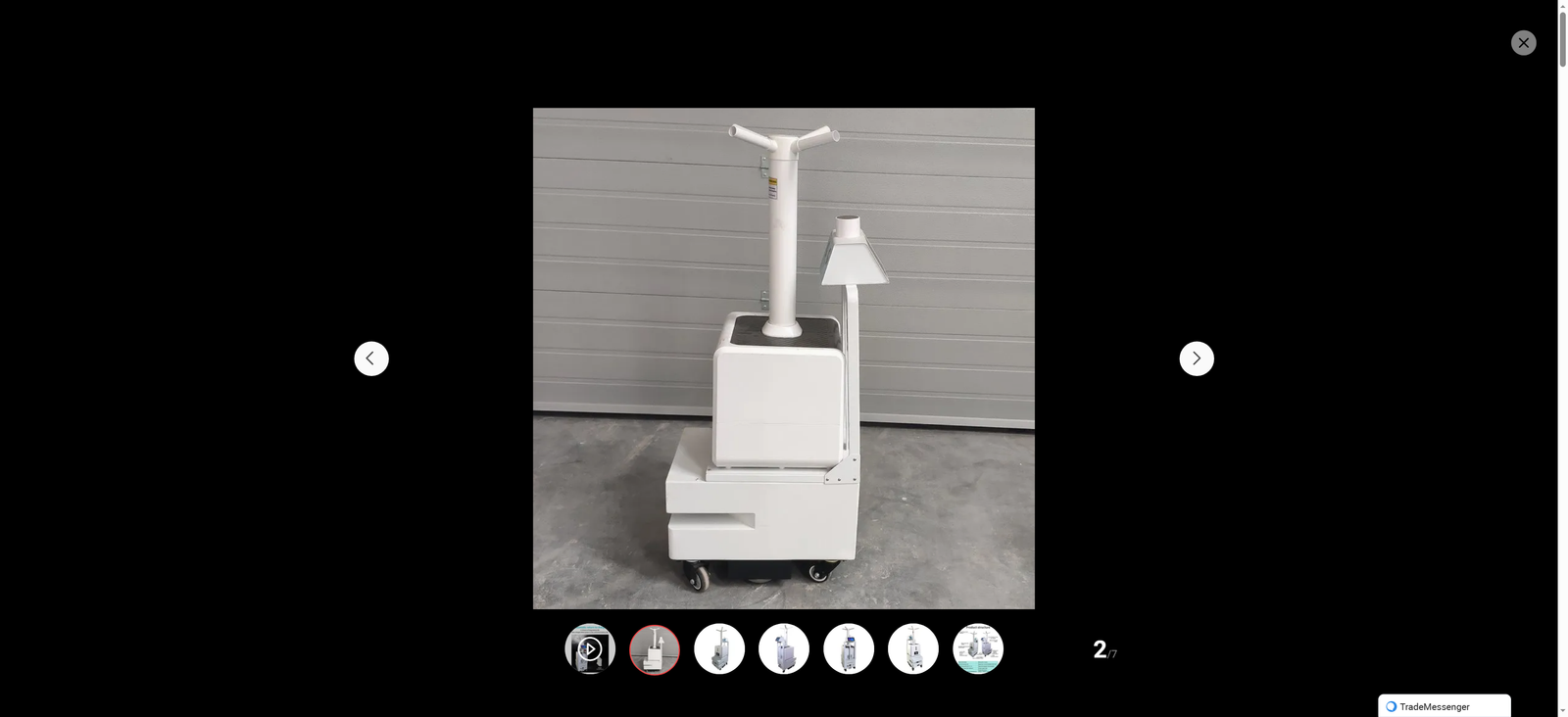
In the context of increasing attention to public health security, traditional manual disinfection methods are gradually unable to meet the needs of high efficiency, full coverage, and contactless operation in complex scenarios. The emergence of intelligent atomizing disinfection robots has revolutionized the sanitization industry, integrating cutting-edge technologies such as second-level obstacle avoidance, automatic charging, high-efficiency atomization, and remote navigation deployment. These robots have become a powerful tool in epidemic prevention and daily hygiene management, providing reliable sanitization solutions for various public places.
High-Efficiency Atomization: Deep Sanitization Without Dead Ends
The core advantage of intelligent atomizing disinfection robots lies in their high-efficiency atomization technology, which breaks through the limitations of traditional spray disinfection. Equipped with advanced ultrasonic or nano-atomization components, these robots can convert disinfectants (such as hydrogen peroxide, hypochlorous acid, and chlorine dioxide) into micron-level particles, with particle diameters even less than 10 μm in high-end models <superscript:8superscript:13</superscript>. These tiny particles have strong suspension and diffusion capabilities, enabling 360° full coverage of the target space, penetrating into corners, gaps, and other hard-to-reach areas that manual disinfection often misses.
The atomization efficiency is also significantly optimized. Taking the GT-R800 model as an example, its atomization rate can reach 2-3 L/h and is adjustable, matching different space sizes and disinfection requirements <superscript:3</superscript>. A large-capacity disinfectant tank (16L or even 22L for some models) allows continuous operation for 5-6 hours, covering an area of 4,000-25,000 m² without refilling, which greatly improves work efficiency and reduces manual intervention <superscript:3superscript:8</superscript>. Moreover, the atomized disinfectant can fully contact air-borne and surface microorganisms, achieving a sterilization rate of over 99.99% and effectively eliminating viruses, bacteria, and spores in 5-10 seconds <superscript:8superscript:13</superscript>.
Second-Level Obstacle Avoidance: Safe Operation in Complex Environments
To ensure safe and stable operation in dynamic and complex environments, intelligent atomizing disinfection robots are equipped with second-level obstacle avoidance systems, integrating multiple sensors and advanced algorithms. Based on laser SLAM (Simultaneous Localization and Mapping) technology, combined with LiDAR, RGB depth cameras, ultrasonic sensors, and infrared detectors, the robots can achieve real-time 3D environmental perception and high-precision positioning <superscript:2superscript:12</superscript>.
The first level of obstacle avoidance is proactive detection and deceleration: when the robot detects obstacles within 2cm to several meters, it immediately reduces its speed and adjusts its path based on the obstacle's size, shape, and movement state <superscript:12</superscript>. The second level is intelligent evasion and path optimization: using optimized A* algorithms and dynamic window fusion technology, the robot can smoothly bypass fixed obstacles (such as pillars, desks, and equipment) and dynamic obstacles (such as pedestrians and moving objects), while ensuring the continuity and completeness of the disinfection path <superscript:9</superscript>. Some high-end models are also equipped with human body induction systems and voice reminders; when detecting personnel entering the disinfection area, they will automatically pause operation or switch to a safe mode to avoid potential risks <superscript:10superscript:11</superscript>.
Remote Navigation Deployment: Intelligent Scheduling at Your Fingertips
Remote navigation deployment technology realizes centralized management and flexible scheduling of disinfection robots, making large-scale and multi-scenario sanitization more efficient. Through a cloud-based control platform or mobile APP, operators can remotely issue disinfection tasks, set parameters such as disinfection time, area, and atomization intensity, and monitor the robot's real-time location, working status, and task progress <superscript:2superscript:6</superscript>.
The robot supports multiple operation modes, including timed disinfection, immediate disinfection, and fixed-point disinfection, which can be customized according to different scenarios such as hospitals, airports, shopping malls, and schools <superscript:3superscript:5</superscript>. For multi-robot collaboration, the cloud platform can intelligently allocate tasks based on priority and area division, realizing seamless coverage of large spaces without task overlap <superscript:8</superscript>. Additionally, the robot can automatically construct a 3D semantic map of the environment, and operators can modify the navigation path remotely according to changes in the site layout, without the need for on-site transformation or debugging <superscript:1superscript:9</superscript>.
Automatic Charging: Uninterrupted Sanitization Around the Clock
To achieve 24/7 uninterrupted operation, intelligent atomizing disinfection robots are equipped with automatic charging functions, which fundamentally solve the problem of limited battery life. When the battery power is lower than the set threshold (usually 20-30%), the robot will automatically suspend the current task, plan the optimal path back to the charging pile, and complete the charging process independently <superscript:2superscript:3</superscript>.
The charging process is efficient and intelligent: most models can be fully charged in 3-4 hours, restoring 100% battery life for continuous operation <superscript:3</superscript>. Some advanced systems also support automatic replenishment of disinfectant while charging, further reducing manual maintenance costs <superscript:8</superscript>. This function ensures that the robot can maintain long-term stable operation in high-demand scenarios such as hospitals and transportation hubs, eliminating the need for manual monitoring of power and charging status<superscript:5superscript:10</superscript>.
Widely Applied: Building a Multi-Scenario Sanitization Defense Line
Integrating the above four core technologies, intelligent atomizing disinfection robots have been widely used in various fields. In hospitals, they can disinfect wards, operating rooms, and isolation areas, reducing cross-infection risks and protecting medical staff and patients <superscript:10superscript:13</superscript>. In transportation hubs such as airports and railway stations, they can quickly sanitize large crowded spaces, preventing the spread of pathogens <superscript:5superscript:8</superscript>. In shopping malls, schools, and office buildings, they can perform regular disinfection to create a safe and hygienic environment for the public <superscript:6superscript:7</superscript>.
As technology continues to evolve, intelligent atomizing disinfection robots will be equipped with more advanced functions such as multi-mode disinfection integration and digital twin management. They are not only a product of the smart era but also a solid guarantee for public health, leading the sanitization industry into a new stage of intelligence, efficiency, and safety.