
Atomizing Disinfection Robot: The Intelligent Innovation of Mobile Sterilization with Hydrogen Peroxide Compatibility
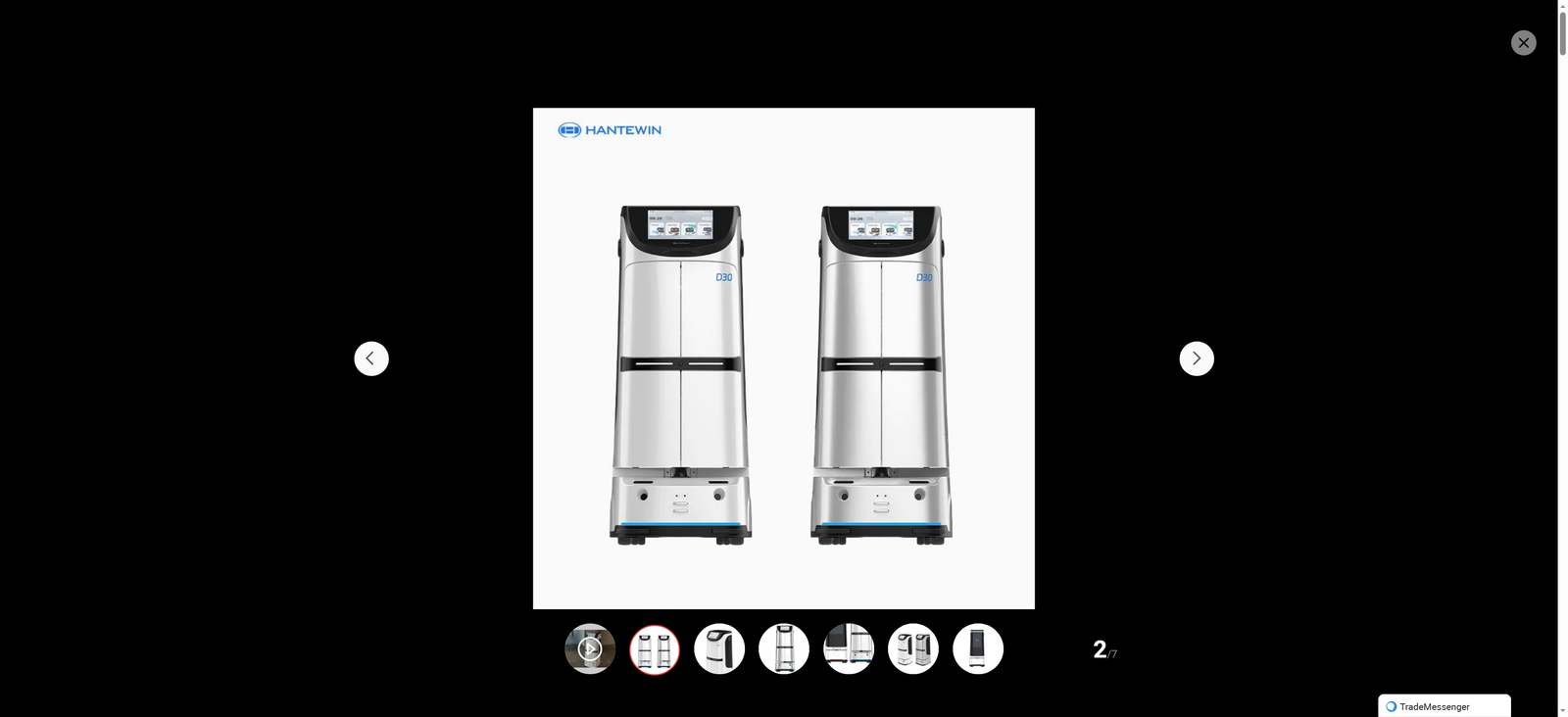
In the era of increasing attention to public health and biosecurity, traditional disinfection methods are gradually unable to meet the needs of high-efficiency, full-coverage, and low-risk sterilization in complex scenarios. The emergence of atomizing disinfection robots—integrating mobile operation, hydrogen peroxide compatibility, and intelligent control—has revolutionized the field of environmental disinfection, becoming a core tool in medical, food processing, and public place protection.
Core Technology: Hydrogen Peroxide Atomization for Efficient Sterilization
At the heart of the atomizing disinfection robot lies its compatibility with hydrogen peroxide, a high-efficiency, environmentally friendly disinfectant, and advanced atomization technology. Hydrogen peroxide exerts its bactericidal effect through strong oxidation, decomposing into harmless water and oxygen after disinfection without leaving toxic residues, making it suitable for high-demand scenarios such as medical institutions and laboratories . The robot adopts micron-level atomization technology, breaking down hydrogen peroxide into tiny droplets with an average particle size of 1-15μm . These droplets form Brownian motion in the air, diffusing evenly into every corner of the space—including gaps and dead spots that traditional disinfection methods (such as ultraviolet irradiation and manual spraying) cannot reach .
Experimental data shows that hydrogen peroxide atomizing disinfection can achieve a killing rate of over 99.99% for Staphylococcus albus and a消亡 rate of more than 90% for natural airborne bacteria . Some high-performance models even reach a 6-log level disinfection effect, effectively eliminating stubborn spores and viruses . Compared with traditional chemical fumigants, hydrogen peroxide atomization requires only a few milliliters of disinfectant per cubic meter, minimizing the impact on environmental humidity (increasing by less than 5%) and avoiding damage to precision instruments .
Mobile Sterilization: Breaking Spatial Limitations for Full Coverage
Unlike fixed disinfection equipment, the atomizing disinfection robot is equipped with a flexible mobile base, enabling it to overcome spatial constraints and achieve mobile sterilization in multiple areas. The mobile system integrates advanced navigation technologies such as SLAM positioning and infrared obstacle avoidance, allowing the robot to autonomously plan routes, identify obstacles (including humans and equipment), and adjust its path in real time . This mobility ensures 360° full-coverage disinfection—whether in large spaces like airport waiting halls or narrow areas such as hospital corridors and equipment gaps.
The efficiency of mobile sterilization is far superior to manual operations. A single robot can disinfect over 10,000 square meters of space, equivalent to the workload of 2-3 skilled disinfection workers . For example, some models can complete disinfection of a 1,000 cubic meter space in just 15 minutes, and with a large-capacity disinfectant tank (up to 23.8L), they can work continuously for 10 hours without refilling . In logistics and transportation scenarios, mobile disinfection robots can also be customized for vehicle disinfection, with 360° spraying through vertical columns and ground nozzles to cover the vehicle body and undercarriage, preventing the spread of pathogens through transportation .
Intelligent Control: Realizing Automated and Refined Operation
Intelligent control is the key to maximizing the performance of atomizing disinfection robots, enabling unattended operation, precise parameter adjustment, and data traceability. The robot is equipped with a PLC controller, touch screen, and sensor cluster, supporting one-click operation and preset program modes . Operators can set disinfection time, spray volume, and navigation routes through the touch screen or remote control, and even activate delayed start functions to ensure safety in occupied spaces .
Advanced intelligent functions further enhance operational safety and convenience. The robot’s obstacle avoidance system uses image recognition and infrared sensors to detect pedestrians and objects in real time, avoiding collisions in crowded areas . Some models support voice interaction—after matching the operator’s identity through face recognition, they can execute disinfection and movement commands via voice, simplifying operation . Additionally, the intelligent control system can automatically record disinfection data (including time, area, and disinfectant dosage), generate reports to meet GMP and ISO certification requirements, and realize data-driven management .
For special scenarios, the robot’s intelligent system can make dynamic adjustments. For example, in spaces with different ceiling heights, it adjusts its moving speed through algorithms to maintain a uniform disinfectant concentration . In medical settings such as ICUs and operating rooms, it can switch between different disinfection modes according to terminal disinfection or preventive disinfection needs, ensuring compliance with medical standards .
Wide Applications: Guarding Multiple Fields of Public Health
Benefiting from its efficient disinfection effect, mobile flexibility, and intelligent operation, the atomizing disinfection robot has been widely applied in various fields. In the medical industry, it is a core tool in operating rooms, ICUs, infectious disease isolation wards, and microbiological laboratories, reducing the risk of hospital-acquired infections . In food processing and pharmaceutical factories, it controls microbial contamination in clean areas, extending product shelf life and ensuring product safety .
In public places with high passenger flow—such as airports, railway stations, schools, and shopping malls—the robot performs regular preventive disinfection. For instance, Hangzhou East Railway Station uses disinfection robots for scheduled daily disinfection, covering ticket gates and waiting halls to reduce cross-infection risks . In logistics and cold chain industries, it disinfects transport vehicles to prevent the spread of pathogens through goods . The global market for medical cleaning and disinfection robots is growing rapidly, with a CAGR of 8.9%, expected to reach 2.72 billion US dollars, reflecting the strong market demand for such equipment .
Future Trends: Towards More Intelligent and Diversified Development
With the advancement of artificial intelligence and material science, atomizing disinfection robots are moving towards more intelligent and multi-functional directions. Future models may integrate electrochemical technology to generate hydrogen peroxide on-site by electrolyzing water, eliminating the need for manual disinfectant preparation . The integration of IoT technology will enable centralized management of multiple robots, realizing unified scheduling and remote monitoring across multiple areas . Additionally, the combination of multi-disinfection technologies (such as hydrogen peroxide atomization and plasma modules) will further enhance disinfection efficiency and adaptability to complex pathogens .
As a key innovation in the field of disinfection, the atomizing disinfection robot—with its hydrogen peroxide compatibility, mobile operation, and intelligent control—has become an indispensable part of modern public health protection. It not only improves disinfection efficiency and quality but also reduces the risk of operator exposure, creating a safer and more reliable environmental protection barrier for society.