
Delivery Robot with Large-Screen Advertising: Redefining Intelligent Services in Catering and Hotel Industries
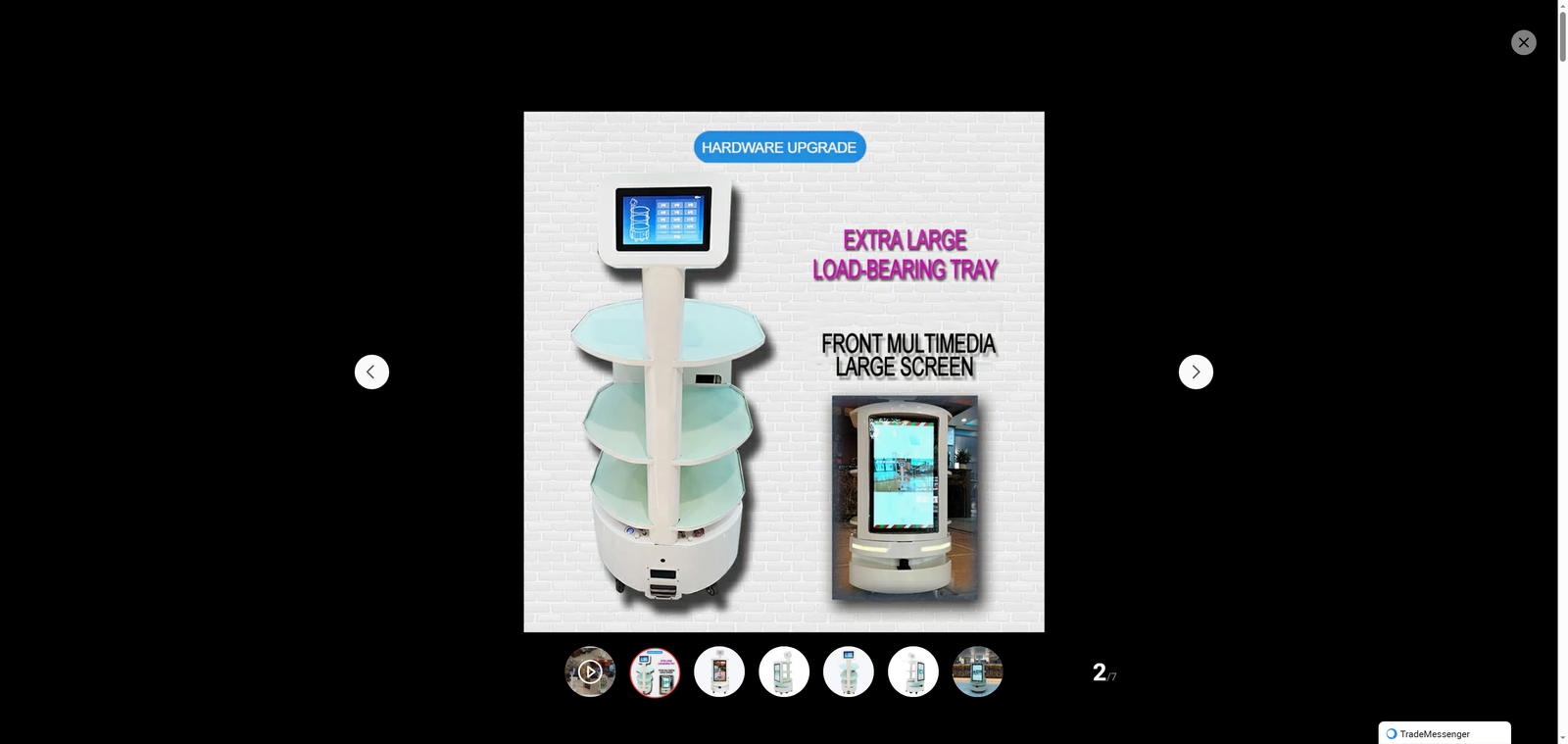
With the rapid development of artificial intelligence and smart service industries, delivery robots have gradually become an indispensable part of catering and hotel operations, breaking the traditional service model with efficient and intelligent features. Among them, the delivery robot integrated with large-screen advertising functions——as a new type of intelligent equipment that combines "delivery services" and "advertising dissemination"——is quietly reshaping the service ecology and commercial value of catering and hotel industries. It is no longer a simple tool for transporting goods, but a multi-functional intelligent terminal that connects services, users and commercial marketing, injecting new vitality into the digital transformation of the industry.
The delivery robot with large-screen advertising is a perfect integration of intelligent delivery technology and digital advertising media, which has inherent technical advantages and functional characteristics that traditional delivery robots do not have. In terms of core delivery functions, it relies on advanced SLAM navigation technology, multi-sensor fusion and intelligent path planning algorithms to accurately identify the environment, avoid obstacles flexibly, and complete the delivery tasks of meals, tableware, hotel supplies and other items efficiently. Whether it is a catering store with a dense flow of people and complex passages or a hotel with multiple floors and scattered rooms, it can move freely, reduce the labor burden of service staff, and improve the efficiency and quality of service.
The large-screen advertising module installed on the robot is the key to realizing its multi-functional value. Different from the traditional fixed advertising positions, the delivery robot with large-screen advertising has strong mobility and targeted dissemination characteristics. It can move with the flow of people in the catering and hotel scenes, and push advertising information to target users in a precise manner. The large screen adopts high-definition display technology, which has clear picture quality and vivid color, and can display not only text, pictures, but also dynamic videos and interactive advertisements, which greatly enhances the attraction and dissemination effect of advertising. For example, in a catering store, the robot can push new dishes, preferential activities and membership benefits while delivering meals; in a hotel, it can display hotel services, surrounding tourist attractions, local characteristic products and other information when delivering daily necessities to guests, realizing the organic combination of service and marketing.
In the catering industry, the application of delivery robots with large-screen advertising has brought a comprehensive upgrade to the operation mode. For catering merchants, on the one hand, the robot replaces manual delivery, which can effectively reduce the labor cost, especially in the peak dining period, it can solve the problem of insufficient service staff, shorten the delivery time of meals, and improve the guest's dining experience. On the other hand, the large-screen advertising function provides a new marketing channel for merchants. Compared with the traditional leaflets, posters and other promotion methods, the robot advertising has lower cost, wider coverage and stronger interactivity. Merchants can update the advertising content in real time according to their business needs, and carry out targeted marketing for different groups of guests, so as to improve the conversion rate of new products and the repurchase rate of guests. In addition, the robot itself, as a novel intelligent device, can also become a "net red check-in point" in the store, attracting young consumers to take photos and share, and bringing more traffic to the store through word-of-mouth communication.
In the hotel industry, the delivery robot with large-screen advertising has also become a powerful assistant for hotels to improve service quality and create differentiated competitiveness. For hotels, the robot can complete the delivery of towels, mineral water, snacks and other items 24 hours a day, avoiding the inconvenience caused by guests waiting for service staff, and realizing "contactless service" to a certain extent, which is in line with the health and safety needs of guests in the new era. The large-screen on the robot can not only display hotel service information, but also cooperate with surrounding businesses to carry out joint marketing, such as recommending nearby scenic spots, restaurants, shopping malls and other resources, which enriches the service content of the hotel and improves the guest's sense of experience and satisfaction. At the same time, the advertising income brought by the large-screen can also become a new profit growth point for the hotel, increasing the additional value of the hotel's operation.
The development of delivery robots with large-screen advertising is not only a manifestation of the intelligence of the service industry, but also a reflection of the deep integration of technology and commerce. With the continuous progress of technology, such robots will be more intelligent and humanized in the future. For example, through the combination of face recognition technology and big data analysis, they can accurately identify the identity and preferences of guests, and push more personalized advertising and service information; through the improvement of voice interaction technology, they can realize more natural communication with guests, and provide more intimate services such as consulting and guidance. At the same time, with the expansion of application scenarios, such robots will not only be limited to catering and hotel industries, but also be applied to more fields such as shopping malls, hospitals and office buildings, creating a broader market space.
Of course, the popularization and application of delivery robots with large-screen advertising also need to face some challenges, such as the high initial investment cost, the need for regular maintenance and technical updates, and the need to balance the advertising push and the guest's service experience to avoid causing guest disgust. However, with the continuous reduction of intelligent hardware costs and the continuous improvement of technical maturity, these problems will be gradually solved.
In conclusion, the delivery robot with large-screen advertising, as a new type of intelligent service equipment, has realized the dual value of "service marketing" in the catering and hotel industries. It not only improves the service efficiency and quality, reduces the operation cost, but also creates a new marketing model, which promotes the digital transformation and high-quality development of the industry. In the future, with the deep integration of artificial intelligence, big data and other technologies, such robots will play a more important role in the service industry, bringing a more intelligent, convenient and personalized experience to people's life and consumption.