
Multi-Purpose Delivery Robot: A New Engine for Hotel Service Upgrade
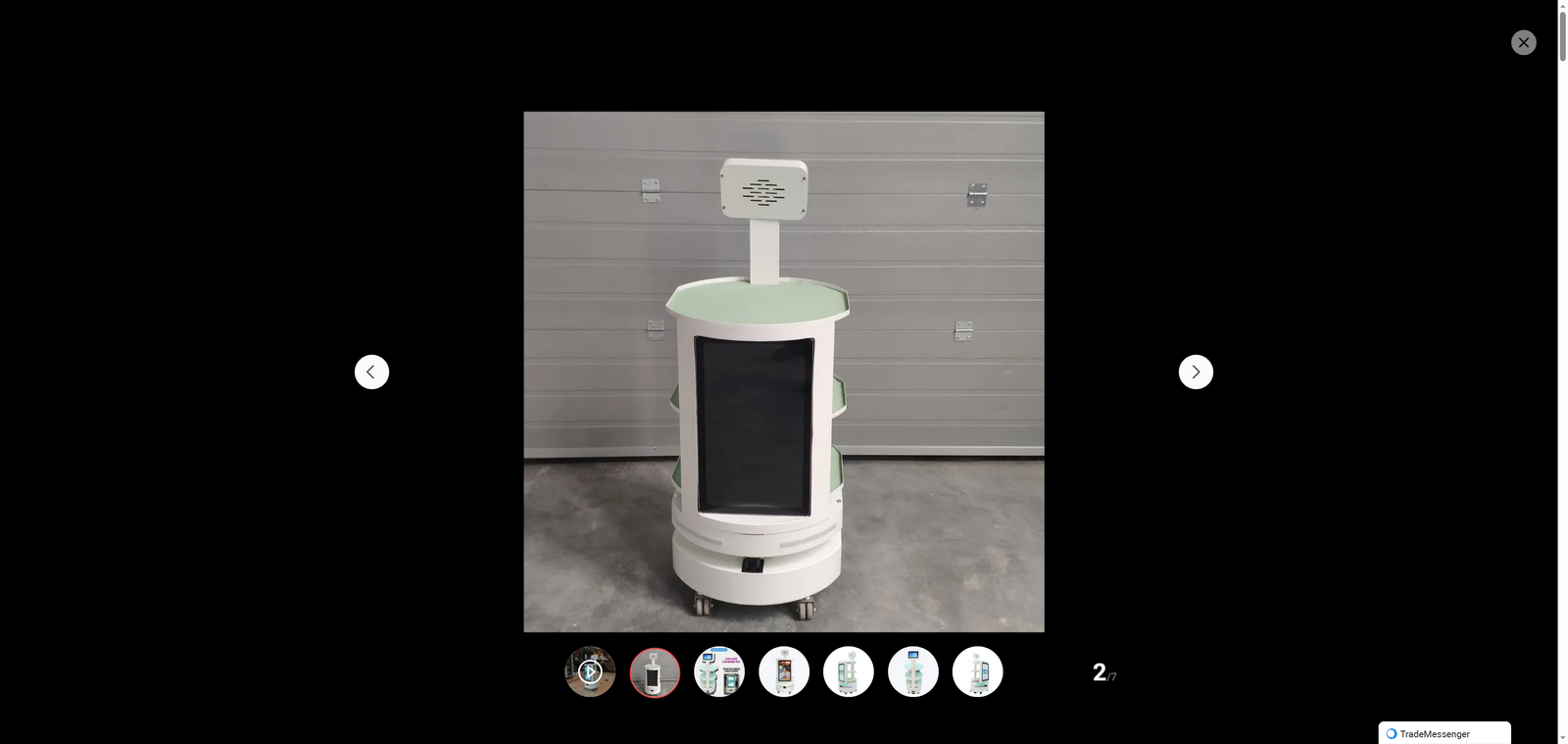
In the era of intelligent consumption, hotels are no longer just a place for accommodation. They are constantly exploring new ways to improve service quality, enhance guest experience and optimize operational efficiency. Against this backdrop, the multi-purpose delivery robot equipped with advertising screens and featuring balanced food delivery and multi-functional services has emerged as a new star in the hotel industry. It breaks through the single function of traditional delivery robots, integrates service, marketing and experience, and injects a strong impetus into the intelligent transformation of hotels.
The balanced food delivery function is the core advantage of this robot, laying a solid foundation for its application in hotels. Food delivery in hotels has always faced many challenges, such as the need to ensure the stability of meals during delivery, avoid spilling and cooling, and also need to accurately deliver to the designated room efficiently. The multi-purpose delivery robot has been specially optimized for food delivery scenarios. It adopts an advanced dynamic balance control system, which can maintain a stable state even when moving through corridors, turning corners or encountering slight obstacles. The built-in food storage compartment is designed with a shockproof and heat preservation structure. It can not only prevent soup and dishes from spilling during transportation, but also maintain the appropriate temperature of the food, ensuring that guests can enjoy delicious meals with the same taste as they just came out of the kitchen.
Compared with manual food delivery, the robot can avoid the delay caused by manual busy work, and can accurately complete the delivery task 24 hours a day without rest. It also reduces the contact between staff and guests, which is more in line with the health and safety needs of guests in the post-epidemic era. At the same time, the robot can automatically plan the optimal delivery route through the indoor positioning system, avoiding detours and improving delivery efficiency, which greatly reduces the work pressure of hotel service staff and allows them to focus more on providing high-value personalized services.
The advertising screen equipped on the robot is another bright spot, turning the robot into a mobile marketing terminal in the hotel. Different from the fixed advertising positions such as hotel lobbies and elevators, the delivery robot moves in various areas of the hotel, including lobbies, corridors, restaurant halls and other places with high guest flow, which can achieve all-round and non-dead-corner advertising coverage. The advertising screen adopts a high-definition display screen with vivid and clear pictures, which can play hotel promotion information, such as special room packages, catering preferential activities, conference services and other content, guiding guests to consume further.
In addition, the advertising screen can also carry out cooperative promotion with surrounding businesses, such as scenic spots, shopping malls, theaters and other institutions, bringing additional income to the hotel while enriching the information acquisition channels of guests. What's more, the robot can push targeted advertising content according to the time period and scene. For example, it can play breakfast preferential information in the morning, afternoon tea recommendations in the afternoon, and night snack and leisure activity introductions in the evening, realizing precise marketing and improving the conversion rate of advertising. This kind of mobile advertising form not only enhances the interactivity and interest of advertising, but also does not cause a sense of oppression to guests, which is more easily accepted by them.
Beyond food delivery and advertising, the multi-functional service capability of the robot further expands its application scenarios in hotels, becoming a "all-round housekeeper" around guests. In the hotel lobby, the robot can provide basic consulting services. Guests can inquire about check-in and check-out procedures, hotel facilities, surrounding traffic and other information through the touch screen on the robot, and the robot will give accurate answers in a timely manner. When guests need to get items such as mineral water, towels and toiletries, they can place an order through the hotel app or the call button in the room. The robot will quickly deliver the items to the room door, avoiding the trouble of guests going to the front desk in person.
In addition, the robot can also undertake tasks such as document delivery and laundry delivery, which greatly improves the efficiency of hotel internal logistics. Some high-end models are also equipped with voice interaction functions. Guests can control the robot through voice commands, such as letting the robot play music, broadcast weather forecasts and other services, which adds more fun to the guest's stay experience. The multi-functional integration makes the robot no longer a simple delivery tool, but an important part of the hotel service system, which comprehensively improves the quality and efficiency of hotel services.
The popularization and application of multi-purpose delivery robots not only brings tangible benefits to hotels, but also conforms to the development trend of the intelligent service industry. For hotels, the robot can reduce labor costs in the long run, improve service efficiency and service quality, enhance the hotel's brand image and market competitiveness. For guests, the intelligent service brought by the robot meets their demand for high-quality, convenient and healthy services, and brings a new and unique stay experience. With the continuous progress of technology, the functions of multi-purpose delivery robots will be more perfect. In the future, they may realize more intelligent interactions with guests, such as face recognition to accurately deliver services, and seamless connection with the hotel's intelligent management system to achieve more efficient operation and management.
In conclusion, the multi-purpose delivery robot equipped with advertising screens and integrating balanced food delivery and multi-functional services is a powerful weapon for hotels to achieve intelligent upgrading. It not only solves the pain points of traditional hotel services, but also creates new value for hotels and guests. In the future, with the deep integration of artificial intelligence, Internet of Things and other technologies and the hotel industry, such multi-purpose service robots will become a standard configuration in more hotels, leading the hotel industry to enter a new era of intelligent services.