
Autonomous Mobile Disinfection Robot for Operating Room Safety
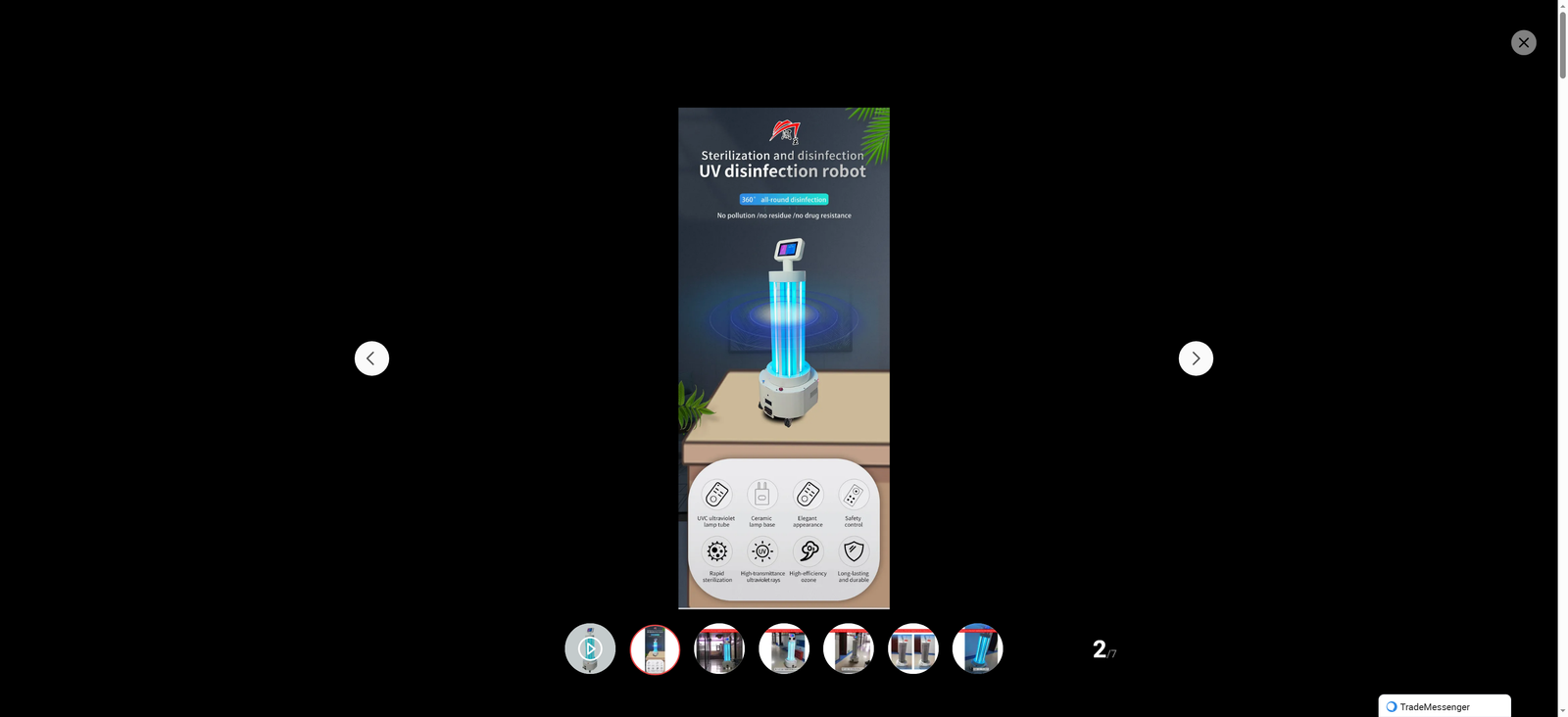
The operating room (OR) is the core area of medical institutions, where the quality of environmental disinfection directly determines surgical safety and patient prognosis. Even minor omissions in disinfection may lead to surgical site infections (SSIs), which not only prolong the patient's hospital stay and increase medical costs but also pose a serious threat to life safety. Traditional manual disinfection methods are limited by human factors such as operational standardization and work fatigue, making it difficult to achieve consistent, comprehensive, and traceable disinfection effects. Against this background, autonomous mobile disinfection robots have emerged as a revolutionary solution, integrating advanced robotics, disinfection technology, and artificial intelligence to build a solid "invisible barrier" for operating room safety.
Core Technical Principles: Integration of Mobility and High-Efficiency Disinfection
Autonomous mobile disinfection robots achieve a leap from "passive manual operation" to "active intelligent operation" by integrating three core technical modules: autonomous navigation, high-efficiency disinfection, and intelligent control. Among them, the autonomous navigation system is the basis for realizing unattended operation. Most advanced robots adopt laser SLAM (Simultaneous Localization and Mapping) technology, which combines laser radar with multi-sensor fusion (including infrared sensors, ultrasonic sensors, and high-definition cameras) to quickly scan the operating room environment, establish a high-precision 2D/3D map, and realize real-time path planning and dynamic obstacle avoidance. This technology enables the robot to flexibly navigate around complex surgical equipment, accurately cover every corner of the operating room, and avoid missed disinfection in dead corners such as under the operating table and beside medical devices that are easily overlooked by manual work.
In terms of disinfection technology, vaporized hydrogen peroxide (VHP) has become the mainstream solution for operating room robots due to its broad-spectrum bactericidal effect and environmental friendliness. Taking the AGV-SD6 VHPS® disinfection robot as an example, it adopts high-speed airflow and flash evaporation technology to vaporize 35% hydrogen peroxide solution into steam, which is then evenly diffused into the space through nozzles. The hydrogen peroxide vapor contains a large number of hydroxyl radicals, which can effectively attack the cell membranes and DNA of microorganisms such as bacteria, fungi, viruses, and spores, achieving a killing rate of over 99.9%. Unlike traditional fixed disinfection equipment, the mobile chassis allows the robot to adjust the disinfection position in real-time, ensuring that the disinfectant quickly reaches the target concentration in the entire operating room and realizing all-round, dead-corner-free disinfection. Additionally, some advanced models are equipped with a self-decomposition device that can decompose residual hydrogen peroxide into water and oxygen after disinfection, avoiding damage to precision medical equipment and ensuring the safety of subsequent surgical operations.
The intelligent control module further enhances the reliability of disinfection operations. Through industrial-grade wireless networks (802.11b/g/n) or 4G communication, the robot can be remotely controlled within a distance of more than 100 meters, and the operation status can be monitored in real-time. It supports three-level authority management and complete data tracing functions, automatically recording operation logs, disinfection time, concentration curves, and environmental parameters (temperature, humidity), and generating standardized data reports. These data not only meet the certification requirements of international standards such as FDA, cGMP, and EPA but also provide data support for hospital infection control departments to analyze disinfection effects and optimize work processes.
Practical Application Advantages: Reconstructing the Operating Room Disinfection Process
Compared with traditional disinfection methods, autonomous mobile disinfection robots have obvious advantages in efficiency, stability, and safety, bringing a comprehensive upgrade to the operating room disinfection process. In terms of efficiency improvement, a single robot can independently complete disinfection tasks in multiple operating rooms by virtue of its mobile chassis, which greatly reduces the need for fixed disinfection equipment and saves equipment investment and space costs. Tests show that advanced robots can complete 3D scanning of a 100-square-meter operating room in 5 seconds, and through machine learning algorithms, identify high-frequency contact points (such as surgical instrument handles and operating table buttons) and prioritize disinfection, which is 40% more efficient than manual disinfection. For large general hospitals with heavy surgical tasks, this efficiency improvement can effectively shorten the turnover time between operations and increase the utilization rate of operating rooms.
In terms of disinfection stability, the robot avoids the uncertainty of manual operation and ensures that each disinfection process strictly complies with operating specifications. Statistics show that hospitals using autonomous mobile disinfection robots have an average 20% reduction in postoperative infection rates, which significantly improves the overall level of infection control. For example, a large comprehensive hospital found through the robot's disinfection data records that the operating room usage frequency is the highest between 10 am and 12 pm. By adjusting the robot's disinfection frequency in this time period, the postoperative infection rate in the corresponding period was further reduced by 15%. This data-driven infection control model has become an important part of modern hospital management.
In terms of safety protection, the robot realizes unattended disinfection, which fundamentally avoids the exposure of medical staff to high-concentration disinfectants and virus aerosols, reducing the risk of occupational exposure. At the same time, the robot is equipped with a human body sensing system. When it detects that medical staff enter the operating room during disinfection, it will automatically stop working and give an alarm to ensure the safety of personnel. The low-concentration hydrogen peroxide composite disinfectant used by the robot is environmentally compatible and will not cause corrosion or damage to expensive surgical equipment, solving the long-standing contradiction between thorough disinfection and equipment protection in operating rooms.
Future Development Trends: Towards a More Intelligent Infection Control Ecosystem
With the continuous integration of 5G, the Internet of Things (IoT), and edge computing technologies, autonomous mobile disinfection robots for operating rooms are moving towards a more intelligent, integrated, and multi-functional direction. In terms of perception and decision-making, the future robot will further optimize the multi-modal perception system, integrate biological sensors to real-time detect the concentration of pathogens in the operating room air, and automatically adjust disinfection intensity and time according to the detection results to realize "predictive disinfection" instead of "regular disinfection". Through the integration of natural language processing technology, it can also provide real-time infection control suggestions for medical staff, becoming an intelligent assistant for operating room safety management.
In terms of system integration, the robot will achieve seamless connection with other medical systems in the hospital, such as the operating room scheduling system, electronic medical record system, and equipment management system. For example, after a surgical operation is completed, the scheduling system will automatically issue a disinfection task to the robot, and the robot will complete the disinfection work according to the surgical type and pollution level, and synchronize the disinfection data to the electronic medical record system to form a closed loop of "surgery - disinfection - record". This integrated operation mode will further improve the efficiency of operating room management and realize refined and intelligent safety control.
In terms of market development, the global intelligent disinfection robot market is growing at a compound annual growth rate of more than 30%, and it is expected to reach 50 billion US dollars by 2025, with the operating room as the core application scenario accounting for an increasing proportion. With the continuous advancement of the "Healthy China 2030" strategy and the increasing strictness of hospital infection control standards, autonomous mobile disinfection robots will gradually become standard equipment in operating rooms, bringing a new revolution to surgical safety protection.
Conclusion
Autonomous mobile disinfection robots have broken the limitations of traditional manual disinfection with their unique technical advantages, reshaping the operating room disinfection process from efficiency, stability, and safety. As an important part of intelligent medical equipment, they not only provide a reliable guarantee for reducing postoperative infections and improving surgical safety but also promote the digital transformation of hospital infection control. With the continuous iteration of technology and the expansion of application scenarios, these intelligent robots will play a more important role in building a safe, efficient, and intelligent operating room environment, making greater contributions to protecting patient health and promoting the high-quality development of the medical industry.