
Autonomous Food Delivery Robot: The New Engine of Efficiency for Commercial Grade Catering Services
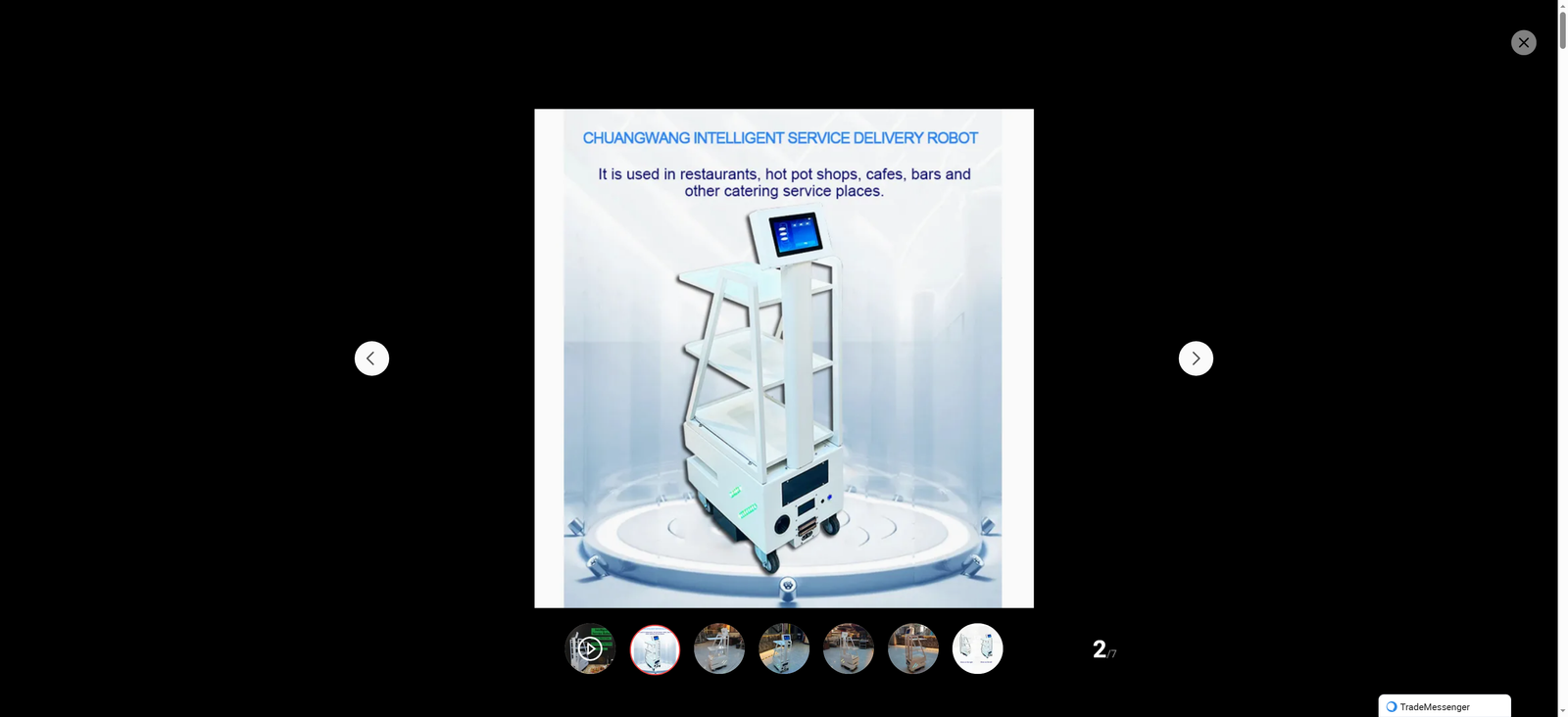
In the era of digital transformation, the catering and commercial service industries are undergoing a profound revolution driven by intelligent technology. Among the various innovative solutions, the Autonomous Food Delivery Robot has emerged as a core force, redefining the operational model of commercial services. As a high-performance Commercial Grade Serving Robot, it is no longer a novelty to attract customers, but has evolved into a practical tool to solve pain points such as labor shortages, high costs, and inefficient services, becoming an indispensable part of modern commercial venues including restaurants, hotels, and cafes.
A qualified Commercial Grade Serving Robot must meet the rigorous requirements of high-frequency, high-intensity commercial scenarios, and the autonomous food delivery robot is a typical representative of this category. Different from ordinary household or experimental robots, it integrates advanced artificial intelligence, precision navigation, and robust structural design, which can adapt to the complex and dynamic environment of commercial venues, achieve 24-hour stable operation, and continuously deliver food, beverages, and other items with high efficiency and low error rate — a performance that is difficult to match by traditional manual services.
The core competitiveness of the Autonomous Food Delivery Robot lies in its mature autonomous navigation and intelligent interaction capabilities. Most commercial grade models adopt a dual SLAM solution combining lidar and visual SLAM, which can accurately collect spatial data and achieve centimeter-level positioning accuracy, ensuring smooth movement even in crowded restaurants or large hotels with complex layouts. Equipped with 3D sensors, RGBD cameras, and advanced obstacle avoidance algorithms, the robot can detect obstacles at a frequency of up to 5400 times per minute, with a front detection angle of more than 190 degrees and a detection range exceeding 10 meters, enabling it to quickly respond to sudden situations such as running children or moving chairs and avoid collisions smoothly. Some high-end models even adopt automotive-grade independent suspension systems, which can adjust damping according to road conditions, ensuring stable delivery without spilling soup or food during movement.
For commercial operators, the value of the Autonomous Food Delivery Robot is reflected in its ability to significantly reduce operational costs and improve service quality. In the catering industry, which is plagued by the "three highs and one low" (high rent, high labor costs, high raw material costs, and low profit margins), the robot can replace 2-3 manual servers, saving a lot of labor costs, social security expenses, and training costs for enterprises every year. Taking a medium-sized restaurant as an example, introducing 2-3 commercial grade food delivery robots can increase the food delivery efficiency by 3 times, and the single delivery can meet the needs of 4 tables, allowing human servers to be freed from tedious delivery work and focus on providing more refined table service, thereby improving customer satisfaction to more than 95%. In addition, the robot is equipped with a modular quick-disassembly structure and infrared tray sensors, which can realize quick battery replacement and intelligent tray management, ensuring 24-hour continuous operation during peak business hours without downtime due to power shortage or equipment failure.
The application scenarios of the Autonomous Food Delivery Robot are constantly expanding, covering almost all commercial venues that require item delivery services. In addition to traditional restaurants, it is also widely used in hotels, coffee shops, gyms, shopping malls, cultural and tourist venues, and government service halls. In hotels, it can seamlessly connect with elevator control systems and PMS systems to realize full-process unmanned delivery of room service and takeout, shortening the delivery response time to less than 5 minutes; in cultural and tourist venues, it can not only deliver cultural and creative products but also serve as an intelligent narrator, integrating service and marketing functions to drive the growth of product sales by more than 60%. Some models are also equipped with large screens and multi-modal interaction functions, which can play promotional videos, display daily specials, and interact with customers through light, touch, and voice, becoming a new marketing tool for commercial operators to attract customers and enhance brand image.
With the continuous advancement of core technologies such as artificial intelligence and sensor technology, and the gradual reduction of hardware costs, the commercial grade autonomous food delivery robot industry is ushering in a period of rapid development. According to industry data, the market size of China's food delivery robots is expected to exceed 18 billion yuan by 2030, with a compound annual growth rate of 20.5%, and the penetration rate in head chain catering brands is steadily increasing. In the future, the Autonomous Food Delivery Robot will develop in the direction of more intelligence, diversification, and humanization — it will have more accurate emotion recognition capabilities, be able to adjust service methods according to customer emotions, and realize more flexible multi-machine collaboration through a decentralized scheduling system, making the service more "humanized" and "intelligent".
In conclusion, the Autonomous Food Delivery Robot, as a high-quality Commercial Grade Serving Robot, is not only a product of technological progress but also a inevitable choice for commercial operators to achieve transformation and upgrading. It solves the core pain points of the commercial service industry, injects new vitality into the development of the industry, and creates a win-win situation for operators, customers, and the industry. With the continuous expansion of the market and the continuous improvement of product performance, it will surely become a standard configuration in the commercial service industry, leading a new trend of intelligent services.