
AGV Intelligent Unmanned Handling Robot: Leading the New Era of Automated Material Handling with Core Advantages
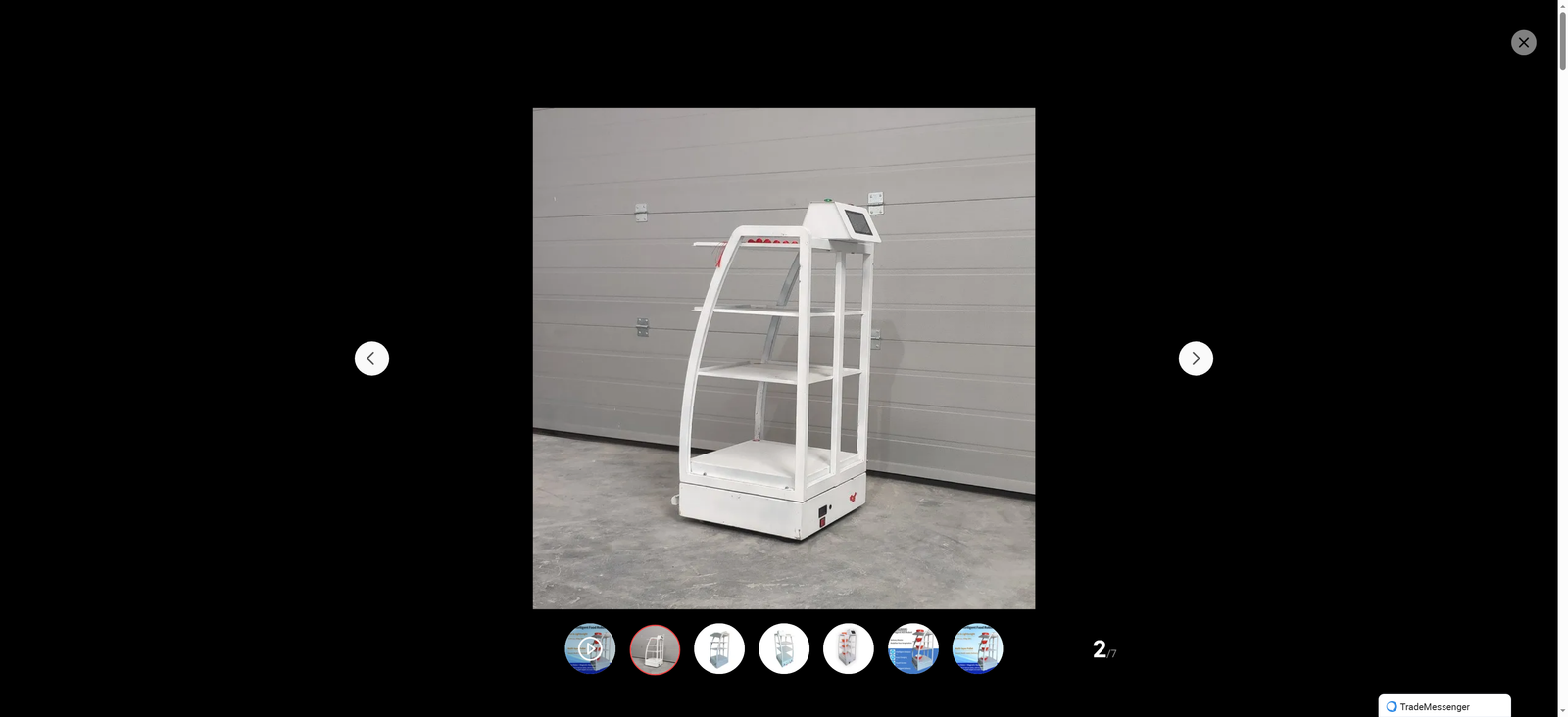
In the wave of industrial automation and intelligent logistics, the AGV intelligent unmanned handling robot has emerged as a core backbone, breaking through the limitations of traditional manual handling and revolutionizing the efficiency and safety of material transportation in various industries. Among the many technical highlights that drive its widespread application, multi-station rotational stop, magnetic strip navigation, and multi-functional adaptation stand out as the three core pillars, endowing the robot with stable, efficient, and flexible operational capabilities, and injecting strong momentum into the transformation and upgrading of global industrial logistics chains.
Multi-station rotational stop is the key functional design that enables AGV robots to adapt to complex production and logistics scenarios, realizing seamless connection between different workflow nodes. Unlike traditional handling equipment that can only complete single-point loading and unloading, the AGV intelligent unmanned handling robot is equipped with a high-precision positioning and motion control system, which can accurately identify preset station positions and achieve smooth rotational stop at multiple designated points in a single operation cycle. This design not only eliminates the need for manual intervention in position adjustment but also ensures that materials are transported, loaded, and unloaded in an orderly manner between different workstations, production lines, or storage areas. For example, in a 3C electronic component production workshop, the robot can sequentially complete material picking at the raw material warehouse station, rotational stop and feeding at the assembly line station, and finished product recycling at the inspection station, forming a closed-loop handling process. In a large-scale logistics warehouse, it can realize rotational stop and sorting at multiple sorting stations, greatly reducing the waiting time of materials between stations and improving the overall efficiency of the logistics system. The high-precision rotational stop performance, with positioning accuracy reaching the centimeter level, also effectively avoids material damage caused by position deviation, reducing the loss rate of materials in the handling process and lowering enterprise operation costs indirectly.
Magnetic strip navigation, as a mature and stable navigation technology adopted by AGV robots, lays a solid foundation for their reliable and efficient operation in complex environments. The core principle of this technology is to lay magnetic strips with specific magnetic signals on the ground of the operation area. The AGV robot is equipped with a high-sensitivity magnetic sensor, which can real-time detect the magnetic field signal emitted by the magnetic strip, accurately identify the navigation path, and automatically correct the running direction to ensure that it always moves along the preset route without deviation. Compared with other navigation methods, magnetic strip navigation has obvious advantages: it has strong anti-interference ability, and is not affected by factors such as light intensity, dust, noise, or harsh weather, making it suitable for harsh working environments such as high-temperature workshops, dusty warehouses, and humid logistics centers. At the same time, the laying and maintenance of magnetic strips are simple and low-cost. The path can be flexibly adjusted by replacing or rearranging the magnetic strips according to the changes of production and logistics processes, without the need for large-scale transformation of the operation site. This flexibility enables enterprises to quickly adapt to the adjustment of production lines or logistics layouts, enhancing the adaptability of the handling system. In addition, magnetic strip navigation also has the characteristics of low energy consumption and high stability, which can ensure that the AGV robot operates continuously for a long time, realizing 24-hour unmanned operation and further releasing labor productivity.
Multi-functional adaptation is the core competitiveness that enables AGV intelligent unmanned handling robots to meet the diverse needs of different industries and scenarios, realizing the integration of one machine with multiple uses. Based on the modular design concept, the robot can be flexibly equipped with different functional components according to the actual handling needs, such as automatic lifting platforms, clamping devices, roller conveyors, or special fixtures, to adapt to the handling of materials of different types, shapes, and weights. For light-weight and small-sized materials such as electronic components and medical reagents, it can be equipped with a precision clamping device to realize safe and stable clamping and transportation; for heavy-weight materials such as mechanical parts, raw material pallets, and photovoltaic components, it can be equipped with a high-load lifting platform, with a load capacity ranging from tens of kilograms to several tons, meeting the heavy-duty handling needs of industrial production. In addition to the basic handling function, the AGV robot can also be integrated with intelligent systems such as warehouse management systems (WMS), production execution systems (MES), and elevator control systems, realizing intelligent scheduling, path optimization, and information interconnection. It can automatically receive handling tasks, plan the optimal running path, and feed back the handling status in real-time, forming an integrated intelligent handling solution. This multi-functional adaptation capability enables the AGV robot to be widely used in manufacturing, logistics warehousing, port terminals, medical and health, and other fields, breaking the limitations of single-scenario application and becoming a versatile helper in the intelligent transformation of various industries.
With the continuous deepening of industrial intelligence, the market demand for AGV intelligent unmanned handling robots is growing day by day, and the requirements for their performance are also constantly improving. The multi-station rotational stop function ensures the efficiency of multi-node connection, the magnetic strip navigation technology ensures the stability of long-term operation, and the multi-functional adaptation capability expands the scope of application. The combination of these three core advantages makes the AGV robot an indispensable core equipment in the modern intelligent logistics and industrial production system. It not only replaces manual handling in tedious, repetitive, and high-risk working environments, reducing labor intensity and ensuring operational safety, but also improves handling efficiency and accuracy, helping enterprises optimize the production and logistics process, reduce operation costs, and enhance core competitiveness.
Looking to the future, with the continuous innovation and integration of technologies such as artificial intelligence, Internet of Things, and big data, the AGV intelligent unmanned handling robot will be further upgraded in terms of multi-station rotational stop precision, magnetic strip navigation intelligence, and multi-functional adaptation flexibility. It will realize more intelligent path planning, more flexible station adaptation, and more diverse functional expansion, and will be deeply integrated with more industries, promoting the comprehensive transformation of the global industrial logistics industry towards intelligence, efficiency, and green development, and opening a new chapter of automated material handling.