
AI Intelligent UV Disinfection Robot: Leading the New Era of Autonomous Sterilization
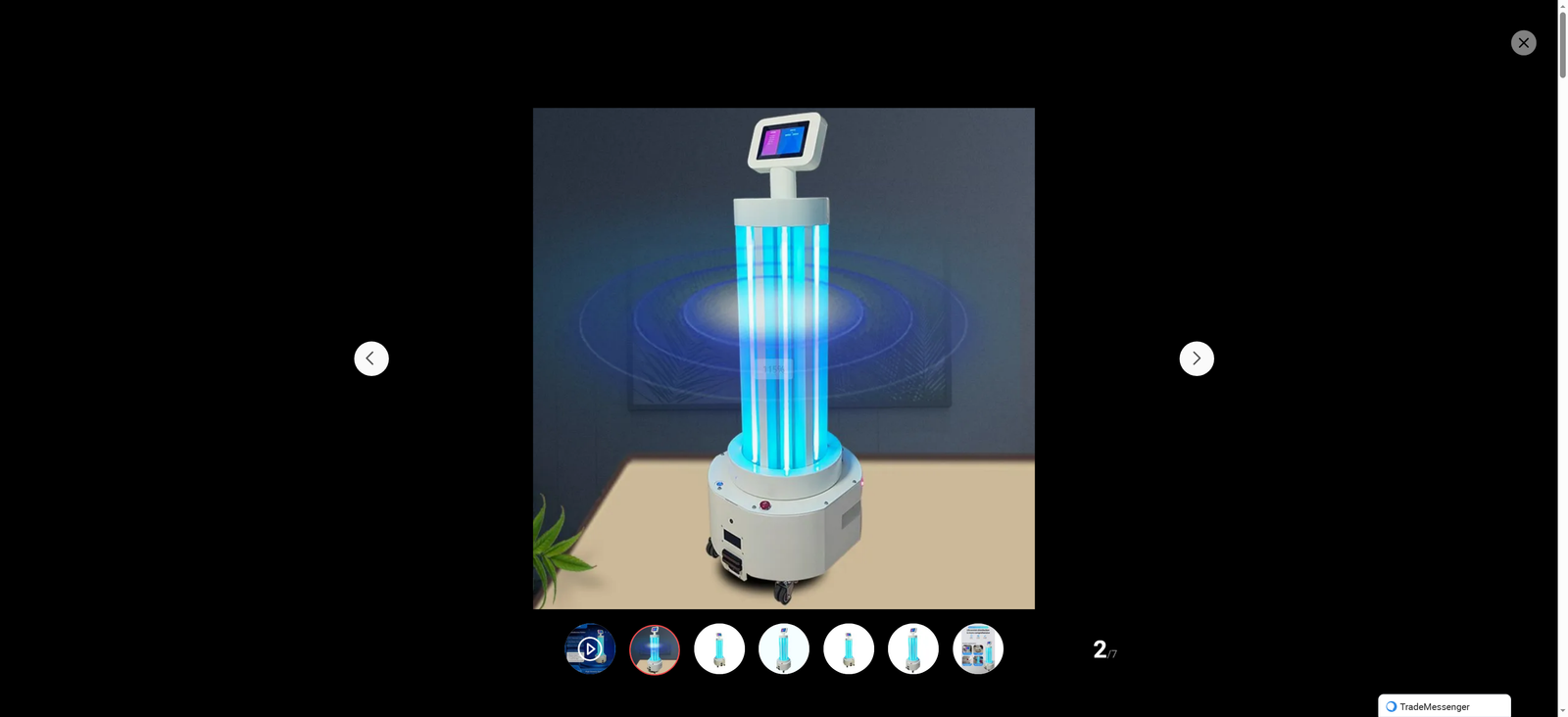
In the post-pandemic era, the demand for public health security has been rising unprecedentedly, driving the rapid development of intelligent disinfection technology. Among numerous innovative solutions, the AI Intelligent UV Disinfection Robot stands out with its core advantages of autonomous navigation and fully automatic sterilization, reshaping the efficiency and standard of disinfection work in various scenarios. As a pivotal product integrating artificial intelligence, ultraviolet disinfection technology and autonomous movement capability, it has become an indispensable "hygiene bodyguard" in medical institutions, public spaces, and commercial venues.
The core competitiveness of the AI Intelligent UV Disinfection Robot lies in its advanced autonomous navigation system, which breaks the limitations of traditional manual disinfection and semi-automatic equipment. Based on cutting-edge AI algorithms and multi-sensor fusion technology, the robot is equipped with laser radar, depth cameras, and infrared sensors, enabling it to achieve high-precision environmental perception and path planning. Different from the traditional SLAM navigation system that requires manual mapping, the latest autonomous exploration navigation algorithm can realize lightweight and high-precision map construction without human intervention, allowing the robot to start disinfection tasks with one click in unfamiliar environments. It can flexibly avoid dynamic and static obstacles such as medical equipment, furniture, and pedestrians, and even stably operate in dark conditions with its night vision function, ensuring comprehensive coverage without blind spots in complex spaces.
This intelligent navigation capability is not only about "autonomous movement" but also about optimizing the entire disinfection process through data analysis. The robot can automatically identify high-frequency contact areas such as handrails, seats, and door handles according to the scene layout, and adjust the moving speed and disinfection time accordingly to achieve targeted and efficient sterilization. For large-scale venues like hospitals, airports, and shopping malls, multiple robots can realize collaborative operation through intelligent scheduling, dividing regions and avoiding conflicts to maximize disinfection efficiency. As demonstrated by the UV disinfection robot ADIBOT, its self-developed three-dimensional navigation algorithm has been successfully applied in global medical institutions and public places, winning wide recognition for its stability and accuracy.
The fully automatic sterilization function of the AI Intelligent UV Disinfection Robot relies on scientifically designed UVC ultraviolet technology, which fundamentally guarantees disinfection effect and safety. UVC (Ultraviolet C-band) with a wavelength of 200-280 nanometers can effectively destroy the DNA and RNA structures of bacteria, viruses, and fungi, making them lose reproductive capacity and achieve a sterilization rate of up to 99.99%甚至 higher. Compared with traditional chemical disinfection methods, this physical disinfection method has no chemical residues, no corrosive effect on equipment and articles, and will not produce harmful by-products, ensuring environmental friendliness and human safety. The robot is usually equipped with multiple UV lamps with scientific distribution, enabling 360-degree all-round irradiation without dead corners, and can complete disinfection of a 40-square-meter space in just 10 minutes, far exceeding the efficiency of manual operation.
To ensure safe operation, the robot is equipped with a multi-layer safety protection system. It can automatically detect human presence during work and immediately turn off the UV lamps to avoid radiation damage. At the same time, operators can remotely monitor the disinfection process in real time through mobile terminals, check working status, and adjust task parameters, realizing unattended operation and reducing the risk of cross-infection for staff. This fully automatic mode not only saves a lot of human resources but also avoids the inconsistency of disinfection standards caused by human factors, ensuring the stability and reliability of each disinfection task.
Driven by strong market demand and technological innovation, the AI Intelligent UV Disinfection Robot industry is showing a vigorous growth trend. Data shows that the global disinfection robot market scale reached approximately 2.8 billion US dollars in 2023, and it is expected to maintain a high compound annual growth rate, with the market scale expanding to a broader range in the next few years. In China, the market scale in 2023 was about 4.9 billion yuan, and policies such as financial subsidies and tax incentives issued by the government have further promoted the technological iteration and market popularization of related products. From medical institutions that require strict disinfection standards to schools, hotels, and transportation hubs with dense crowds, the application scenarios of AI UV disinfection robots are constantly expanding, gradually penetrating into all aspects of social life.
Looking forward to the future, with the continuous advancement of artificial intelligence, Internet of Things, and new material technologies, AI Intelligent UV Disinfection Robots will move towards a more intelligent, efficient, and multi-functional direction. The integration of technologies such as AI semantic recognition and intelligent environment monitoring will enable robots to better adapt to complex working conditions, and the optimization of battery technology will further extend their working hours. As an important part of the intelligent public health system, AI Intelligent UV Disinfection Robots will continue to play a key role in safeguarding human health, leading a new era of autonomous, efficient, and safe sterilization.