
AI Intelligent Autonomous Navigation Disinfection Robot: Leading a New Era of High-Tech Sanitization with UV Sterilization
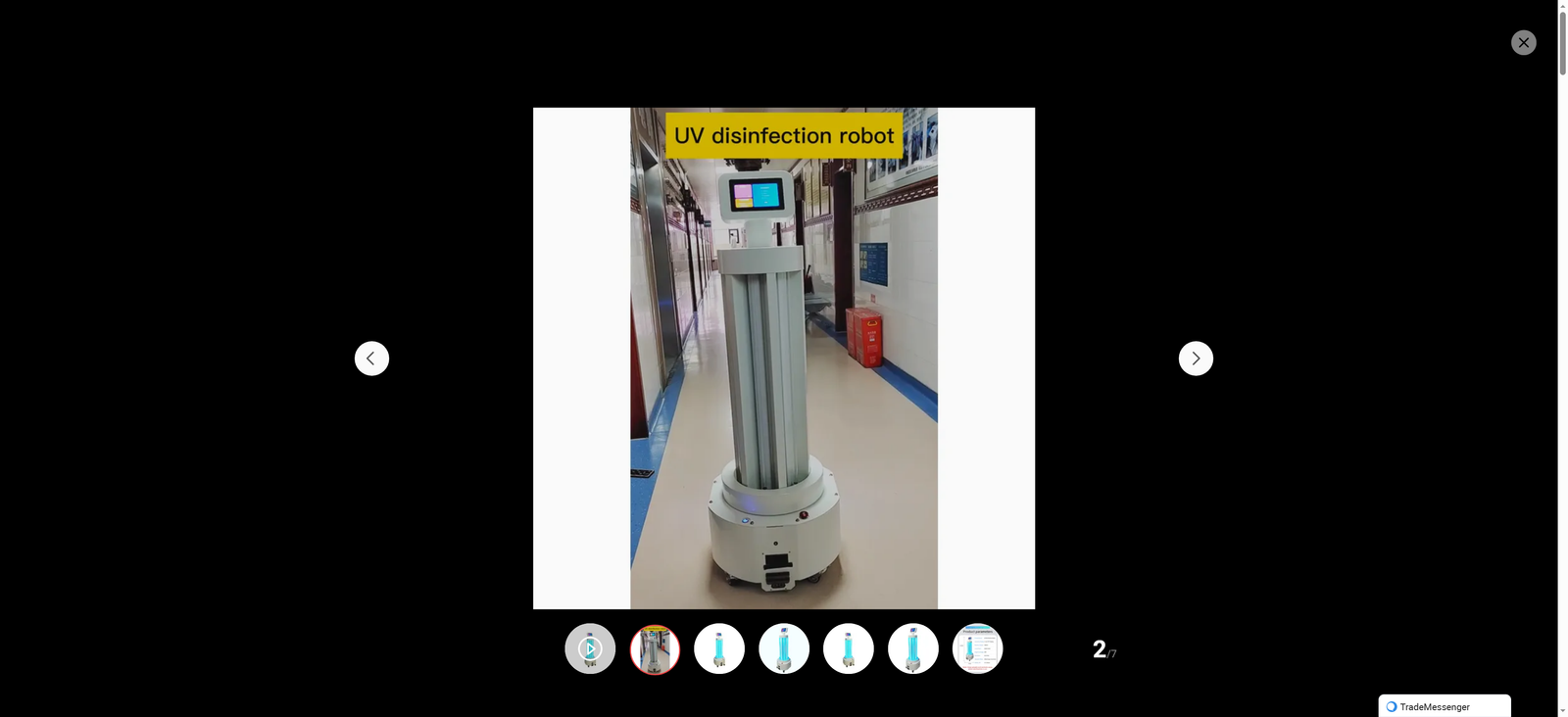
In the post-pandemic era, the demand for efficient, safe, and standardized sanitization solutions has surged dramatically across global industries. Traditional manual disinfection methods, plagued by inconsistencies, human fatigue, and exposure risks to hazardous substances, are no longer sufficient to meet the rigorous hygiene requirements of modern public spaces, healthcare facilities, and commercial venues. Against this backdrop, the AI Intelligent Autonomous Navigation Disinfection Robot, integrating UV sterilization technology and fully automatic operation, has emerged as a transformative force, redefining the landscape of high-tech sanitization.
The Core of Sterilization: UV-C Technology’s Scientific Power
At the heart of the robot’s sanitization capability lies ultraviolet-C (UV-C) radiation, a proven physical disinfection method that operates within the wavelength range of 200-280 nm. Unlike chemical disinfectants that may leave residues or trigger allergic reactions, UV-C light exerts its bactericidal effect by disrupting the DNA and RNA molecular structures of microorganisms, including bacteria, viruses, and fungi, effectively inactivating their ability to replicate and survive . Laboratory tests have demonstrated that advanced UV-C disinfection robots can achieve a pathogen elimination rate of over 99.9%, outperforming manual cleaning in both efficiency and thoroughness .
To address the inherent safety risks of UV-C exposure to humans—such as severe skin and ocular damage—modern AI disinfection robots are equipped with intelligent safety systems. Integrated cameras and vision-based human detection technology enable instantaneous UV deactivation within 0.35 seconds of detecting human presence, ensuring safe operation even in semi-occupied environments . Some advanced models also adopt mercury-free pulsed xenon UV technology, which not only enhances disinfection efficiency but also aligns with environmental protection standards .
Intelligent Autonomy: The “Brain” Behind Seamless Navigation
The true breakthrough of these robots lies in their AI-powered autonomous navigation system, which eliminates the need for manual supervision and enables seamless operation across complex environments. Leveraging Simultaneous Localization and Mapping (SLAM) technology, combined with LiDAR, ultrasonic sensors, and inertial measurement units (IMU), the robots can quickly construct 3D environmental maps, achieve precise positioning, and dynamically plan optimal disinfection paths . This ensures comprehensive area coverage without repetition or omission, even in spaces with frequent furniture rearrangements or dynamic obstacles.
The dual-microcontroller architecture—typically integrating Raspberry Pi for computational tasks and Arduino for real-time motor control—further enhances operational stability . The AI system processes sensor data in real time, enabling intelligent obstacle avoidance (even in 70cm narrow channels) and adaptive path adjustment . When battery levels run low, the robot autonomously returns to its charging station, supporting 24/7 uninterrupted sanitization operations .
Beyond basic navigation, AI algorithms empower the robots with data-driven intelligence. Post-task, they generate detailed disinfection logs, including coverage area, operation duration, and pathogen elimination metrics, providing digital traceability for hygiene management . Integration with cloud-based platforms and IoT sensors also enables remote task scheduling, fleet management, and real-time monitoring, transforming sanitization from a passive task to a proactive, data-managed process .
Fully Automatic High-Tech Sanitization: Transforming Multiple Industries
As fully automatic devices, AI UV disinfection robots streamline sanitization workflows, reduce labor costs, and ensure consistent performance. Unlike human workers, they do not experience fatigue, do not skip hard-to-reach areas, and maintain standardized disinfection intensity across every task . A single robot can complete disinfection of thousands of square meters in just tens of minutes, with a single charge supporting up to 6 hours of continuous operation .
Their versatility has driven adoption across diverse sectors. In healthcare facilities—hospitals, clinics, and laboratories—they are used for terminal disinfection in operating rooms, isolation wards, and发热 clinics, significantly reducing healthcare-associated infections (HAIs) . At transportation hubs such as airports and train stations, they perform regular air and surface sanitization to mitigate cross-infection risks in high-traffic environments . Educational institutions, hotels, office buildings, and food processing facilities also benefit from their efficient, contactless sanitization, supporting safe reopening and daily hygiene maintenance .
Market Trends and Future Outlook
The global disinfection robot market is experiencing robust growth, driven by rising hygiene awareness, labor shortages in janitorial services, and regulatory mandates for infection control . Valued at USD 1.136 billion in 2024, the market is projected to reach USD 5.37 billion by 2031 with a CAGR of 24.8%, with UV-C disinfection robots accounting for over 70% of the market share . Asia-Pacific is emerging as the fastest-growing region, fueled by increasing investments in smart infrastructure and public health initiatives .
The future of AI disinfection robots lies in multifunctional integration and technological advancement. Trends include the development of hybrid systems combining UV-C sterilization with air filtration and ultrasonic spraying, as well as the integration of additional capabilities such as mask detection, environmental巡检, and voice interaction . As AI algorithms become more sophisticated and component costs decrease, these robots will become more accessible to small businesses and educational institutions, democratizing high-tech sanitization .
Conclusion
The AI Intelligent Autonomous Navigation Disinfection Robot represents the convergence of UV sterilization technology and AI-driven automation, offering a safe, efficient, and scalable solution to modern sanitization challenges. By liberating humans from high-risk, repetitive tasks and delivering data-backed hygiene assurance, these robots are not just tools—they are essential pillars of a smarter, healthier future. As technology evolves and market adoption deepens, they will continue to redefine the standards of cleanliness across industries, safeguarding public health with unprecedented precision and reliability.