
Advanced Smart Delivery Robot: Redefining Efficiency in Office and Hotel Logistics
In the era of digital transformation, the demand for efficient, intelligent and low-cost logistics services in office buildings and hotels is growing exponentially. As a core product of intelligent logistics, advanced smart delivery robots have emerged as a game-changer, breaking through the limitations of traditional manual delivery and building a new pattern of "unmanned, intelligent and efficient" logistics operations. These robots integrate cutting-edge technologies such as artificial intelligence, automatic navigation, and Internet of Things, seamlessly adapting to the complex and dynamic environments of offices and hotels, and injecting strong momentum into the upgrading of logistics services in these scenarios.
The rise of smart delivery robots is closely linked to the pain points of traditional logistics in office and hotel scenarios. In large office buildings, daily delivery tasks such as documents, packages, office supplies, and meals are heavy, and manual delivery is often plagued by low efficiency, high error rates, and high labor costs. Employees often need to leave their work posts to pick up packages or documents, which disrupts work rhythm and reduces work efficiency. In hotels, the delivery of room service (such as meals, drinks, towels), express packages, and laundry involves multiple floors and multiple rooms. Manual delivery not only requires a lot of human resources but also is prone to delays due to factors such as elevator waiting and wrong room numbers, affecting customer experience. Advanced smart delivery robots precisely solve these pain points, realizing the automation and intelligence of delivery services and fundamentally improving the efficiency and quality of logistics operations.
Advanced smart delivery robots have a series of core advantages that make them competent in office and hotel logistics scenarios. First of all, in terms of intelligent navigation and obstacle avoidance, these robots are equipped with high-precision sensors (such as lidar, visual sensors) and advanced navigation algorithms. They can quickly map the indoor environment of office buildings and hotels, accurately identify elevators, stairs, doors, and obstacles (such as pedestrians, furniture), and automatically plan the optimal delivery route. Even in complex environments with frequent personnel movement, they can flexibly avoid obstacles and ensure smooth delivery. For example, when encountering an elevator, the robot can automatically call the elevator, accurately enter and exit, and adjust the route in real time according to the elevator's operation status, without manual intervention.
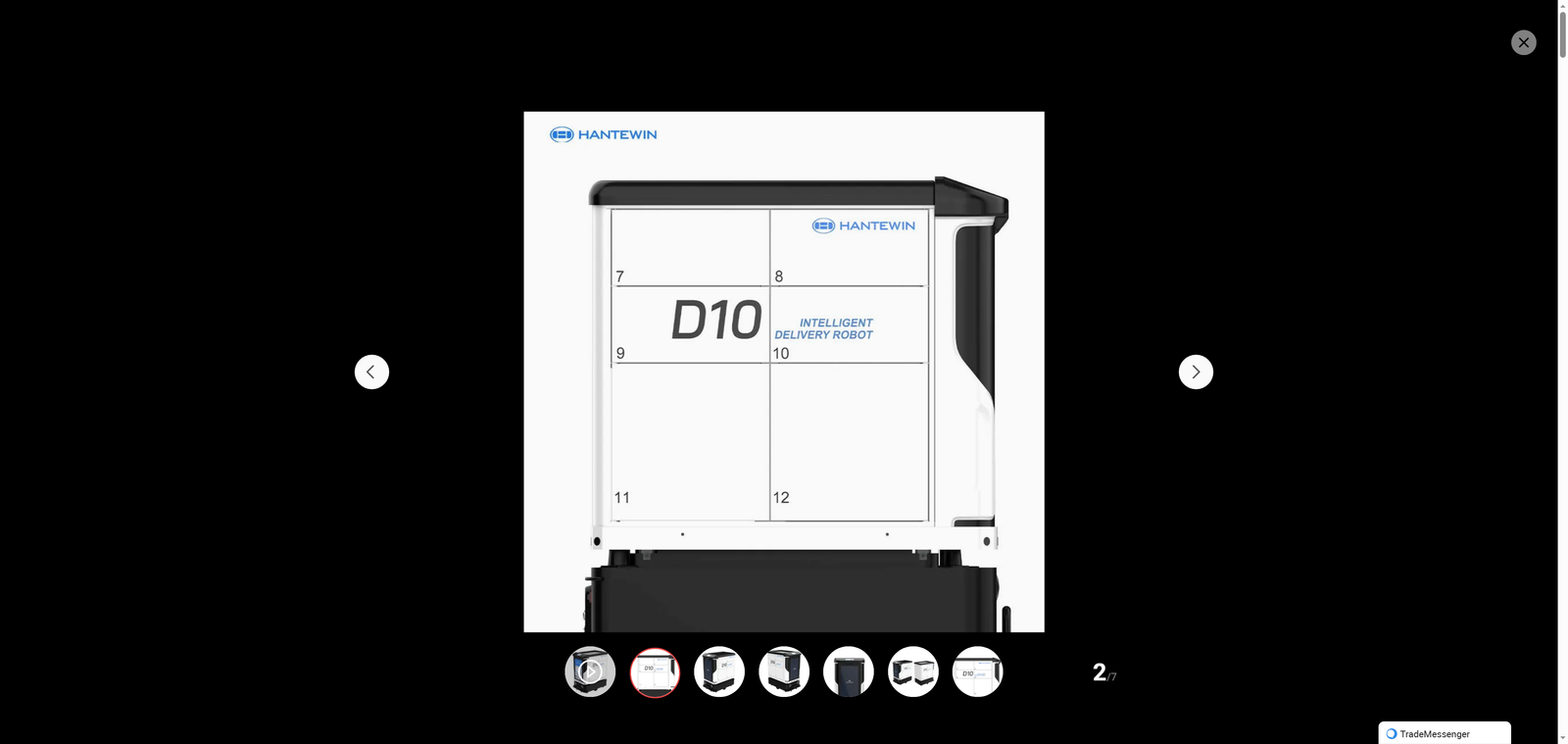
Secondly, in terms of multifunctional adaptation and customized services, advanced smart delivery robots have strong scenario adaptability. For office scenarios, they can be customized to deliver documents, packages, office supplies, and even coffee and meals. They can recognize office card swiping systems, automatically enter designated office areas, and send reminders to recipients through WeChat, SMS, or in-robot voice. For hotel scenarios, the robots can be connected to the hotel's PMS system (Property Management System), accurately receive delivery orders, and deliver items to the door of the designated room. They can also interact with customers through voice, answer simple questions, and improve the sense of technology and experience of hotel services. In addition, the robot's cargo compartment can be designed with multiple layers and partitions, which can carry items of different sizes and types, realizing classified delivery and improving delivery efficiency.
Thirdly, in terms of efficiency improvement and cost control, smart delivery robots can work 24 hours a day without rest, which is far more efficient than manual delivery. A single robot can complete dozens of delivery tasks a day, which is equivalent to the workload of 1-2 manual workers. At the same time, the use of robots can greatly reduce labor costs, including wages, social security, and training costs. For enterprises and hotels, long-term use can significantly reduce operating costs. In addition, the robot's operation data can be uploaded to the background management system in real time, and managers can monitor the robot's working status, delivery progress, and fault information through the background, realizing refined management and further improving logistics efficiency.
In practical applications, advanced smart delivery robots have been widely used in office buildings and hotels around the world, and have achieved remarkable results. In some high-end office buildings in first-tier cities, smart delivery robots have become a "common sight". They shuttle between floors to deliver documents and packages for employees, which not only saves employees' time but also reduces the workload of the administrative department. According to statistics, after the use of smart delivery robots, the efficiency of office logistics delivery has increased by more than 60%, and the error rate has dropped to less than 1%. In high-end hotels, smart delivery robots have become a "new business card" of intelligent services. When customers order meals or other services through the hotel APP, the robot can complete the delivery within a few minutes and send a voice reminder to the customer. Many customers said that the robot delivery service is not only fast and accurate but also full of fun, which has greatly improved their satisfaction with the hotel.
With the continuous progress of technology and the continuous expansion of application scenarios, the future development of advanced smart delivery robots will have broader prospects. On the one hand, the integration of technologies such as 5G, edge computing, and big data will make robots more intelligent. For example, through 5G technology, the robot can realize low-latency data transmission and remote control; through big data analysis, it can predict the delivery demand of different time periods and different areas, and carry out pre-delivery preparation to further improve efficiency. On the other hand, the application scenarios of robots will be more diversified. In addition to delivery, they can also undertake tasks such as environmental detection, security patrol, and information consultation, becoming a multi-functional intelligent terminal in office buildings and hotels. At the same time, the cost of robots will continue to decrease with the maturity of the industrial chain, making them more popular in small and medium-sized office buildings and hotels.
However, the popularization and application of advanced smart delivery robots still face some challenges. For example, the compatibility of indoor environment layout (such as narrow corridors, old elevators) with robots, the standardization of logistics delivery processes, and the protection of user privacy and information security. These problems need to be solved through the joint efforts of robot manufacturers, enterprises, hotels, and relevant departments. For example, robot manufacturers can optimize the robot's body design to adapt to more complex environments; enterprises and hotels can adjust the logistics process to match the robot's operation mode; relevant departments can formulate relevant standards and regulations to ensure the healthy development of the industry.
In conclusion, advanced smart delivery robots, as an important carrier of intelligent logistics, are reshaping the logistics service model of office buildings and hotels with their unique advantages of intelligence, efficiency, and low cost. They not only solve the pain points of traditional manual delivery but also promote the digital and intelligent upgrading of office and hotel services. With the continuous breakthrough of technology and the continuous improvement of the industrial environment, smart delivery robots will play a more important role in office and hotel logistics, bringing more convenience and surprises to people's work and life. It is believed that in the near future, smart delivery robots will become an indispensable part of intelligent office and smart hotels, creating a more efficient, convenient, and intelligent living and working environment for people.