
Intelligent Efficient Food Delivery Robot for Smart Hospitality Restaurant Hotel Environments
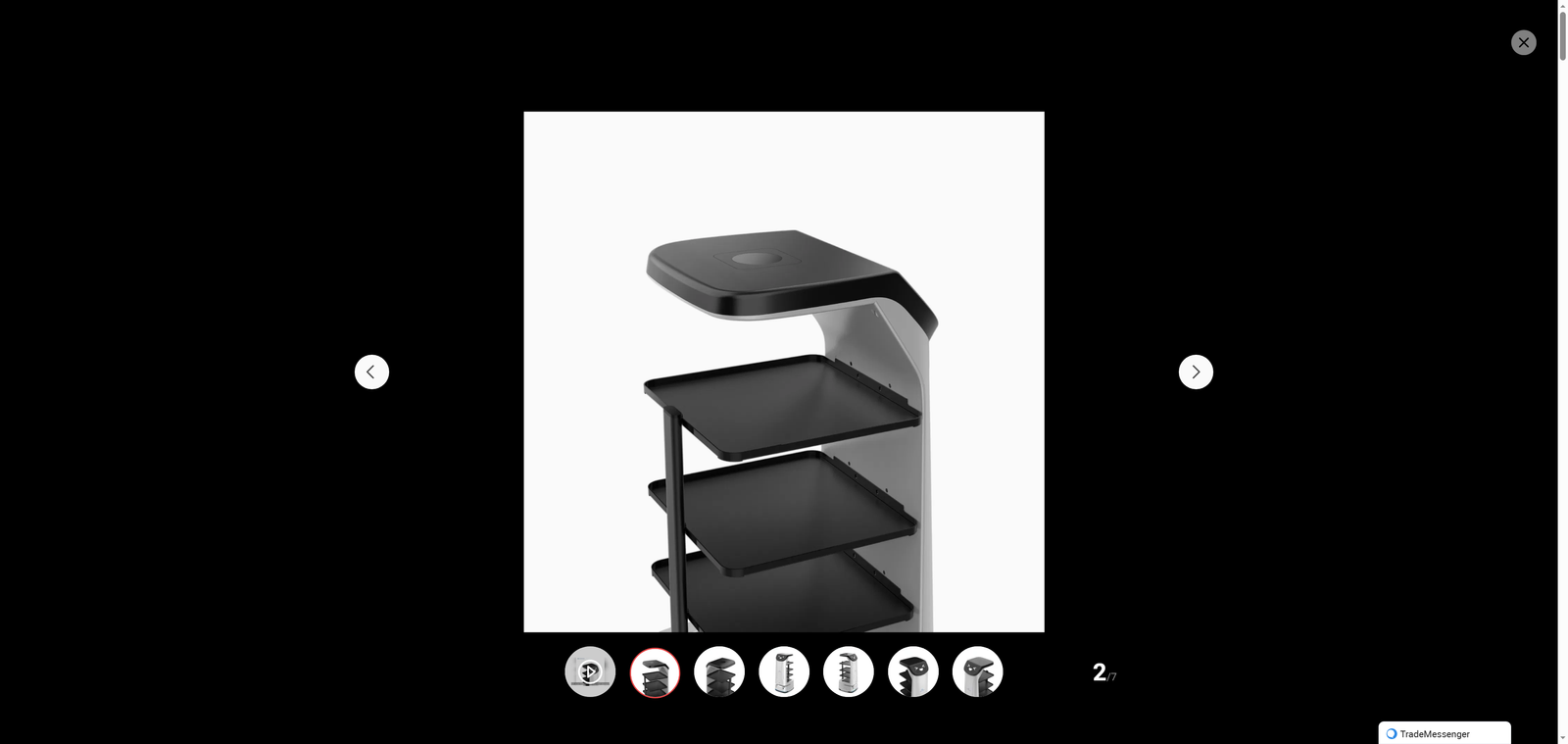
With the rapid development of smart technology and the continuous upgrading of the hospitality industry, the demand for efficiency, intelligence and personalized services in restaurants and hotels is becoming increasingly prominent. As a key carrier of intelligent transformation in the hospitality field, the intelligent and efficient food delivery robot has gradually stepped out of the conceptual stage and become a practical tool that reshapes service processes, optimizes operational efficiency and enhances customer experience. It is not only a symbol of the intelligent upgrading of restaurants and hotels, but also a concrete practice of the deep integration of "technology hospitality", injecting new vitality into the traditional hospitality industry.
The emergence of intelligent food delivery robots is closely linked to the pain points of the current hospitality industry. For a long time, restaurants and hotels have been facing problems such as high labor costs, uneven service quality, low peak-period efficiency and difficulty in ensuring service consistency. Especially during dining peaks, waiters are often overwhelmed by taking orders, delivering food and cleaning tables, which easily leads to delayed food delivery, wrong delivery and other problems, affecting customer satisfaction. In addition, the high turnover rate of front-line service staff in the hospitality industry also brings great pressure to the stable operation of enterprises. Against this background, intelligent food delivery robots, with their advantages of 24-hour continuous work, high efficiency, accuracy and low long-term cost, have become an important solution to solve the above pain points.
Intelligent efficient food delivery robots designed for smart hospitality restaurant and hotel environments have a number of core functions that are closely integrated with service scenarios, showing strong adaptability and practicality. First of all, in terms of path planning and navigation, these robots are equipped with advanced sensor technologies such as laser radar, visual recognition and ultrasonic radar, which can quickly perceive the complex environment in restaurants and hotels, including tables, chairs, pedestrians, obstacles and narrow passages. Through the built-in intelligent algorithm, they can realize real-time path planning, automatic obstacle avoidance and accurate positioning, and can smoothly complete the food delivery task even in crowded peak periods without affecting the movement of customers and staff. For example, when a customer suddenly walks in front of the robot, the robot can quickly stop, adjust the path and continue to move, ensuring the safety and stability of food delivery.
Secondly, in terms of service efficiency and accuracy, intelligent food delivery robots have obvious advantages over manual services. A single robot can undertake the food delivery tasks of multiple tables at the same time. After receiving the order information from the restaurant's POS system, it can automatically go to the kitchen to pick up the food, and then accurately deliver it to the designated table according to the order number. The whole process is fully automated without manual intervention, which greatly reduces the workload of waiters and improves the efficiency of food delivery. At the same time, the robot's "memory" function can record the order information and table location, avoiding the problem of wrong delivery or missing delivery caused by human factors, ensuring the accuracy of service. In addition, some high-end food delivery robots are also equipped with intelligent voice interaction functions, which can respond to customer inquiries, remind customers to take food and even recommend dishes, realizing a more humanized service experience.
Thirdly, in terms of operational cost control and management optimization, intelligent food delivery robots bring long-term benefits to restaurants and hotels. Although the initial purchase cost of the robot is relatively high, compared with the long-term manual labor cost (salary, social security, training, etc.), the robot has the advantage of low use cost after being put into use. It can work 24 hours a day without rest, holidays or turnover, which effectively reduces the enterprise's labor cost pressure. At the same time, the background management system of the robot can record the work data in real time, such as the number of food deliveries, the average delivery time, the working status of the robot, etc. The management can grasp the service operation status through these data, optimize the staffing and service process, and realize refined management. For example, according to the peak and valley periods of food delivery, the number of robots put into use can be adjusted to maximize the efficiency of resource allocation.
In addition to the above core functions, intelligent food delivery robots also play a positive role in enhancing the brand image and customer experience of restaurants and hotels. In the era of smart consumption, customers are increasingly willing to accept new technologies and new services. The appearance of food delivery robots in restaurants and hotels can bring a sense of novelty and technology to customers, become a "net red check-in point" in the store, and enhance the brand's attractiveness and popularity through word-of-mouth communication of customers. For elderly customers or children, the friendly appearance and intelligent interaction of the robot can also bring more fun to the dining experience. At the same time, the robot can avoid direct contact between people during the food delivery process, which is more in line with the health and safety needs of customers in the post-epidemic era, and further improves customer satisfaction and loyalty.
Of course, the popularization and application of intelligent food delivery robots in the hospitality industry also face some challenges. On the one hand, the cost of high-end intelligent robots is still relatively high, which may bring certain economic pressure to small and medium-sized restaurants and hotels. On the other hand, the complex service scenarios in restaurants and hotels (such as sudden obstacles, irregular table arrangements, customer's random movement, etc.) also put forward higher requirements for the stability and adaptability of the robot's navigation and obstacle avoidance functions. In addition, some customers may still prefer manual service, believing that manual service is more humanized and emotional, which requires enterprises to balance the relationship between robot service and manual service, and avoid the loss of humanistic care caused by excessive reliance on robots.
In the face of these challenges, with the continuous progress of technology and the gradual maturity of the industry, the development prospect of intelligent food delivery robots is still broad. In the future, with the reduction of component costs and the optimization of production processes, the price of intelligent food delivery robots will gradually decrease, making it accessible to more small and medium-sized hospitality enterprises. At the same time, with the development of artificial intelligence, big data and 5G technology, the functions of food delivery robots will be more powerful: they can realize more accurate path planning and more natural voice interaction, and even complete more complex tasks such as table setting, cleaning and order taking. In addition, the integration of robots and the digital management system of restaurants and hotels will be deeper, realizing the full-link intelligence of service, management and operation.
In conclusion, the intelligent efficient food delivery robot is an important product of the intelligent transformation of the hospitality industry. It not only solves the pain points of high labor cost and low efficiency in restaurants and hotels, but also brings a new service experience to customers, and promotes the upgrading and development of the hospitality industry towards intelligence, refinement and humanization. Although there are still some challenges in the popularization and application stage, with the continuous innovation of technology and the continuous optimization of the industry ecology, intelligent food delivery robots will surely become an indispensable part of smart hospitality scenarios, and make greater contributions to the high-quality development of the hospitality industry.