
Widely Used Superior Quality Popular Humanoid Artificial Intelligence Commercial Delivery Service Robot
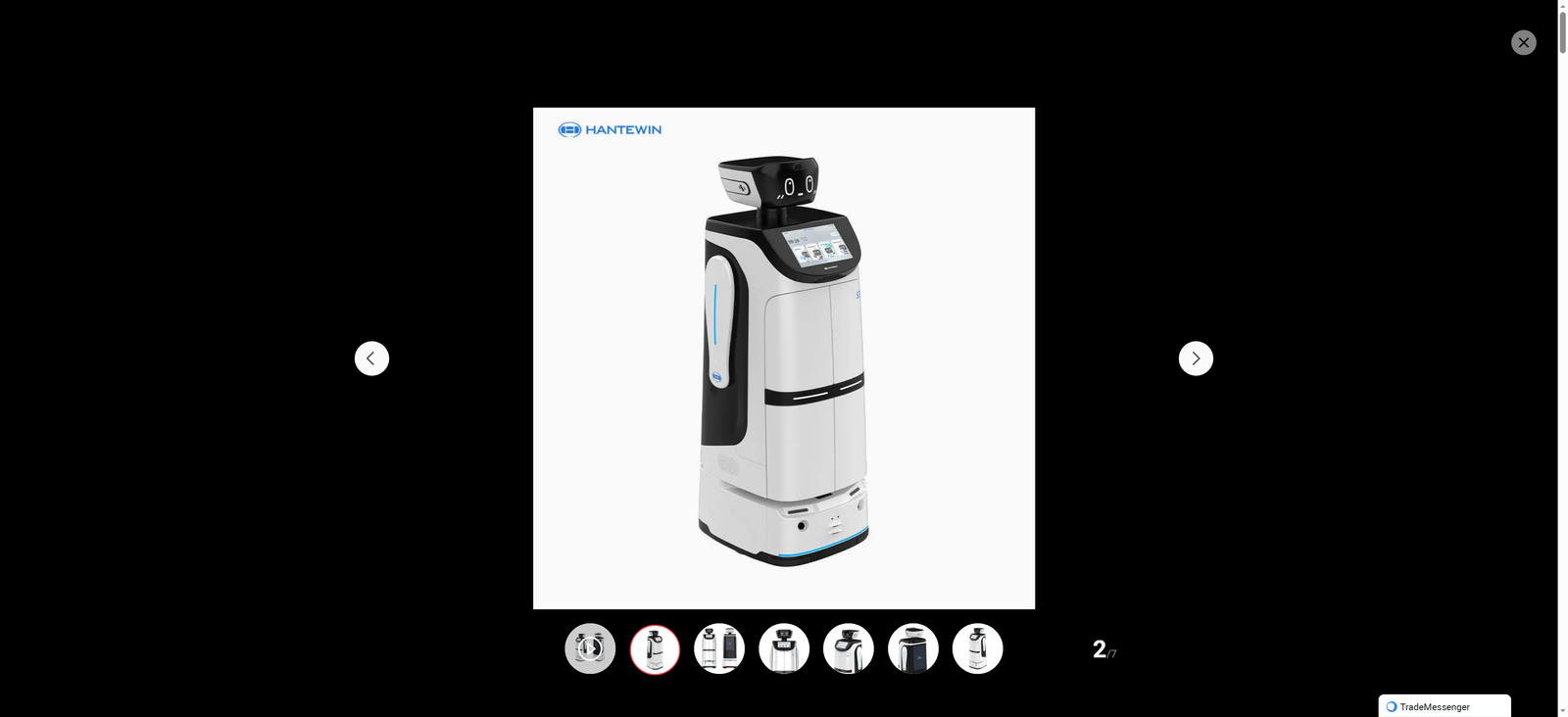
In the era of rapid digital transformation and booming e-commerce, the logistics and delivery industry is undergoing a profound revolution driven by technological innovation. Among the various cutting-edge technologies reshaping this field, the humanoid artificial intelligence commercial delivery service robot stands out as a star product, winning widespread recognition and popularity with its superior quality, human-like flexibility and efficient service capabilities. Today, these intelligent robots have penetrated into various commercial scenarios, becoming an indispensable part of modern delivery services and redefining the efficiency and experience of last-mile logistics.
The popularity of humanoid AI commercial delivery service robots is closely linked to their superior quality, which lays a solid foundation for their wide application in complex commercial environments. Unlike traditional delivery robots with single functions and poor adaptability, high-quality humanoid delivery robots integrate advanced AI algorithms, precision mechanical structures and multi-sensor fusion technologies, realizing a perfect combination of stability, flexibility and intelligence. In terms of hardware, top-grade materials and precision manufacturing processes ensure the robots’ durability and long service life—they can operate stably for 24 hours without interruption, adapt to different ground conditions such as marble, concrete and carpets, and even cope with slight obstacles and slope environments in commercial venues such as shopping malls, hotels and office buildings. For example, Pudu Technology’s FlashBox Arm, the world’s first commercial humanoid embodied intelligent service robot, adopts a high-strength integrated structure and a closed cabin design, which not only ensures the safety of delivered goods but also enhances the robot’s resistance to wear and corrosion, making it suitable for long-term high-frequency operation in various commercial scenarios.
In terms of software and intelligence, superior quality is reflected in the robot’s powerful AI core and human-like interaction capabilities. Equipped with advanced machine learning and computer vision technologies, these humanoid robots can independently complete path planning, real-time obstacle avoidance, and accurate delivery without manual intervention. They integrate VSLAM and laser SLAM technologies to efficiently build 3D maps of the environment, realizing autonomous and precise navigation even in crowded commercial spaces, and avoiding collisions with pedestrians or other objects flexibly. Moreover, with the support of large language models, they possess natural language understanding and interaction capabilities, enabling them to communicate with customers simply and friendly—such as confirming delivery information, responding to simple inquiries, and even adjusting delivery time according to customer needs. Amazon’s humanoid delivery robots, which are currently being tested, are equipped with advanced AI software that allows them to “see”, plan paths, maintain balance and act according to real-world conditions, laying a solid foundation for their reliable operation in complex residential and commercial environments. This human-like intelligent experience not only improves delivery efficiency but also enhances customer satisfaction, becoming a key factor in their popularity.
The wide application of humanoid AI commercial delivery service robots is a direct manifestation of their popularity, covering almost all major commercial scenarios and forming a comprehensive service network. In the retail industry, large shopping malls and supermarkets use these robots to deliver goods purchased by customers to the entrance or parking lot, reducing customers’ carrying burden and improving shopping experience; in the catering industry, they replace waiters to deliver meals, drinks and takeaways between the kitchen and dining tables, especially in peak hours, effectively solving the problem of labor shortage and improving service efficiency. In the hotel and office building fields, they are responsible for delivering room service items, documents, packages and other items, realizing 24-hour uninterrupted delivery and saving labor costs for enterprises. Even in the medical field, they can deliver medical supplies, samples and other items in hospitals, avoiding cross-infection risks and improving the efficiency of medical services.
On a global scale, the wide application of these robots is also supported by continuous technological iteration and industrial layout. Amazon, a global tech giant, is currently testing humanoid delivery robots that can deliver packages directly to customers’ doorsteps. The company has built a “humanoid park” in its San Francisco office to simulate real-world delivery scenarios, training robots to climb stairs, navigate sidewalks and complete door-to-door delivery tasks. These robots will work with Amazon’s electric Rivian vans, forming a hybrid delivery mode that combines human drivers and robots, effectively increasing delivery volume and reducing costs. In China, many enterprises such as Hangcha Group and Jingsong Intelligent have launched logistics humanoid robots, focusing on material handling, sorting and other scenarios, and are moving towards small-batch trial and large-scale sales. A large number of orders in the industry also indicate that humanoid delivery robots are accelerating their march from the laboratory to real commercial scenarios, and their application scope is constantly expanding.
The popularity of humanoid AI commercial delivery service robots is not only due to their superior quality and wide application but also because they conform to the development trend of green, efficient and intelligent logistics. In the context of increasing labor costs and increasing emphasis on environmental protection, these robots, as electric-powered equipment, are clean and pollution-free, in line with the global sustainable development strategy—Amazon’s humanoid delivery robots are paired with electric vans, which strongly supports the company’s sustainability goals. At the same time, they can replace manual labor to complete tedious, repetitive and high-intensity delivery tasks, freeing human resources from heavy physical labor and allowing them to engage in more valuable and creative work. Analysts estimate that if Amazon’s humanoid delivery robots are widely used in its U.S. operations, the company could save $7.1 billion annually by 2032, which fully demonstrates the economic value of these robots. For businesses, introducing such robots can not only reduce operating costs but also improve service quality and efficiency, enhancing their core competitiveness in the market; for consumers, they can enjoy faster, more convenient and more intimate delivery services, improving the quality of life.
Looking to the future, with the continuous progress of AI technology, sensor technology and mechanical manufacturing technology, the quality of humanoid artificial intelligence commercial delivery service robots will be further improved, and their application scenarios will be more extensive. They will become more intelligent, flexible and humanized—able to adapt to more complex commercial environments, complete more diverse delivery tasks, and even realize seamless connection with smart cities, smart communities and other systems, creating a more efficient, convenient and intelligent logistics service system. It is foreseeable that in the near future, these widely used, high-quality and popular humanoid AI commercial delivery service robots will completely change the pattern of the delivery industry, becoming an important driving force for the high-quality development of the logistics industry and bringing more convenience and surprises to people’s lives and work.