
Versatile Little Delivery Robots for Efficient Material Transport Tasks
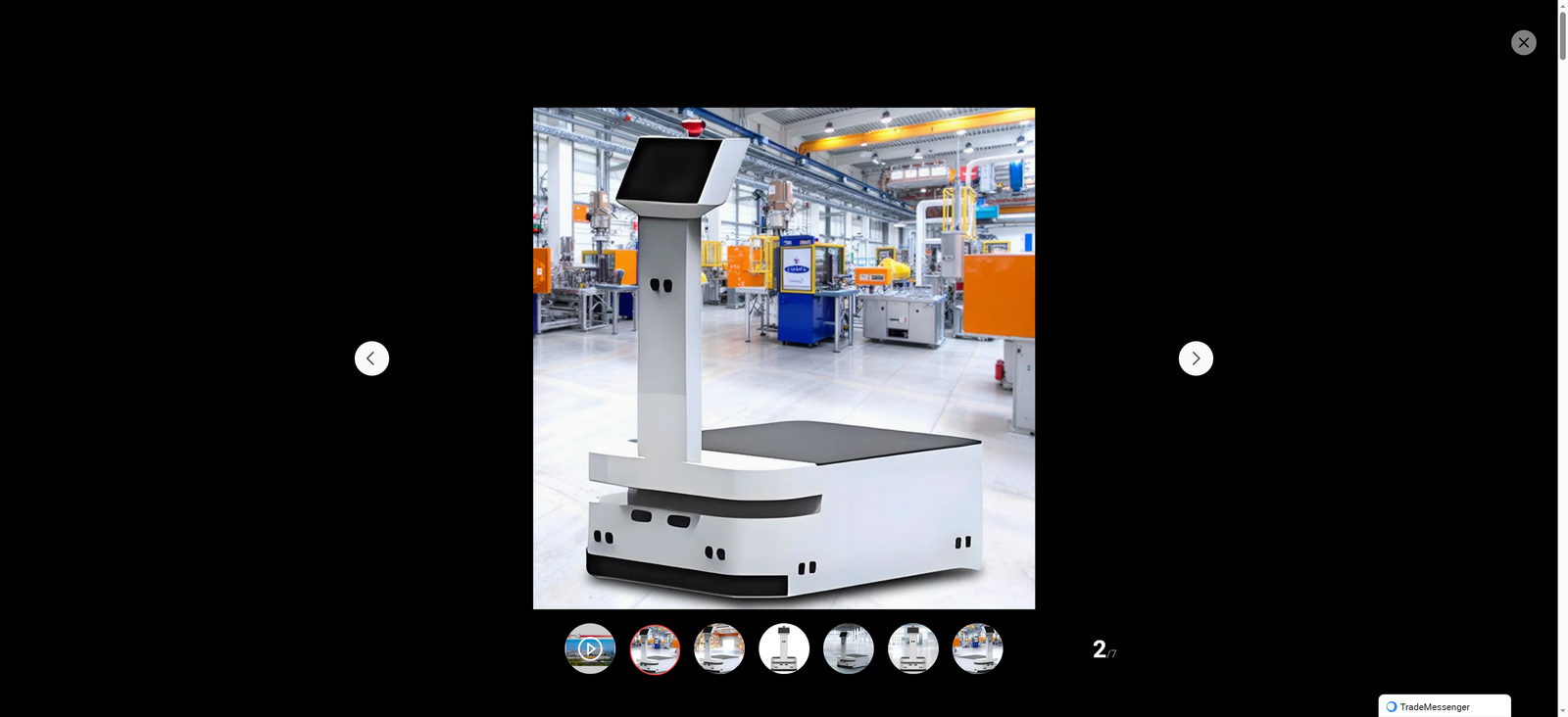
In the era of intelligent transformation, material transport has evolved from a labor-intensive link to a key node driving operational efficiency, and versatile little delivery robots have emerged as game-changers in this evolution. These compact, smart machines, designed to adapt to diverse scenarios and tasks, are breaking through the limitations of traditional transport methods, bringing unprecedented efficiency, accuracy and cost-saving benefits to industries ranging from manufacturing and logistics to healthcare and retail. Unlike large-scale transport equipment that is rigid and site-specific, these small delivery robots leverage flexibility and intelligence to tackle material transport challenges in complex, dynamic environments, proving that "small size" can deliver "big value".
The core strength of versatile little delivery robots lies in their exceptional adaptability, which enables them to seamlessly fit into multiple material transport scenarios. In indoor environments such as factories and warehouses, where space is limited and workflows are intricate, these robots shine with their narrow-passage navigation capability. For instance, models like OrionStar’s Baoxiaodi Slim are optimized for tight spaces, with a passing width controlled at 55cm, allowing them to move freely in crowded factory corridors, elevator cabs and warehouse aisles. They can handle cross-floor transport by integrating elevator control modules, autonomously calling and riding elevators to deliver materials between different floors, eliminating the need for manual handling and reducing waiting time. In industrial settings, robots like OrionStar’s Baochangtong series support "shared mapping" and PC-free deployment, enabling quick integration into existing production lines without disrupting operations, and their ability to navigate narrow 65cm paths significantly improves warehouse space utilization.
Beyond industrial and warehouse scenarios, these versatile little robots also excel in commercial, healthcare and urban terminal environments. In hospitals, they securely transport sensitive items such as medications and medical supplies using closed compartments and access control, reducing the risk of human error and cross-contamination while freeing up medical staff from tedious transport tasks. In hotels and office buildings, they deliver room service, documents and packages efficiently, operating quietly to avoid disturbing people and completing multiple delivery tasks at once with multi-compartment designs. Even in semi-outdoor or extreme environments, some models are equipped with sodium battery solutions that maintain 85% discharge capacity at -40℃, ensuring stable operation in low-temperature conditions. For urban "last three kilometers" delivery, compact outdoor models, similar to Meituan’s unmanned delivery vehicles but smaller in size, navigate sidewalks and residential areas to deliver groceries, takeout and small parcels, complementing large delivery vehicles and improving terminal delivery efficiency.
The efficient material transport capability of these robots is supported by advanced core technologies that ensure accuracy, safety and intelligence. In terms of navigation and positioning, most models adopt a hybrid navigation scheme combining laser radar and visual perception (VSLAMLaser), enabling real-time mapping of the environment, centimeter-level positioning accuracy and dynamic obstacle avoidance. They can detect obstacles as small as 20mm in height and adopt a three-layer protection mechanism of "prediction-evasion-emergency response" to ensure collision-free operation in crowded or dynamic environments. In terms of task management, these robots are equipped with intelligent scheduling systems, such as Orion-MoE large model scheduling algorithms, which support collaborative operation of more than 200 robots, reduce multi-machine conflict rates to less than 0.1%, and can quickly connect to enterprise MES or WMS systems to achieve real-time synchronization of data flow and logistics. Additionally, their modular design allows for easy customization—equipped with shelves, drawers, conveyor belts or custom attachments—to adapt to different payload requirements, with some models capable of carrying up to 300kg of materials, covering needs from small packages to heavy pallets.
From an operational perspective, versatile little delivery robots bring tangible benefits to enterprises and institutions by optimizing material transport workflows and reducing comprehensive costs. Firstly, they replace manual labor in repetitive, tedious transport tasks, alleviating labor shortages and reducing labor costs—especially in industries with high labor turnover or high labor intensity, such as manufacturing and logistics. For example, in a South Korean printing factory, the deployment of delivery robots allowed workers to focus on production tasks, significantly improving production efficiency and product quality while reducing the risk of work-related injuries from manual handling. Secondly, their 24/7 uninterrupted operation capability ensures continuous material supply, avoiding production delays caused by manual rest or fatigue, which is particularly critical in assembly lines or emergency scenarios such as hospital material supply. Thirdly, the high accuracy of robot transport reduces material damage and loss caused by human error, improving the stability and reliability of the material supply chain. According to industry data, the deployment of delivery robots can improve material transport efficiency by 30%-50% and reduce related costs by 20%-40% for most enterprises.
Looking ahead, with the continuous iteration of AI, sensor and battery technologies, versatile little delivery robots will become more intelligent, flexible and integrated, further expanding their application boundaries in material transport. They will evolve towards lighter designs, lower energy consumption and stronger environmental adaptability—such as better performance in extreme temperatures or harsh weather—and will gradually integrate with 5G, V2X and cloud management platforms to achieve more refined task scheduling and remote monitoring. Moreover, as policies support the development of intelligent logistics and the maturity of the industrial chain, these robots will move from large-scale pilot applications to large-scale deployment, becoming an indispensable part of the intelligent material transport system across industries. From factories and warehouses to hospitals and urban communities, these small but powerful robots will continue to play a key role in optimizing material flow, improving operational efficiency and promoting the transformation and upgrading of the logistics industry.
In conclusion, versatile little delivery robots are not just simple "material carriers", but intelligent terminals that integrate perception, decision-making and execution, reshaping the pattern of material transport with their flexibility, efficiency and versatility. They break through the limitations of traditional transport methods, adapt to the diverse and refined needs of modern material transport tasks, and bring sustainable development impetus to enterprises and society. As intelligent technology continues to advance, these small robots will surely unlock more potential in material transport, contributing to a more efficient, intelligent and green future of logistics.