
Specialized Disinfection Robot for Hospital Lobbies: Redefining Sanitation with UV Technology and Intelligent Control
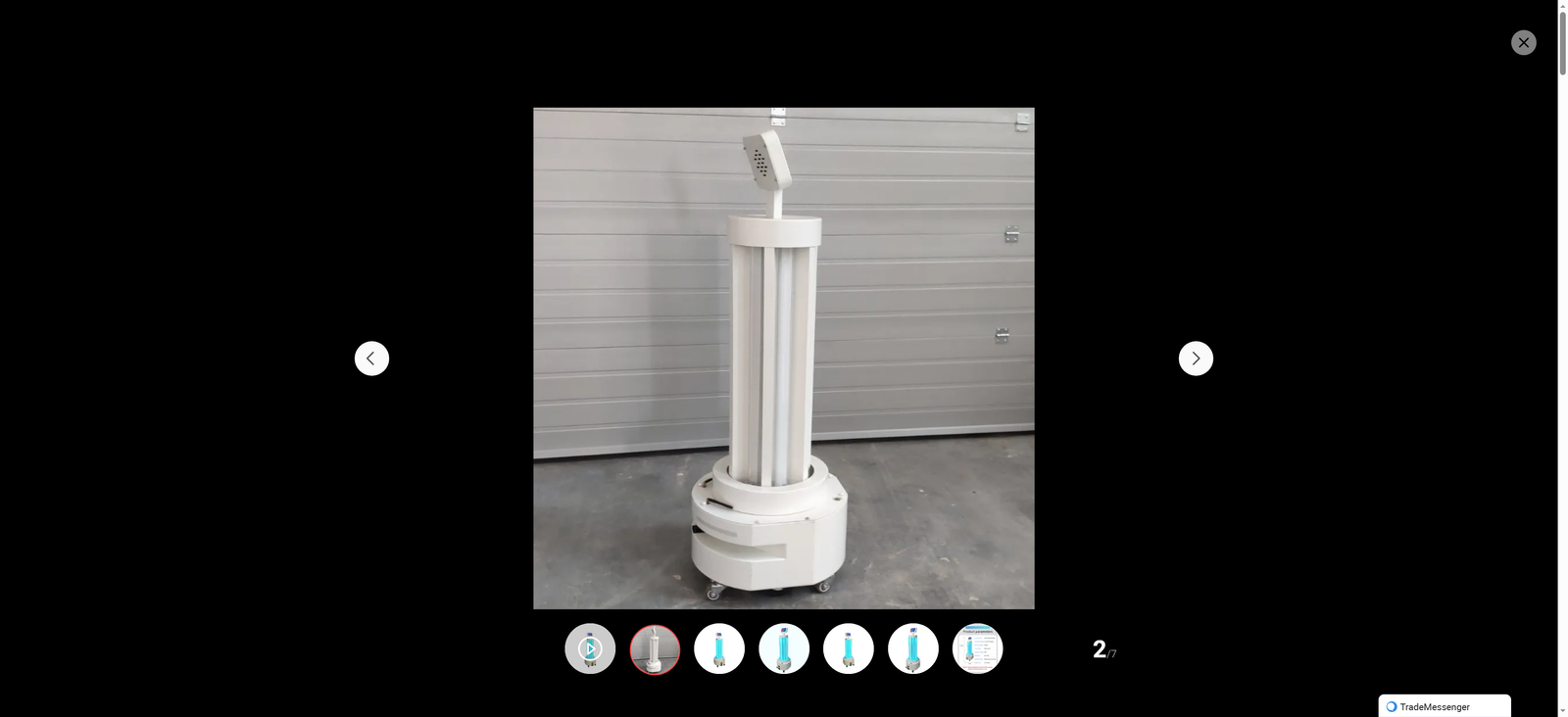
Hospital lobbies serve as the first line of contact for patients, visitors, and medical staff, bearing the dual pressure of high foot traffic and strict infection control requirements. Traditional manual disinfection often struggles with limitations such as uneven coverage, uncontrollable human error, and difficulty balancing efficiency with thoroughness. Against this backdrop, specialized disinfection robots tailored for hospital lobbies have emerged as a transformative solution, integrating UV sterilization, fully intelligent control, and simultaneous surface-air disinfection to build an impenetrable barrier against harmful pathogens.
UV Sterilization: The Core of Efficient Germ Elimination
At the heart of these specialized robots lies UV-C sterilization technology, a proven physical disinfection method that targets the DNA and RNA of microbial cells, rendering bacteria, viruses, and spores inactive without chemical residues. Unlike conventional disinfection agents that may cause secondary pollution or damage to sensitive surfaces, UV-C light achieves a sterilization rate of up to 99.9999% for a broad spectrum of pathogens, including drug-resistant bacteria like MRSA, coronaviruses, and C. difficile spores .
Designed for hospital lobbies' complex layout—with seating areas, reception desks, handrails, and high-touch surfaces—the robots are equipped with multi-angle UV lamps and adjustable irradiation heights, ensuring 360-degree coverage without shadowed dead zones . Advanced optical design concentrates UV energy to shorten disinfection cycles: a single robot can disinfect a 1,000 cubic meter lobby area in just 15 minutes, 2-3 times faster than manual operations . Safety is paramount, as built-in motion sensors and human detection systems automatically shut down UV lamps when personnel approach, eliminating the risk of accidental exposure .
Fully Intelligent Control: Unmanned Operation for Seamless Integration
Fully intelligent control systems empower these robots to adapt to the dynamic environment of hospital lobbies, realizing autonomous operation from mapping to task completion. Leveraging laser SLAM and visual SLAM multi-sensor fusion technology, the robots can quickly map a 10,000 square foot lobby in less than five minutes, automatically planning optimal disinfection routes while avoiding obstacles such as moving people, wheelchairs, and furniture .
The intuitive intelligent control platform supports customizable task settings—staff can preset disinfection schedules, adjust irradiation duration for high-risk areas (e.g., reception counters, elevator buttons), and switch between modes via a web-based background or mobile app . Equipped with automatic charging capabilities, the robots return to their docks independently when battery levels run low, enabling 24/7 uninterrupted operation without manual intervention . Post-disinfection, real-time data reports with heat maps and route tracking are generated automatically, providing quantifiable evidence of disinfection efficacy for compliance with medical institution audits .
Surface-Air Dual Disinfection: Comprehensive Sanitation for Complex Spaces
Hospital lobbies pose unique challenges as pathogens spread through both surface contact and airborne aerosols. Specialized disinfection robots address this by integrating UV sterilization with air filtration and ultra-fine mist technology, achieving simultaneous surface and air disinfection . For surface disinfection, UV-C light penetrates high-touch areas that manual cleaning often misses, while ultra-fine mist (particle size ≤5 μm) reaches crevices in seating, decorative elements, and equipment surfaces .
In air disinfection mode, the robots circulate indoor air through HEPA filters to remove PM2.5, aerosols, and airborne pathogens, while UV-C light neutralizes microorganisms in the air stream . This dual-action approach ensures that both visible surfaces and invisible air are sanitized, effectively reducing the risk of cross-infection in crowded lobby environments. Some advanced models even support multi-disinfectant compatibility, allowing hospitals to use hypochlorous acid or hydrogen peroxide solutions for enhanced efficacy in high-risk scenarios .
Transforming Hospital Lobby Infection Control
The application of specialized disinfection robots in hospital lobbies marks a shift from "human-dependent" to "algorithm-driven" infection control. By automating repetitive disinfection tasks, hospitals can reallocate human resources to critical care work, reducing labor costs by up to 80% while improving disinfection consistency . The robots' compact design enables them to navigate narrow spaces between seating rows and around reception areas, adapting to the lobby's dynamic flow without disrupting daily operations .
As healthcare continues to prioritize infection prevention, these robots are evolving with technological advancements—future iterations will integrate AI-driven big data analysis to optimize disinfection plans based on foot traffic patterns and pathogen risk, and multi-robot collaboration systems to cover larger lobbies more efficiently . From杀灭 harmful pathogens to ensuring regulatory compliance, specialized disinfection robots are becoming indispensable tools in hospital lobbies, safeguarding the health of everyone who steps through the door.
In an era where infection control is non-negotiable, the combination of UV sterilization, fully intelligent control, and surface-air dual disinfection has elevated hospital lobby sanitation to a new standard. These robots are not just equipment—they are silent guardians, working tirelessly to create a safer environment for patients, visitors, and medical staff alike.