
The Rising Star of Smart Service: Small Food Delivery Robots Transforming Restaurants and Hotels
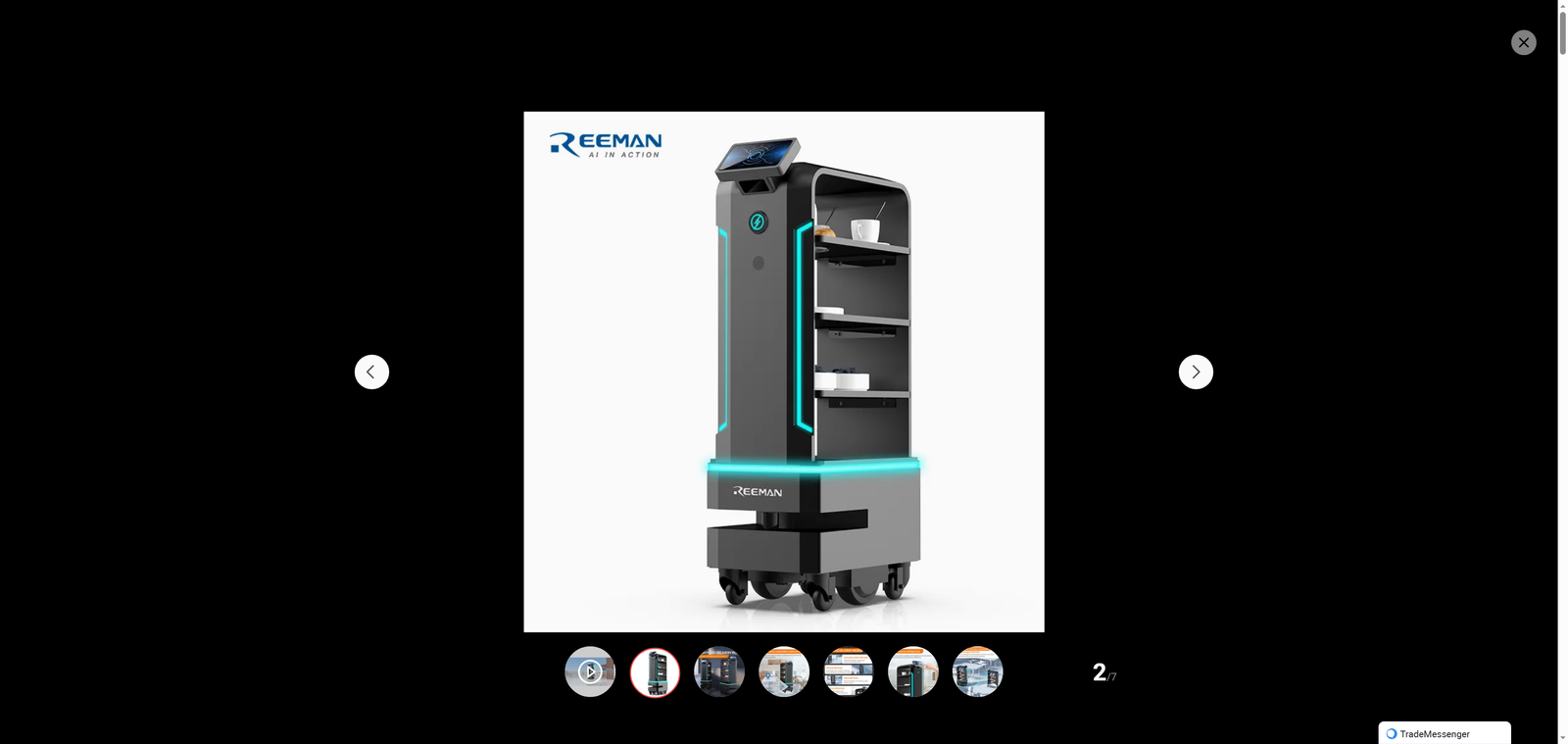
In the wave of global intelligence, the integration of technology and service industries has spawned a series of innovative products, among which small food delivery robots have become a bright star in the catering and hotel sectors. These compact, flexible and intelligent robots are no longer just a "novelty" in science fiction movies, but have gradually stepped into real life, quietly changing the way services are provided in restaurants and hotels, and injecting new vitality into the traditional service industry.
Small food delivery robots, as the name suggests, are intelligent equipment designed for short-distance food and item delivery. Compared with large-scale logistics robots, they are more suitable for the relatively narrow and complex indoor environments of restaurants and hotels, with the characteristics of small size, light weight, flexible movement and strong adaptability. Equipped with advanced sensors, navigation systems and intelligent control modules, these robots can accurately identify obstacles, plan optimal delivery routes, and complete delivery tasks efficiently and safely without manual intervention.
In restaurants, small food delivery robots have become powerful assistants for waiters, solving many pain points in the catering service process. First of all, they greatly improve the delivery efficiency. During peak meal hours, restaurants often face a shortage of waiters, and customers have to wait a long time for food to be served. Small food delivery robots can carry multiple dishes at one time, shuttling between the kitchen and dining tables quickly. They do not need to rest, do not make mistakes, and can continuously complete delivery tasks, which shortens the customer's waiting time and improves the restaurant's turnover rate. Secondly, they reduce the labor cost of restaurants. In recent years, the labor cost in the catering industry has been rising, and hiring and retaining waiters has become a difficult problem for many restaurant operators. The use of small food delivery robots can replace part of the manual delivery work, reducing the number of waiters needed, thereby reducing labor costs and improving the restaurant's profit margin. In addition, small food delivery robots also add fun to the dining experience. Many robots are designed with cute appearances and can interact with customers through voice prompts, which not only attracts children's attention, but also makes adults feel fresh and interesting, enhancing the customer's sense of satisfaction and recognition of the restaurant.
In hotels, small food delivery robots also play an increasingly important role, bringing a more convenient and intelligent experience to guests and hotel management. For guests, when they need to order takeout, buy snacks or receive daily necessities, they no longer need to go to the front desk or wait for the delivery person to arrive at the door. They only need to make a request through the hotel's smart terminal or mobile app, and the small food delivery robot will send the items to the door of the room accurately. This not only saves the guest's time, but also protects the guest's privacy, avoiding the trouble of interacting with strangers. For hotel management, small food delivery robots can optimize the service process and improve management efficiency. The robots can automatically record delivery information, such as delivery time, item type and guest room number, which is convenient for the hotel to count and manage service data. At the same time, they can also reduce the workload of hotel attendants, allowing them to focus more on providing high-quality personalized services, such as room cleaning and guest consultation, thereby improving the overall service level of the hotel.
The popularization and application of small food delivery robots are not only due to their obvious practical advantages, but also inseparable from the continuous progress of related technologies. With the development of artificial intelligence, Internet of Things, navigation and positioning and other technologies, the performance of small food delivery robots is constantly improving. Their navigation accuracy is higher, the ability to avoid obstacles is stronger, and they can better adapt to the complex and changeable indoor environments of restaurants and hotels. At the same time, the cost of robot production is gradually reducing, making it possible for more small and medium-sized restaurants and hotels to afford and use them.
Of course, small food delivery robots still face some challenges in their application process. For example, in some old restaurants or hotels with narrow corridors and complex layouts, the movement of robots may be restricted; in the face of sudden obstacles or special situations, the emergency response ability of robots needs to be further improved; in addition, some elderly customers may be not familiar with the use of intelligent robots, and need the guidance and help of staff. However, with the continuous innovation and upgrading of technology, these problems will be gradually solved.
Looking to the future, small food delivery robots will have a broader development space in the restaurant and hotel industries. On the one hand, their functions will be more diversified. In addition to delivering food and items, they may also undertake more service tasks, such as guiding customers, taking orders, collecting dishes and cleaning tables, becoming a "multi-functional assistant" in the service industry. On the other hand, the integration of robots with other intelligent devices will be closer. They will be connected with the restaurant's ordering system, the hotel's customer management system and other platforms to realize information sharing and collaborative work, building a more intelligent and efficient service ecosystem. In addition, with the improvement of people's acceptance of intelligent services, small food delivery robots will become a standard configuration in more restaurants and hotels, becoming an important symbol of the intelligent transformation of the service industry.
In conclusion, small food delivery robots, with their unique advantages, are gradually changing the service mode of restaurants and hotels, promoting the intelligent transformation and upgrading of the service industry. They are not only a technological innovation, but also a new force to improve service quality, reduce costs and enhance core competitiveness. With the continuous advancement of technology and the continuous expansion of application scenarios, small food delivery robots will surely shine more brightly in the future service industry, bringing more convenience and surprises to people's life.