
Shock-Absorbing and Vibration-Free and Gentle Delivery Robot: Redefining Precision and Care in Intelligent Logistics
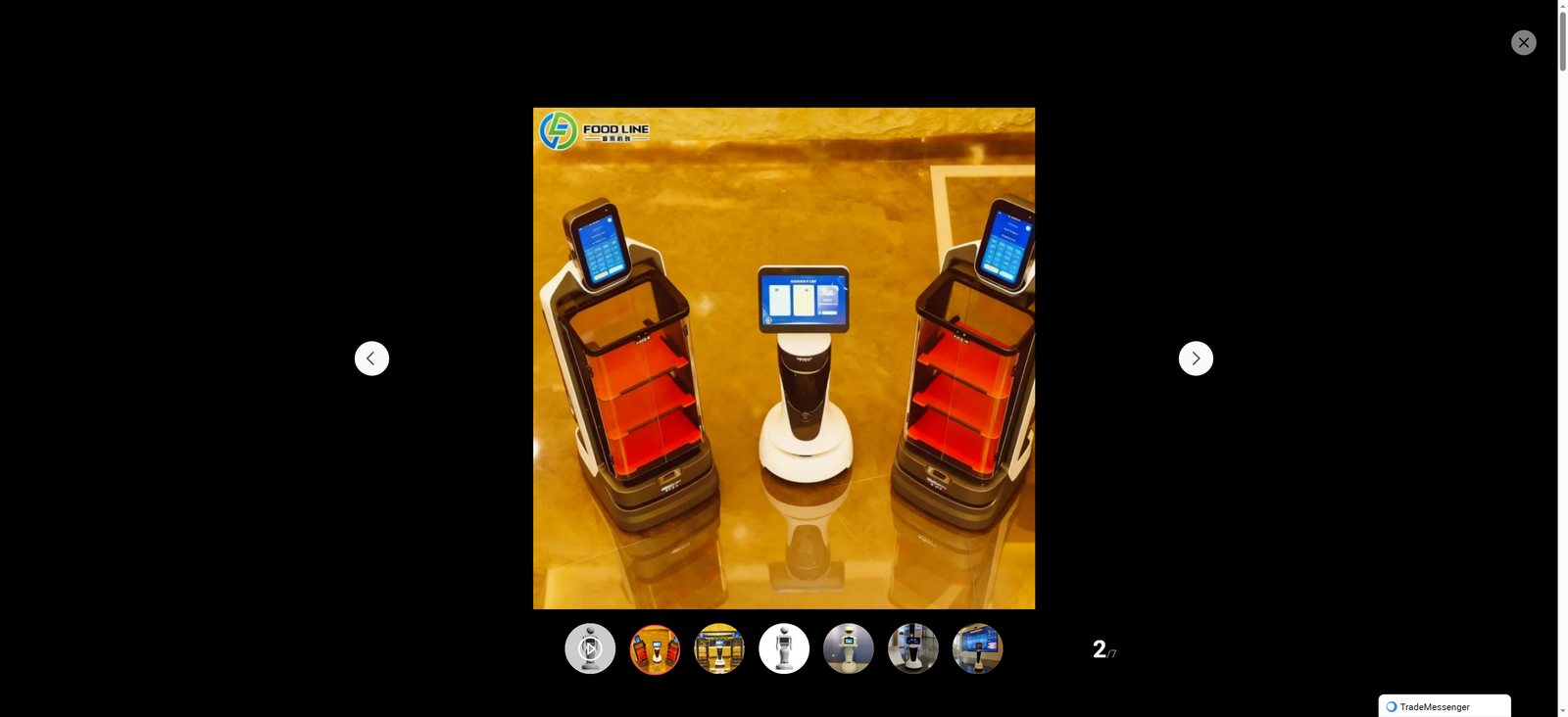
In the era of intelligent logistics and contactless service, delivery robots have become indispensable tools across industries, from restaurants and hotels to hospitals and industrial parks. However, traditional delivery robots often struggle with vibration and impact during operation, leading to damaged goods, spilled items, or compromised delivery quality—especially when handling fragile, delicate, or high-value payloads. To address this critical pain point, the shock-absorbing, vibration-free, and gentle delivery robot emerges as a game-changer, integrating advanced engineering design and intelligent technology to ensure that every delivery is smooth, safe, and precise.
At the core of this innovative robot lies its state-of-the-art shock-absorbing and vibration-free technology, which distinguishes it from conventional delivery equipment. Unlike traditional robots that rely on rigid chassis and simple suspension systems, this specialized robot adopts automotive-grade independent suspension structures and multi-link damping systems, a design inspired by high-performance vehicles to minimize vibrations caused by uneven terrain, sudden stops, or turns. The chassis is often crafted with lightweight yet durable die-cast materials, reducing overall weight to enhance operational efficiency while ensuring exceptional strength to withstand daily wear and tear—all while reducing the friction and environmental disturbance that contribute to vibration. Additionally, advanced sensor fusion technology, including laser radar, infrared sensors, and IMU (Inertial Measurement Unit), enables real-time detection of road conditions, allowing the robot to adjust its speed and suspension damping dynamically to counteract shocks and vibrations before they affect the payload.
The "gentle delivery" feature, closely linked to its shock-absorbing and vibration-free capabilities, is designed to prioritize the safety and integrity of the delivered items. This is particularly critical in scenarios where precision and care are non-negotiable. For example, in restaurants and catering environments, the robot can transport liquid dishes, delicate pastries, or hot beverages without spilling a drop, thanks to its stable operation and minimal vibration—even when navigating narrow aisles or uneven floor surfaces. In hospitals, it can deliver fragile medical supplies, temperature-sensitive medications, or diagnostic samples with utmost gentleness, avoiding damage that could compromise patient care or test results. Even in industrial settings, the robot can transport small, precision-manufactured components without causing scratches or structural damage, supporting efficient production workflows.
To achieve true gentle delivery, the robot also integrates intelligent navigation and motion control systems that work in harmony with its shock-absorbing mechanisms. Many models adopt dual SLAM (Simultaneous Localization and Mapping) solutions, combining lidar and visual SLAM to ensure high-precision positioning and smooth navigation in complex environments—whether crowded restaurant halls, busy hospital corridors, or cluttered industrial workshops. The robot moves at an optimized speed (typically 0.1 to 1.0 m/s) and features 3D omnidirectional obstacle avoidance, with response times as short as 0.5 seconds to detect and avoid obstacles, eliminating sudden jolts or collisions that could disrupt the payload. Some advanced designs, such as soft everting robots, even extend their bodies through a flexible tube, with only the tip moving during operation to further reduce friction and environmental disturbance, enabling gentle delivery in highly constrained or hazardous spaces.
Beyond its core shock-absorbing, vibration-free, and gentle delivery capabilities, these robots offer additional features that enhance their versatility and practicality. Many are equipped with intelligent trays with infrared sensors or plate detection technology, ensuring secure placement of items and preventing slippage during transport. They support autonomous charging, with battery life ranging from 8 to 15 hours, enabling 24/7 uninterrupted operation to meet the demands of high-volume delivery scenarios. Some models also include user-friendly interaction features, such as voice prompts, visual screen guidance, or haptic feedback, making it easy for staff or customers to retrieve items without disrupting the robot’s gentle operation.
The impact of shock-absorbing, vibration-free, and gentle delivery robots extends beyond just protecting goods—it also optimizes operational efficiency, reduces costs, and enhances user experience. For businesses in the catering or hospitality industry, these robots reduce food waste caused by spills, lower labor costs by automating repetitive delivery tasks, and improve customer satisfaction by ensuring timely, intact deliveries. In healthcare settings, they reduce the risk of medical supply damage, streamline logistics workflows, and minimize cross-infection risks through contactless delivery, supporting safer and more efficient patient care. In the broader intelligent logistics ecosystem, they fill a critical gap in handling fragile or delicate items, complementing traditional delivery robots and expanding the scope of automated delivery applications.
As technology continues to advance, the future of these robots looks even more promising. Ongoing research is focused on enhancing their payload capacity—with current models able to carry anywhere from 5 kg to 40 kg, and soft everting robots capable of transporting payloads up to 1.5 kg in various shapes. Engineers are also exploring more advanced damping materials and adaptive suspension systems to handle even more challenging terrains, such as larger gaps or steeper slopes, while maintaining gentle delivery performance. Additionally, integration with IoT (Internet of Things) systems and cloud-based management platforms will enable real-time monitoring of robot performance, predictive maintenance, and centralized scheduling, further optimizing efficiency and reliability.
In conclusion, the shock-absorbing, vibration-free, and gentle delivery robot represents a significant advancement in intelligent delivery technology. By prioritizing smooth, precise, and careful transport, it addresses a longstanding challenge in automated logistics and opens up new possibilities across diverse industries. From protecting delicate pastries and critical medical supplies to supporting precision manufacturing, these robots are not just tools for efficiency—they are guardians of quality, ensuring that every delivery is handled with the utmost care. As demand for contactless, precise, and reliable delivery continues to grow, these specialized robots will play an increasingly vital role in shaping the future of intelligent logistics, redefining what it means to deliver with precision and care.