
ROS1 Open-Source Robot Drive-by-Wire Chassis: Empowering Intelligent Movement with Chuangwang SLAM Mapping & Navigation and High-Flexibility Omnidirectional Mobility
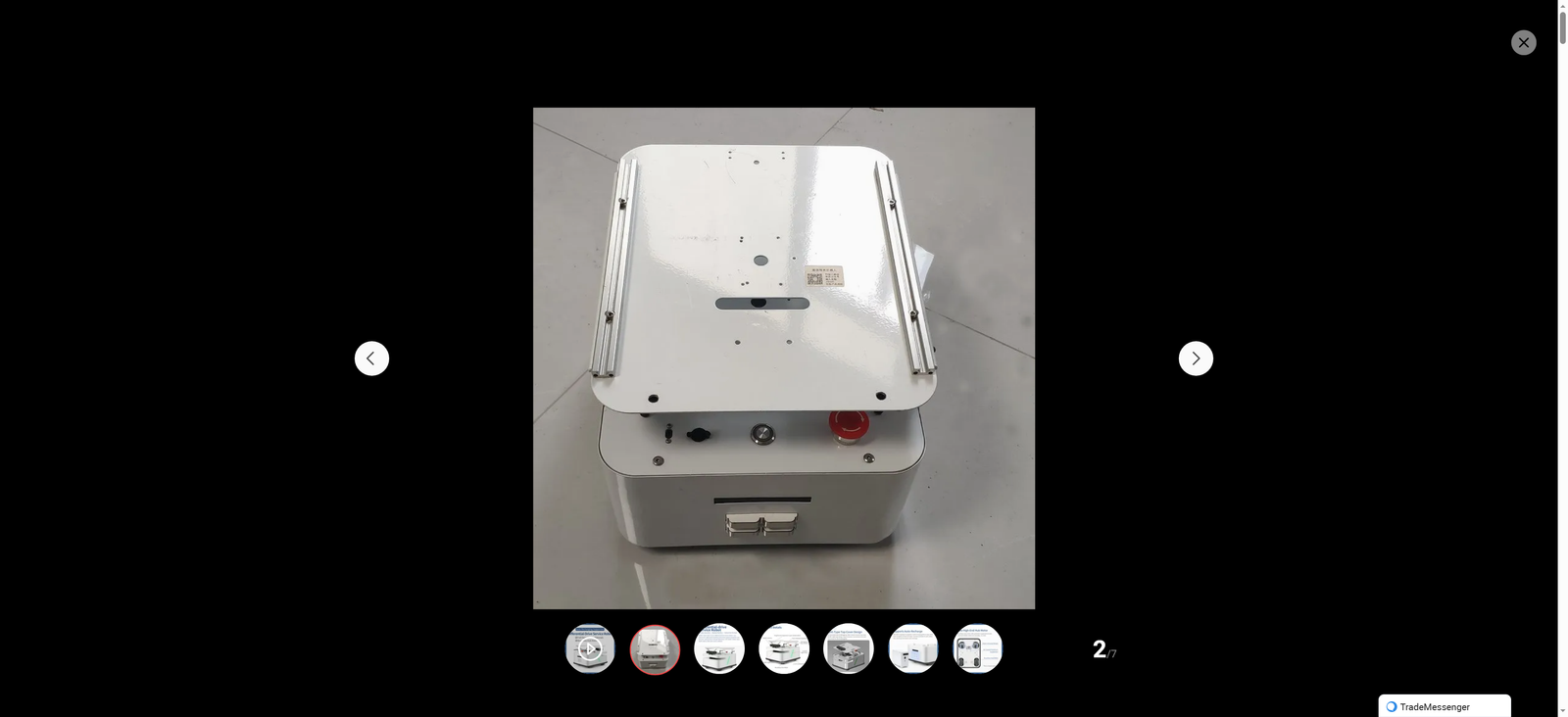
In the era of rapid development of intelligent robotics, the drive-by-wire chassis serves as the "feet" of autonomous robots, bearing the core task of enabling stable, precise, and flexible movement. As a mature and widely used open-source middleware, ROS1 (Robot Operating System 1) provides a powerful technical foundation for the integration and optimization of robot components. Combining the advantages of ROS1 open-source architecture, Chuangwang SLAM mapping and navigation technology, and high-flexibility omnidirectional movement, the ROS1 open-source robot drive-by-wire chassis has broken through the technical bottlenecks of traditional robot movement and positioning, becoming a key supporting platform for the popularization and application of intelligent robots in various fields.
The Core Foundation: ROS1 Open-Source Ecosystem Empowers Drive-by-Wire Chassis Innovation
The ROS1 open-source ecosystem has long been recognized as the cornerstone of intelligent robot development, with its modular design, rich open-source packages, and strong community support, which greatly reduces the development threshold of robot drive-by-wire chassis and accelerates the iteration speed of technology. Unlike closed-source drive-by-wire systems, the ROS1-based open-source robot drive-by-wire chassis adopts an open architecture, allowing developers to freely access, modify and secondary develop the source code according to actual application needs, realizing the flexible matching of chassis functions and specific scenarios.
For the drive-by-wire chassis, the ROS1 ecosystem provides a complete set of technical support including motion control, sensor data fusion, and communication interaction. The rich open-source packages (such as geometry_msgs, nav_msgs, and tf) in ROS1 can quickly realize the parsing and transmission of chassis motion commands, the collection and processing of sensor data (laser radar, IMU, camera, etc.), and the coordinate transformation of robot posture, avoiding the repetitive development of basic functions. At the same time, the ROS1 communication mechanism (including Topic, Service, and Action) ensures the real-time and stability of data interaction between the drive-by-wire chassis and upper-layer control modules (such as SLAM mapping, navigation planning), laying a solid foundation for the integrated operation of the entire robot system . In addition, the open-source nature of ROS1 also promotes technical exchanges and cooperation among global developers, making the drive-by-wire chassis continuously optimized in terms of performance, stability, and compatibility, and adapting to the diversified needs of different application fields.
Intelligent Core: Chuangwang SLAM Mapping & Navigation Realizes Autonomous Positioning and Path Planning
Autonomous mapping and navigation are the key to realizing the intelligence of mobile robots, and Chuangwang SLAM (Simultaneous Localization and Mapping) technology, as the core positioning and mapping solution integrated into the drive-by-wire chassis, solves the problem that traditional robots are difficult to adapt to unknown environments and complex terrain. SLAM technology, known as "simultaneous localization and mapping", enables the robot to establish an environmental map in real time while moving in an unknown environment, and accurately estimate its own position, realizing "where it goes, where it maps, and where it navigates" . Chuangwang SLAM technology, based on the optimization and innovation of traditional SLAM algorithms, has higher mapping accuracy, faster navigation response speed, and stronger adaptability to complex environments, perfectly matching the application needs of ROS1 open-source robot drive-by-wire chassis.
In the actual operation process, the Chuangwang SLAM module integrated in the drive-by-wire chassis collects environmental data in real time through the equipped laser radar, depth camera and other sensors, and completes a series of key steps including feature extraction, data association, state estimation, map update, loop closure detection and global optimization through the algorithm . The high-precision point cloud map or grid map constructed by it can clearly reflect the distribution of obstacles in the environment, the layout of the scene, and other key information, providing accurate spatial reference for the autonomous navigation of the chassis. In terms of navigation function, Chuangwang SLAM technology is deeply integrated with the ROS1 navigation framework (including move_base, AMCL and other packages), which can realize autonomous path planning, real-time obstacle avoidance, and precise positioning according to the target position set by the user . Whether it is a narrow indoor space or a complex outdoor environment, the drive-by-wire chassis can automatically adjust the movement path, avoid obstacles such as walls, equipment, and pedestrians, and ensure that it can reach the target position stably and efficiently. Compared with traditional manual control or fixed-path navigation, Chuangwang SLAM mapping and navigation technology not only greatly improves the work efficiency of the robot but also reduces the manual intervention cost, making the drive-by-wire chassis truly realize autonomous intelligence.
Movement Advantage: High-Flexibility Omnidirectional Movement Breaks Through Spatial Limitations
The high-flexibility omnidirectional movement is another core highlight of the ROS1 open-source robot drive-by-wire chassis, which solves the problem that traditional robot chassis (such as differential drive, Ackermann drive) have poor maneuverability in narrow spaces and cannot realize arbitrary direction movement. The omnidirectional movement function of the chassis is mainly realized by adopting advanced omnidirectional wheel technology (such as Mecanum wheel, Swedish wheel) and matching with the precise motion control algorithm of ROS1 . Among them, the Mecanum wheel, with its unique structure of hub and obliquely installed small rollers, can decompose the motion force into forward and transverse components when rotating, enabling the chassis to realize arbitrary direction movement such as forward, backward, left, right, oblique movement, and in-situ rotation without changing the direction of the wheel itself .
Under the control of the ROS1 motion control module, the high-flexibility omnidirectional movement of the drive-by-wire chassis has the characteristics of high precision, fast response, and stable operation. In narrow spaces (such as indoor workshops, warehouses, and narrow corridors), the chassis can realize in-situ rotation and transverse movement, avoiding the cumbersome operations of turning around and adjusting the direction, greatly improving the space utilization rate and work efficiency . For example, in the warehouse logistics scenario, the chassis can flexibly shuttle between dense shelves, complete the handling and sorting of goods without occupying too much space; in the indoor service scenario, it can accurately move to the side of the user to provide services, avoiding collision with furniture and other obstacles. At the same time, the ROS1 open-source architecture allows developers to optimize the omnidirectional movement algorithm according to actual needs, adjust parameters such as movement speed and acceleration, and realize the flexible matching of movement performance and application scenarios . This high-flexibility omnidirectional movement capability enables the drive-by-wire chassis to adapt to more complex spatial environments and expand the application scope of the robot.
Integration Application: Empowering Diversified Scenarios with Synergistic Advantages
The ROS1 open-source robot drive-by-wire chassis, with the synergistic effect of ROS1 open-source ecosystem, Chuangwang SLAM mapping and navigation technology, and high-flexibility omnidirectional movement, has formed a complete technical system, which is widely used in industrial manufacturing, logistics warehousing, indoor service, scientific research and education, and other fields, showing strong practical value and application potential.
In the field of industrial manufacturing, the drive-by-wire chassis can be equipped with manipulators and detection equipment to form an autonomous inspection robot. With the help of Chuangwang SLAM mapping and navigation technology, it can automatically complete the inspection of production lines, equipment, and pipelines in the workshop, and use omnidirectional movement to flexibly pass through narrow workshop channels, improving the inspection efficiency and reducing the safety risks of manual inspection . In the field of logistics warehousing, the chassis can be transformed into an autonomous handling robot, relying on high-precision SLAM mapping to realize the positioning of goods and shelves, and using omnidirectional movement to quickly and accurately complete the handling of goods, matching the intelligent logistics needs of modern warehouses . In the field of indoor service (such as hotels, hospitals, shopping malls), the drive-by-wire chassis can be used as a service robot platform to realize autonomous navigation and movement, provide services such as guidance, delivery, and consultation, and improve service efficiency and user experience . In the field of scientific research and education, the open-source nature of the chassis provides a good experimental platform for researchers and students, who can carry out secondary development and technical innovation based on ROS1, explore the application of SLAM mapping, navigation planning, and omnidirectional movement technology, and promote the development and inheritance of intelligent robot technology .
Future Outlook: Continuous Iteration to Create a More Intelligent Drive-by-Wire Platform
With the continuous development of intelligent robot technology, the ROS1 open-source robot drive-by-wire chassis, as a key supporting platform, will continue to iterate and upgrade with the help of the open-source ecosystem and technological innovation. In terms of the ROS1 ecosystem, although ROS2 has gradually emerged, the rich open-source resources and mature application cases of ROS1 still make it have strong vitality. The drive-by-wire chassis will continue to absorb the advantages of the ROS1 ecosystem, and at the same time explore the compatibility with ROS2, realizing the smooth transition of technology .
In terms of Chuangwang SLAM mapping and navigation technology, future optimization will focus on improving the adaptability to extreme environments (such as dark, rainy, and dusty environments), reducing the dependence on sensors, and realizing more efficient and accurate mapping and navigation . In terms of omnidirectional movement, it will further improve the stability and load capacity of movement, combine with multi-sensor fusion technology, and realize more precise motion control . In addition, with the integration of artificial intelligence, big data, and other technologies, the drive-by-wire chassis will gradually realize intelligent decision-making capabilities, which can automatically adjust work strategies according to environmental changes and task requirements, and move towards a more intelligent, efficient, and flexible direction.
Conclusion
The ROS1 open-source robot drive-by-wire chassis, integrating the advantages of ROS1 open-source architecture, Chuangwang SLAM mapping and navigation technology, and high-flexibility omnidirectional movement, has broken through the technical limitations of traditional robot chassis and become a key carrier for the intelligent development of mobile robots. The ROS1 open-source ecosystem provides a flexible and efficient development platform for the chassis, Chuangwang SLAM technology realizes the autonomous positioning and navigation of the chassis, and the high-flexibility omnidirectional movement expands the application space of the chassis. The synergistic effect of the three enables the drive-by-wire chassis to show strong adaptability and practical value in various fields.
In the future, with the continuous innovation of open-source technology, SLAM mapping and navigation technology, and motion control technology, the ROS1 open-source robot drive-by-wire chassis will continue to optimize its performance, expand its application scenarios, and provide stronger support for the popularization and development of intelligent robots, contributing to the innovation and progress of the intelligent manufacturing and service industry.