
Autonomous Robot Delivery: Transforming Restaurant Service in China
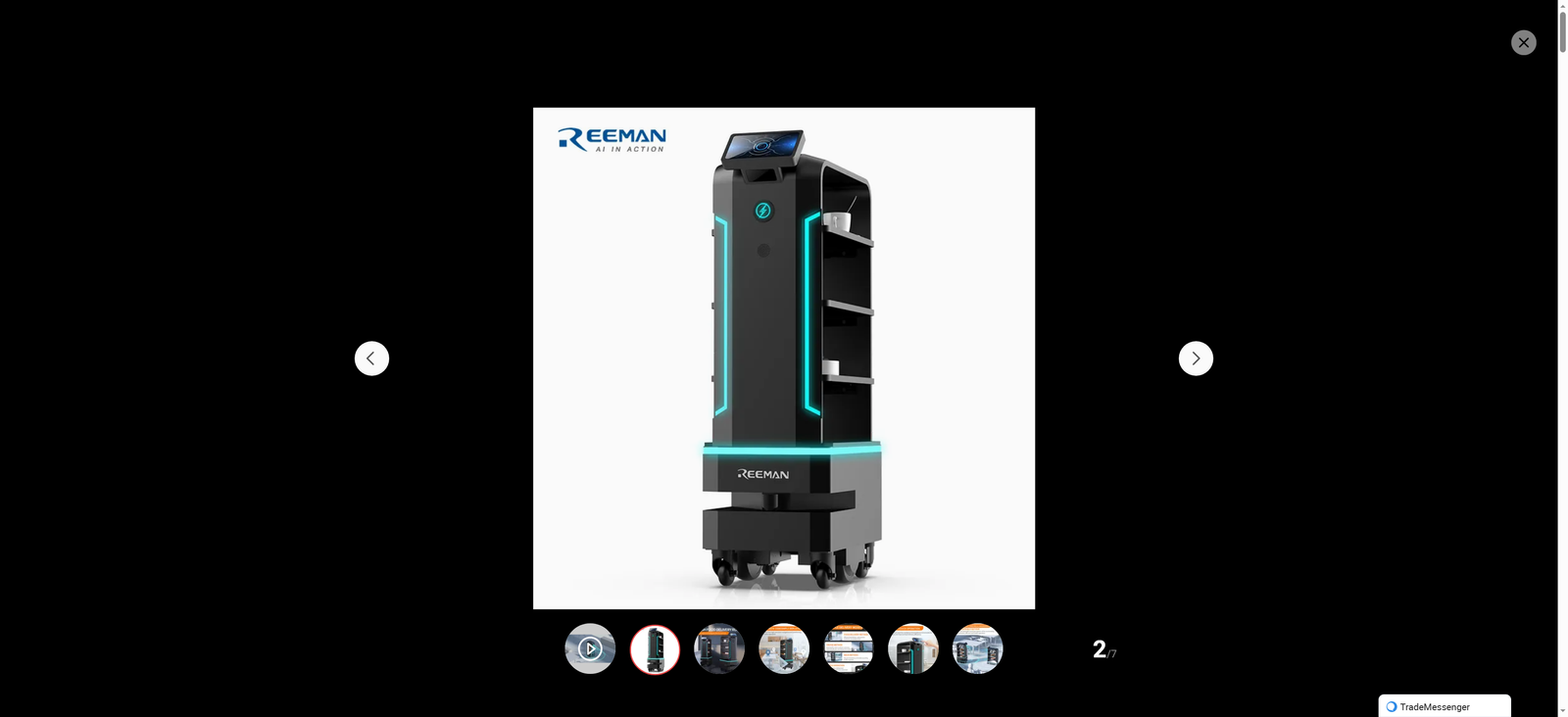
In the wave of global intelligent transformation, the catering industry in China is undergoing a profound revolution driven by technology. Autonomous robot delivery has emerged as a key breakthrough, with restaurant service robot companies leading the charge to integrate delivery robots into daily restaurant operations. These intelligent machines are not only reshaping the efficiency of food delivery but also redefining the future of catering services, making "robot delivers food in restaurant" a common sight across the country.
China’s restaurant service robot companies have made remarkable strides in technological innovation, laying a solid foundation for the widespread application of delivery robots. Leveraging advanced technologies such as multi-sensor fusion, SLAM navigation, and artificial intelligence decision-making algorithms, these companies have developed autonomous delivery robots with high stability and adaptability. Unlike traditional manual delivery, these robots can achieve precise positioning, dynamic obstacle avoidance, and multi-machine collaboration, smoothly navigating through crowded dining halls, narrow aisles, and complex restaurant environments without human intervention. For instance, leading enterprises like Orion Star have launched delivery robots that can complete single-point and multi-point delivery, automatically return to charge when power is low, and even remind customers to avoid wrong food pickup, significantly improving delivery accuracy and efficiency.
The integration of delivery robots into restaurant services has brought tangible benefits to both restaurant operators and consumers. For restaurant owners, the adoption of autonomous robot delivery effectively addresses the pain points of rising labor costs and labor shortages. Data shows that a single delivery robot can work for nearly 12 hours a day, delivering 400 to 600 plates of food, which is equivalent to the workload of 2 to 3 human waiters, and can save 8,000 to 12,000 yuan in labor costs per month. Meanwhile, these robots reduce the physical burden on employees by taking over repetitive and tedious tasks such as food delivery and tableware recovery, lowering staff turnover rates and allowing human employees to focus on more valuable services like customer consultation and dish promotion.
For consumers, robot-delivered food offers a more efficient and novel dining experience. With autonomous delivery robots, the waiting time for food is significantly shortened, especially during peak dining hours, as robots can quickly transfer food from the kitchen to the dining table without delay. Moreover, many delivery robots are equipped with interactive functions such as voice broadcasting, 7-inch HD displays, and even singing and dancing performances, adding a sense of technology and fun to the dining process, which is particularly popular among young customers and families. In large chain restaurants like Xijia De, robot greeters and delivery robots have become "traffic stars," attracting customers through interesting interactions and enhancing overall customer satisfaction.
The rapid development of China’s delivery robot industry is also supported by favorable policies and a booming market environment. The Chinese government has included service robots in key development areas in national strategies such as the "14th Five-Year Plan for Robot Industry Development" and the "Artificial Intelligence Development Plan (2023—2025)," providing financial subsidies, tax incentives, and R&D support for related enterprises. Local governments in the Yangtze River Delta, the Guangdong-Hong Kong-Macao Greater Bay Area, and other regions have also introduced special subsidies to encourage restaurants to adopt intelligent equipment, further accelerating the market penetration of delivery robots. Additionally, the continuous growth of China’s catering market and the increasing demand for digital and intelligent services have created a huge space for the development of restaurant service robot companies, driving the market scale of delivery robots to grow at an annual compound growth rate of over 30%.
Looking ahead, China’s restaurant service robot companies will continue to focus on technological upgrading and product iteration, pushing autonomous robot delivery towards a more intelligent, personalized, and green direction. Future delivery robots will integrate 5G, the Internet of Things, and edge computing to achieve more accurate environmental perception and autonomous decision-making, and will be customized to meet the needs of different types of restaurants, such as pizza shops, cafes, and large-scale catering venues. Meanwhile, with the continuous improvement of core component localization rates and the optimization of product costs, delivery robots will penetrate more into third and fourth-tier cities and sinking markets, bringing intelligent services to more catering enterprises.
In conclusion, China’s restaurant service robot companies have demonstrated strong innovation capabilities in the field of autonomous robot delivery, successfully promoting the transformation of the catering industry from labor-intensive to technology-intensive. Delivery robots have not only become an important tool for restaurants to improve efficiency and reduce costs but also a new symbol of China’s intelligent catering development. As technology continues to advance and market demand continues to expand, autonomous robot delivery will surely play a more important role in China’s catering industry, creating a more convenient, efficient, and enjoyable dining experience for people and leading the global development trend of intelligent catering services.