
Revolutionize Restaurant Efficiency with Intelligent Food Delivery Robots
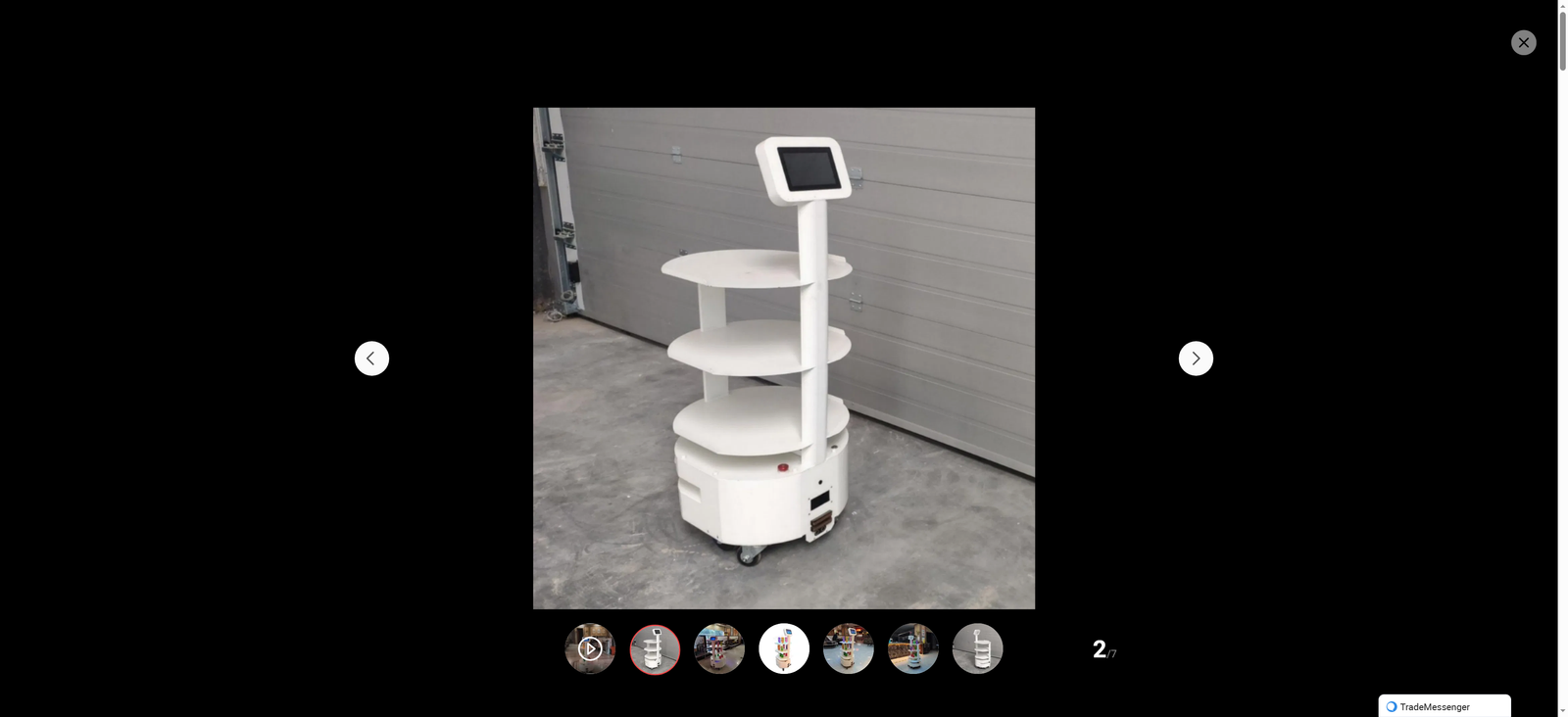
In the fiercely competitive catering industry, operational efficiency directly determines a restaurant’s profitability and market competitiveness. Persistent challenges such as labor shortages, rising labor costs, and inconsistent service quality during peak hours have become bottlenecks for sustainable development. Today, intelligent food delivery robots are emerging as a transformative solution, reshaping service models and leading a new wave of efficiency revolution in the catering sector. These advanced devices are not just technological gimmicks but practical tools that integrate into daily operations, delivering tangible value to restaurant owners, staff, and customers alike.
Cutting-Edge Technology: The Core Driving Force of Efficient Operations
The outstanding performance of intelligent food delivery robots stems from sophisticated core technologies that enable them to adapt seamlessly to complex restaurant environments. At the heart of their functionality lies advanced navigation and obstacle avoidance systems, typically powered by multi-sensor fusion SLAM (Simultaneous Localization and Mapping) solutions. Integrating lidar, cameras, RGBD sensors, and IMUs, these robots can create real-time environmental maps, achieve centimeter-level positioning accuracy, and navigate autonomously even in crowded dining areas or dynamic settings with moving customers and staff . Unlike traditional 2D navigation, 3D visual sensors enable full-body environmental detection, significantly reducing the risk of collisions with suspended objects or blind-spot obstacles, ensuring safe and stable operation .
Modular design and robust hardware configurations further enhance their practicality. Equipped with large-capacity metal trays (up to 43*50cm per tray) and a total load capacity of 30kg, top-tier models can handle bulk delivery needs with ease . Features such as magnetic suction food covers support contactless delivery, aligning with hygiene standards and customer safety expectations. The aviation-grade aluminum frame ensures structural stability, while the advanced suspension system allows smooth operation on uneven surfaces . With 10-12 hours of continuous battery life and automatic recharging capabilities, these robots can work around the clock, far outperforming human staff in endurance .
Triple-Win Outcome: Empowering Owners, Staff, and Customers
For Restaurant Owners: Cost Reduction and Profitability Enhancement
Labor costs account for a significant portion of restaurant operating expenses, and intelligent food delivery robots offer a cost-effective alternative. Data shows that a single robot can replace 2-3 full-time food runners, handling 400-600 plates of food daily with a near 99.9% delivery accuracy . This translates to monthly labor cost savings of 8,000-12,000 yuan, a substantial reduction in operational pressure . Beyond direct cost savings, robots contribute to higher table turnover rates—a key driver of revenue growth. By efficiently handling food delivery and dish retrieval tasks, they shorten the time between customer seating and meal service, as well as post-meal cleanup. In large venues like theme park restaurants, robots can recover 2,000-3,000 dirty plates daily, boosting dish retrieval efficiency by 300% and significantly improving table turnover .
Cloud-based management systems further optimize operational oversight. Platforms like PUDU CLOUD provide real-time monitoring of robot status, task scheduling, and data analytics, enabling restaurant managers to make data-driven decisions to streamline workflows . The decentralized scheduling algorithm allows multiple robots to communicate directly and coordinate tasks autonomously, adapting dynamically to peak-hour demands without relying on a high-performance central server .
For Staff: Reducing Burden and Elevating Service Quality
Intelligent food delivery robots take over repetitive, labor-intensive tasks such as food delivery, dish retrieval, and table-to-table patrols, freeing up staff from physical exhaustion and tedious work . This not only reduces the risk of work-related injuries from carrying hot dishes or heavy loads but also lowers staff turnover—a long-standing issue in the catering industry . With robots handling logistical tasks, human staff can focus on high-value interactions, such as providing personalized dining recommendations, attending to customer needs promptly, and ensuring a superior dining experience . In海底捞 restaurants, for example, the adoption of delivery robots has allowed staff to develop multi-skill capabilities, learning other roles and enhancing their professional development prospects .
For Customers: Enhancing Experience with Speed and Novelty
In an era where time is precious, reducing waiting time is crucial for customer satisfaction. Intelligent food delivery robots optimize delivery routes in real time, cutting down food delivery time by up to 50% during peak hours . Features like wrong-pick reminders and order tracking ensure accurate and transparent service, minimizing errors and enhancing customer trust . Beyond efficiency, these robots add a futuristic and entertaining element to the dining experience. Equipped with high-fidelity audio systems, interactive light strips, and multimedia screens, they can greet customers, promote signature dishes, and even perform songs and dances to engage diners . At Xijia De, a renowned Chinese chain restaurant, robots attract family customers with over 220 daily interactions, including 140 dance performances, significantly boosting customer engagement and brand loyalty .
Proven Success: Real-World Applications Across Scenarios
Leading catering brands worldwide have already embraced intelligent food delivery robots and reaped remarkable benefits.海底捞, a global catering giant, deployed Pudu Technology’s "Huanlesong" robots, which handle 300-400 trays of food daily, replacing 1.5-2 full-time food runners per robot . This not only reduced labor costs by over 50% but also enhanced the brand’s tech-savvy image, attracting young consumers . In a global fast-food chain, robots operate for 11.7 hours daily, delivering 400-600 plates and maintaining consistent service quality regardless of peak-hour pressure .
The application scope extends beyond traditional restaurants. In large-scale venues such as theme parks and hotels, robots excel at high-volume delivery and dish retrieval tasks. A German restaurant with over 1,000 daily customers uses robots to recover 2,000-3,000 dirty plates daily, operating for 16.5 hours straight and improving efficiency by 300% . For casual dining restaurants, fast-food chains, and even high-end hotels, intelligent food delivery robots have proven to be versatile tools that adapt to diverse operational needs.
Embrace the Future: Invest in Intelligent Transformation
The integration of intelligent food delivery robots is no longer an option but a necessity for restaurants seeking to stay competitive in the digital age. By automating repetitive tasks, these robots reduce costs, boost efficiency, and elevate service quality, creating a win-win situation for all stakeholders. They are not just replacing human labor but reshaping the catering industry’s operational model—freeing staff to focus on human-centric service while leveraging technology to optimize workflows.
For restaurant owners looking to overcome labor challenges, improve profitability, and deliver exceptional customer experiences, intelligent food delivery robots are the ultimate solution. As technology continues to advance, these robots will become even more intelligent, versatile, and affordable, driving the next phase of innovation in the catering industry. Now is the time to embrace this transformation and revolutionize your restaurant’s efficiency with intelligent food delivery robots.