
Trackless Restaurant Delivery Robot: Redefine Dining Service with Precise Navigation & Active Avoidance
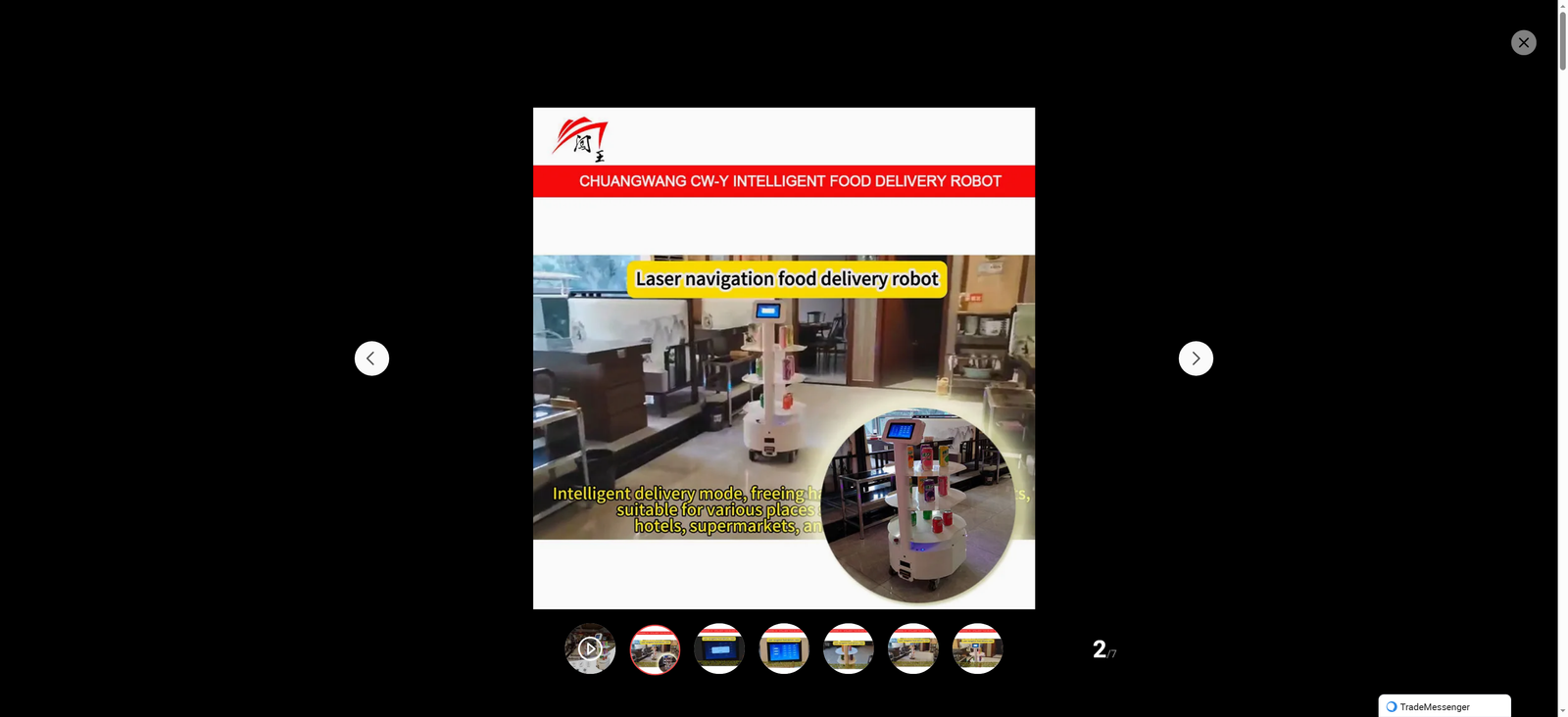
In the ever-evolving catering industry, efficiency, safety, and customer experience have become the core competitiveness for restaurants. Facing the challenges of labor shortages, high labor costs, and uneven service quality during peak hours, the trackless restaurant delivery robot equipped with precise navigation and active avoidance technology has emerged as a game-changer. It breaks the limitations of traditional delivery methods, injects intelligent momentum into catering operations, and reshapes the new pattern of dining services.
Trackless Operation: Free Movement Unshackled by Environment
Traditional delivery robots often rely on magnetic strips, QR codes, or fixed tracks to move, which require cumbersome pre-installation and modification of the restaurant environment. Once the layout of tables and chairs is adjusted, the entire navigation system needs to be reconfigured, bringing great inconvenience to restaurant operations. The trackless restaurant delivery robot fundamentally solves this pain point by adopting advanced trackless navigation technology that eliminates the need for any auxiliary markers.
This trackless design allows the robot to move freely in various dining spaces, whether it is a spacious western restaurant, a compact hot pot restaurant, or a hotel banquet hall with a frequently changing layout. It can adapt to different floor materials such as tiles, wooden floors, and carpets without changing the original decoration style of the restaurant. For catering operators, this means lower transformation costs, more flexible space utilization, and the ability to quickly adjust service routes according to business needs, greatly improving operational flexibility.
Precise Navigation: Centimeter-Level Positioning for Efficient Delivery
Precise navigation is the core guarantee for the stable operation of trackless delivery robots. The product integrates laser radar, visual sensors, and SLAM (Simultaneous Localization and Mapping) technology to achieve real-time mapping and centimeter-level positioning in complex indoor environments. When the robot is first put into use, it can quickly scan the entire dining area to build a high-precision environmental map, and mark the coordinates of each table, the kitchen window, and the recycling area in detail.
During the delivery process, the robot can dynamically plan the optimal path based on real-time environmental changes, avoiding congested areas and shortening the delivery time. Even in crowded dining peaks, it can accurately identify the target table and stop stably at the designated position, with a positioning error of less than 15mm. This not only ensures that dishes are delivered to customers in the freshest state but also avoids the chaos caused by wrong deliveries, improving the efficiency of the entire catering service chain. In addition, the robot supports virtual wall and virtual track settings through software, allowing operators to flexibly limit the movement range and optimize the service route according to actual needs.
Active Avoidance: Safe Interaction Guarding Dining Experience
The complex and dynamic dining environment puts high demands on the safety performance of delivery robots. The active avoidance system of the trackless delivery robot builds a multi-dimensional safety barrier through multi-sensor fusion technology, ensuring smooth interaction with customers and staff.
Equipped with laser radar, ultrasonic sensors, and depth cameras, the robot achieves 360-degree all-round environmental perception. The laser radar can detect obstacles at a long distance and plan a detour path in advance; the ultrasonic sensor makes up for the blind spots of laser detection, effectively identifying transparent obstacles such as glass doors and windows and low obstacles such as table legs; the depth camera can accurately judge the movement trajectory of pedestrians, especially for moving objects such as running children, and take predictive avoidance measures in time. When encountering unexpected situations, the robot will immediately stop, issue a voice reminder, and resume movement after confirming the safety of the path, ensuring that it will not collide with people or objects, and protecting the safety of customers, staff, and dishes.
Multi-Dimensional Value: Empowering Catering Operations to Upgrade
The trackless restaurant delivery robot with precise navigation and active avoidance capabilities brings multi-dimensional value to catering operators beyond basic delivery functions. In terms of cost control, it can work continuously for 8-12 hours after a single charge, with a daily delivery volume equivalent to 2-3 waiters, significantly reducing labor costs and solving the problem of labor shortage during peak hours. In terms of service quality, it maintains stable and standardized service 24 hours a day, avoiding service fluctuations caused by human factors such as fatigue and mood, and enhancing customer satisfaction.
In addition, the intelligent appearance and novel service method of the robot can also become a unique business card of the restaurant, attracting customers to experience and take photos to share, creating a topic effect and improving the brand's popularity and influence. It is widely applicable to various catering scenarios such as chain restaurants, hotels, hospitals, and office buildings. For example, in hot pot restaurants with high delivery frequency, it can efficiently undertake the task of delivering dishes and锅底; in hospitals, it can realize contactless meal delivery, reducing the risk of cross-infection.
Future Outlook: Intelligent Catering Enters a New Era
With the continuous advancement of AI, sensor, and navigation technology, trackless restaurant delivery robots will move towards a more intelligent and humanized direction. In the future, they will not only realize more precise path planning and more flexible obstacle avoidance but also integrate functions such as voice interaction, dish introduction, and tableware recycling, becoming a multi-functional intelligent service terminal in the catering industry. They will also realize multi-machine collaborative operation, through cloud management to achieve unified scheduling of multiple robots, further improving service efficiency.
For catering operators who are seeking transformation and upgrading, the trackless restaurant delivery robot is not only a tool to reduce costs and increase efficiency but also a key entry point to embrace the intelligent era. It breaks the traditional service model, redefines the efficiency and experience of dining services, and helps the catering industry move towards a more efficient, safe, and intelligent future.