
In the fast-paced modern life, the catering industry is constantly seeking innovation to balance efficiency, quality and cost. Against this backdrop, service robots have gradually stepped out of the laboratory and become an indispensable part of restaurants, cafes and canteens. Among them, Restaurant Waiter Robot, Autonomous Service Robot and Cafeteria Delivery Robot are leading the transformation of the catering service model with their unique functions and advantages. They are not only changing the way services are provided, but also redefining the relationship between humans and technology in the catering scene.
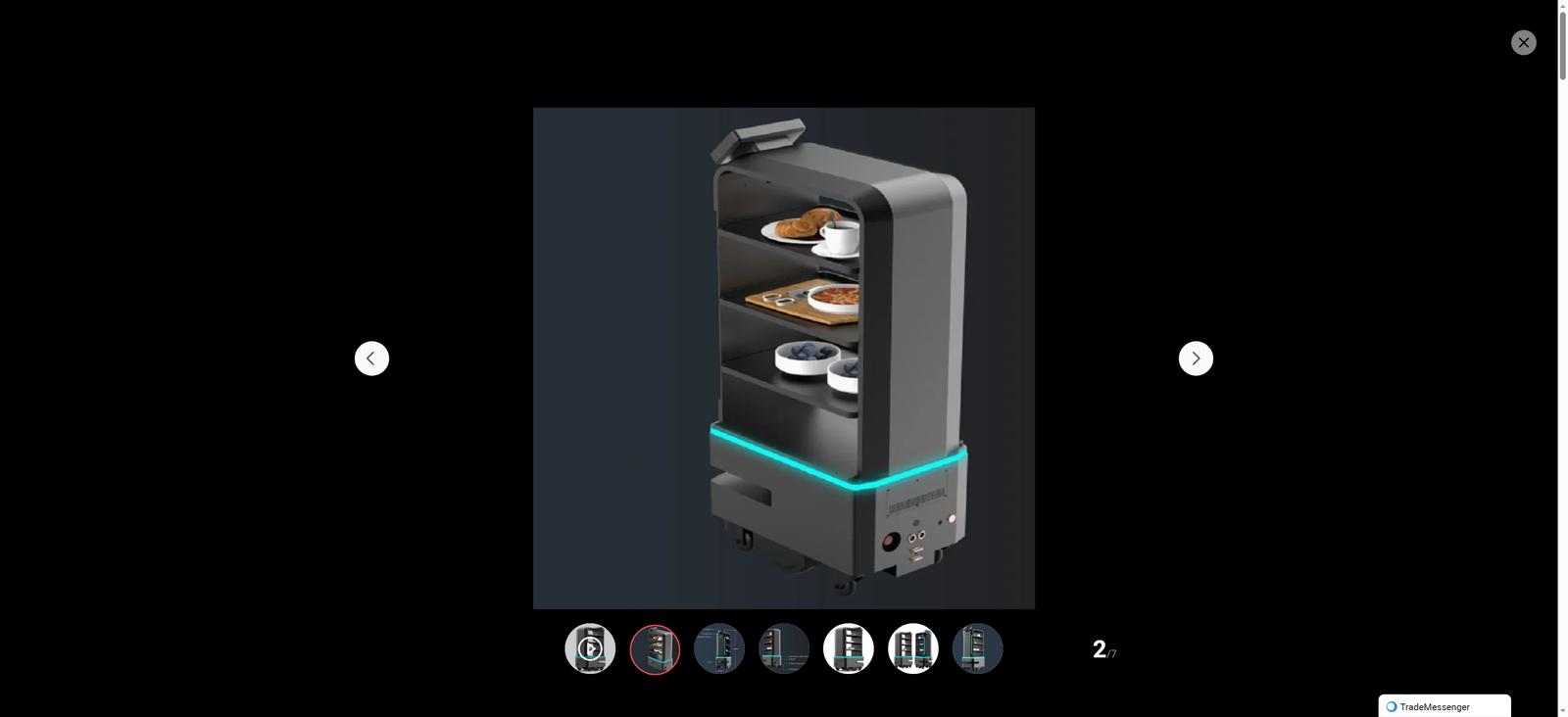
The Restaurant Waiter Robot is a revolutionary product that replaces traditional human waiters in providing front-end service. Different from the fixed workflow of traditional service, this type of robot is equipped with advanced navigation and obstacle avoidance systems, which can freely shuttle between dining tables, corridors and cash registers in the restaurant. From greeting customers at the door, leading them to their seats, presenting menus, taking orders to delivering dishes and collecting tableware, the Restaurant Waiter Robot can complete the whole set of service processes accurately and efficiently. What is more worth mentioning is that they can maintain a stable service quality 24 hours a day without being affected by factors such as fatigue, mood or work pressure. For example, in busy peak hours, when human waiters are overwhelmed by the endless orders and requests, the Restaurant Waiter Robot can still move in an orderly manner, ensuring that each table of customers can receive timely service. This not only improves the overall service efficiency of the restaurant, but also reduces the waiting time of customers, thus enhancing customer satisfaction.
As a more versatile type of equipment, the Autonomous Service Robot has a broader application scope in the catering industry. Compared with the Restaurant Waiter Robot which focuses on front-end dining service, the Autonomous Service Robot has stronger autonomous decision-making ability and multi-scenario adaptation ability. It can not only undertake the work of a waiter, but also complete a series of auxiliary tasks such as material transportation, environmental cleaning and inventory checking. Equipped with high-definition cameras, sensors and intelligent control systems, the Autonomous Service Robot can accurately identify the surrounding environment, make real-time adjustments to its movement route, and avoid collisions with humans or other objects. In large-scale catering venues such as hotels and banquet halls, the Autonomous Service Robot can cooperate with each other to form a highly efficient service team: some are responsible for receiving customers, some are responsible for delivering food, and some are responsible for cleaning the venue. This kind of collaborative work mode not only greatly reduces the labor cost of the catering enterprise, but also optimizes the service process, making the whole catering service more systematic and standardized. In addition, the Autonomous Service Robot can also collect and analyze customer behavior data through its own sensors, such as customer's dining time, favorite dishes and service needs, and provide valuable reference for catering enterprises to adjust their business strategies.
The Cafeteria Delivery Robot is a service robot tailored for the canteen scenario, which solves the pain points of low delivery efficiency and high labor intensity in traditional canteens. Canteens, especially those in schools, enterprises and institutions, usually have the characteristics of a large number of diners, concentrated dining time and fixed dining positions. In the past, the work of delivering meals relied entirely on manual labor. Canteen staff had to carry heavy dining cars back and forth between the kitchen and the dining area, which was not only laborious but also easy to cause confusion in the dining area. The emergence of the Cafeteria Delivery Robot has completely changed this situation. This type of robot is usually designed with a large-capacity meal storage space, which can carry a large number of meals at one time. At the same time, it adopts the magnetic navigation or visual navigation technology, which can accurately reach the designated dining area according to the preset route. After arriving at the destination, the Cafeteria Delivery Robot will send a reminder to the diners through voice or light, and diners can take their meals by themselves. After the meal delivery task is completed, the robot will automatically return to the kitchen to accept the next task. In the canteen scenario, the Cafeteria Delivery Robot can not only improve the efficiency of meal delivery, reduce the labor burden of the staff, but also avoid the cross-contamination caused by manual meal delivery, ensuring the hygiene and safety of food.
The popularization and application of Restaurant Waiter Robot, Autonomous Service Robot and Cafeteria Delivery Robot have brought profound changes to the catering industry, but this does not mean that they will completely replace human waiters. On the contrary, the combination of robots and human services is the future development trend of the catering industry. Robots are responsible for repetitive, tedious and heavy physical work, while human waiters can focus on providing more humanized and emotional services, such as communicating with customers, introducing dishes and solving special needs of customers. This kind of human-machine collaboration mode not only gives full play to the advantages of robots in efficiency and stability, but also retains the temperature of human services, making the catering experience more perfect.
Looking forward to the future, with the continuous progress of artificial intelligence, sensor and navigation technology, Restaurant Waiter Robot, Autonomous Service Robot and Cafeteria Delivery Robot will be more intelligent, humanized and personalized. They may have more accurate speech recognition ability, be able to communicate with customers freely; they may have stronger learning ability, be able to continuously optimize their service processes according to the actual situation; they may also have a more fashionable and beautiful appearance, integrating with the decoration style of the catering venue. At the same time, the application cost of service robots will gradually decrease, making more small and medium-sized catering enterprises able to afford and use them.
In conclusion, Restaurant Waiter Robot, Autonomous Service Robot and Cafeteria Delivery Robot are not only the product of technological progress, but also the inevitable choice for the transformation and upgrading of the catering industry. They are reshaping the service model of the catering industry, improving the operational efficiency of enterprises, and bringing a better dining experience to customers. With the continuous development of technology, we have reason to believe that service robots will play a more important role in the catering industry, creating a more intelligent, efficient and humanized new catering era.