
Remote Control Smart Robot Chassis Kit - Wheeled Mobile Platform with Open SDK: Empowering Innovation Across Industries
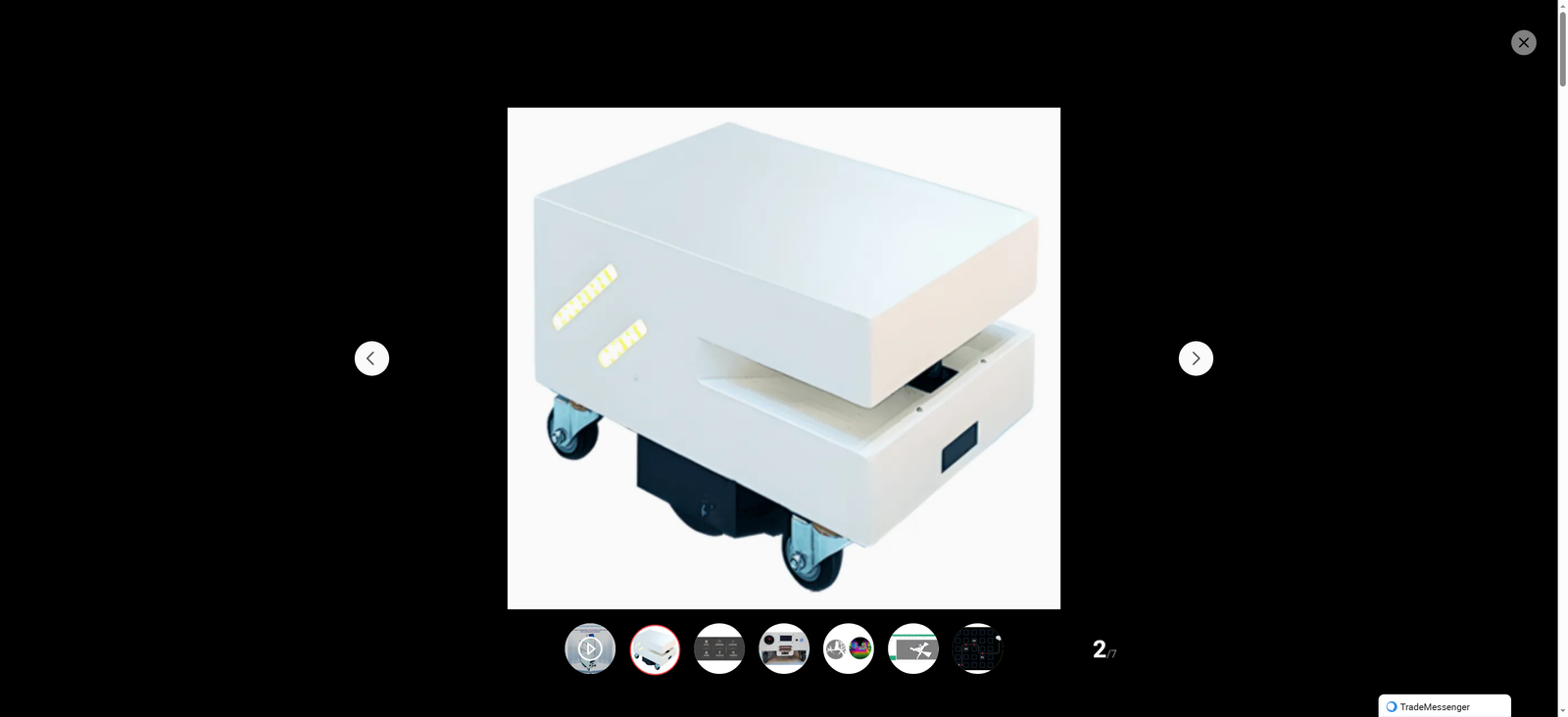
In the era of intelligent manufacturing and automation, the remote control smart robot chassis kit—equipped with a wheeled mobile platform and an Open SDK—has emerged as a foundational tool that breaks through the barriers of robot development, enabling enthusiasts, researchers, and enterprises to turn innovative ideas into practical applications. As the "feet" of intelligent robots, this chassis kit combines flexible mobility, remote controllability, and open customization, becoming a cornerstone in fields ranging from education and scientific research to industrial logistics and service robotics.
At its core, the remote control smart robot chassis kit is designed as a scalable, user-friendly wheeled mobile platform that prioritizes stability, adaptability, and ease of development. Unlike traditional fixed-function robot chassis, this kit adopts a modular design, allowing users to customize and expand its functions according to specific needs without the need for complex modifications to the base structure. The wheeled design, often equipped with high-performance DC motors and anti-slip tires, ensures smooth movement on various indoor surfaces—from factory floors and warehouse corridors to classroom tables and office spaces—while a built-in damping mechanism prevents driving wheels from hanging in the air, reducing measurement errors and enhancing operational stability.
The most distinctive advantage of this chassis kit lies in its integrated Open SDK (Software Development Kit), which unlocks unlimited possibilities for secondary development. For developers and researchers, the Open SDK provides standard API interfaces, rich programming resources, and detailed technical documentation, eliminating the need to invest massive resources in chassis R&D and allowing them to focus on core functional innovation instead. This open architecture supports compatibility with mainstream development platforms such as Arduino, Raspberry Pi, and ROS (Robot Operating System), enabling seamless integration of sensors, controllers, and application modules—from lidar and infrared sensors for obstacle avoidance to voice broadcast systems and cloud control platforms. In fact, many development teams have used this open environment to shorten their project cycles by more than 80%, completing navigation module development in weeks that would have previously taken months.
Complementing its open software ecosystem is a robust hardware configuration that ensures reliable performance in diverse scenarios. High-precision sensors—including lidar, speed encoders, and infrared detectors—enable the chassis to achieve centimeter-level positioning accuracy, millisecond-level obstacle avoidance, and real-time environmental perception. An industrial-grade main control computer, often equipped with 8GB memory and 32GB solid-state drives, handles large-volume computing tasks with ease, supporting advanced functions like SLAM 2.0 autonomous navigation and intelligent path planning. The chassis also features flexible power options, with selectable lithium battery specifications (10Ah/37V or 20Ah/37V) that provide 6 to 8 hours of continuous operation; when battery power is low, an infrared communication module enables automatic docking with charging piles, ensuring uninterrupted task execution.
The versatility of the remote control smart robot chassis kit makes it indispensable across a wide range of industries and applications. In education, it serves as an ideal STEM teaching tool, allowing students and beginners to gain hands-on experience in robotics, programming, and electronics. Its simple assembly process, clear instructions, and compatibility with beginner-friendly platforms like Arduino make it accessible to learners of all ages, fostering innovation and problem-solving skills through DIY projects such as obstacle avoidance robots, line-tracking cars, and remote-controlled mobile platforms. For scientific research institutions, the chassis provides a stable, customizable platform for testing new algorithms, sensor fusion technologies, and autonomous navigation systems, accelerating the pace of robotics innovation without the burden of developing a chassis from scratch.
In industrial and commercial sectors, this chassis kit is transforming efficiency and automation. In logistics and warehousing, it can be upgraded into AGVs (Automated Guided Vehicles) to handle inventory management, order picking, and material transportation, streamlining workflows and reducing labor costs—especially crucial as the global e-commerce boom drives demand for efficient warehousing solutions. In smart factories, it supports cluster scheduling of production-line robots, while its open SDK allows integration with factory management systems for real-time data monitoring and remote control. In service industries, it can be customized into service robots for hotels, hospitals, and shopping malls, performing tasks such as food delivery, disinfection, and guest guidance, enhancing service quality while reducing human contact risks. Even in specialized fields like disaster rescue and defense, modified versions of the chassis can navigate complex terrains to perform reconnaissance,物资运输, and environmental monitoring, ensuring safety and efficiency in high-risk scenarios.
The growing popularity of this chassis kit is also aligned with the global trend of the mobile robot chassis market, which is projected to grow from USD 1.6 billion in 2023 to USD 4.5 billion by 2032 at a CAGR of 11.5%. This growth is driven by increasing demand for automation, advancements in sensor and AI technology, and the need for cost-effective, scalable robotics solutions—all of which the remote control smart robot chassis kit delivers. By offering a balance of performance, affordability, and openness, it empowers small and medium-sized enterprises to participate in the robotics revolution, reducing entry barriers and fostering a more inclusive innovation ecosystem.
In conclusion, the remote control smart robot chassis kit—with its wheeled mobile platform and Open SDK—is more than just a hardware component; it is a catalyst for innovation that bridges the gap between ideas and real-world applications. Its modular design, open development environment, robust hardware, and multi-industry adaptability make it a versatile tool for educators, researchers, developers, and enterprises alike. As robotics technology continues to evolve, this chassis kit will remain at the forefront of innovation, enabling smarter, more efficient, and more accessible robots that transform how we live, work, and learn. Whether you are a beginner exploring the world of robotics, a researcher pushing the boundaries of technology, or a business seeking to automate operations, this chassis kit provides the foundation to turn your vision into reality.