
Reception Welcome Humanoid Service Robot: Transforming Commercial Hospitality with Intelligence
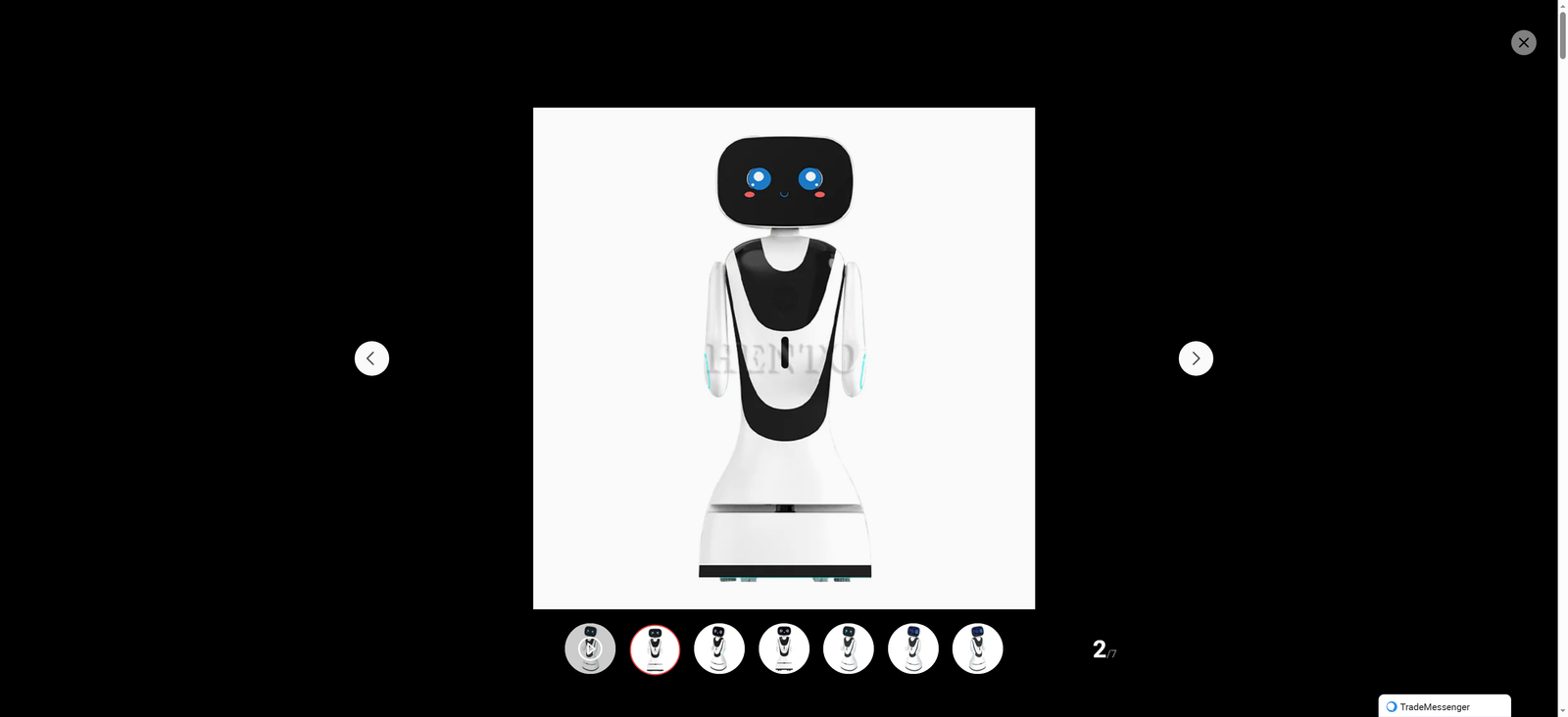
In the era of intelligent commercial upgrading, the reception welcome humanoid service robot has emerged as a game-changer in the hospitality industry, redefining the way businesses interact with customers and optimize operational efficiency. As a core branch of commercial service robots, the reception welcome humanoid service robot integrates advanced artificial intelligence, multimodal interaction, and autonomous navigation technologies, evolving from a simple "greeting tool" into an indispensable comprehensive service partner for various commercial scenarios. It not only enhances the brand image of enterprises but also bridges the gap between humanized service and intelligent efficiency, becoming a new benchmark for modern commercial reception.
A reception welcome humanoid service robot is distinguished by its human-like appearance and behavior, which breaks the cold stereotype of traditional machines. Unlike ordinary commercial robots, it is designed with simulated human features—from facial expressions that can convey warmth to flexible limb movements that mimic natural gestures—enabling it to establish an emotional connection with visitors at the first interaction. Equipped with high-definition cameras and voice recognition systems, it can accurately identify human faces, greet guests by name, and respond to inquiries in multiple languages, eliminating communication barriers in international commercial environments. This humanized design not only makes the reception process more approachable but also leaves a deep and innovative impression on customers, helping businesses stand out in fierce market competition.
The core value of reception welcome humanoid service robots lies in their ability to take on diverse commercial reception tasks with high efficiency and standardization, significantly reducing the burden on human staff. In commercial scenarios such as hotels, shopping malls, banks, exhibition halls, and corporate lobbies, these robots can perform a wide range of functions seamlessly. For instance, in hotels, they can welcome guests 24/7, assist with check-in procedures by scanning IDs and issuing room cards, guide guests to their rooms, and even provide personalized recommendations for catering and local attractions based on guest preferences. In shopping malls, they act as intelligent guides, helping customers locate stores, query product information, and learn about promotional activities, while some can also perform interactive performances to attract foot traffic and boost consumption frequency. In banks and government halls, they can answer common business questions, guide customers to the correct service windows, and manage appointment notifications in real time, improving service efficiency and reducing customer waiting time.
Behind the excellent performance of reception welcome humanoid service robots is the support of cutting-edge technologies. Multimodal human-computer interaction technology allows them to "hear" and "understand" human needs accurately even in noisy commercial environments—equipped with 6-array microphones and beamforming technology, they can achieve long-distance sound pickup and noise reduction, ensuring clear communication within 5 meters. SLAM autonomous navigation technology, combined with laser radar and visual sensors, enables them to build environmental maps independently, avoid obstacles dynamically, and move smoothly in crowded spaces while adhering to social etiquette, such as not interrupting conversing groups. Moreover, driven by large language models and RAG technology, these robots can quickly build professional knowledge bases by parsing enterprise documents, enabling them to answer complex professional questions accurately and update information in real time, greatly reducing the cost of operation and maintenance.
As the demand for intelligent commercial services continues to grow, reception welcome humanoid service robots are constantly evolving and expanding their application boundaries. Today, they are no longer limited to basic reception and guidance tasks but are integrated with more professional functions to adapt to diversified commercial needs. In exhibition halls, they serve as professional narrators, introducing product features, enterprise development histories, and industry knowledge in detail, while also collecting visitor data to provide insights for exhibition optimization. In hospitals, they assist with patient guidance, help with registration and appointment, and even provide preliminary health consultations, promoting the construction of smart hospitals. In large-scale events and stadiums, they welcome participants, guide them to booths or seats, and broadcast important notices, enhancing the overall event experience.
The popularization of reception welcome humanoid service robots also reflects the transformation of commercial services towards "humanization intelligence". For enterprises, deploying these robots is not only a manifestation of technological strength but also a practical measure to reduce operational costs and improve service quality. They can work continuously without rest, avoiding the impact of human factors such as fatigue and mood on service standards, and ensuring consistent and high-quality reception services at all times. For customers, interacting with humanoid welcome robots brings a novel and convenient experience, meeting their demand for efficient and personalized services in the fast-paced modern life. For the industry, these robots promote the upgrading of the commercial service ecosystem, driving the development of related technologies such as artificial intelligence, robotics, and big data, and creating new industrial opportunities.
Looking ahead, with the continuous advancement of AI technology and the deep integration of industrial needs, reception welcome humanoid service robots will become more intelligent, humanized, and modular. They will have stronger emotional perception capabilities, being able to accurately identify human emotions and adjust service strategies accordingly; their functions will be more customizable, allowing enterprises to tailor them to their specific business scenarios; and their integration with commercial systems will be more seamless, realizing data sharing with hotel management software, enterprise OA systems, and customer relationship management platforms. In the near future, these humanoid welcome robots will no longer be a "novelty" in commercial spaces but will become a common sight, injecting new vitality into the development of the commercial hospitality industry and creating a more efficient, warm, and intelligent service experience for everyone.