
High Quality Good Performance Real-Time Monitoring Restaurant Delivery Robot: Transforming Catering Services with Intelligence
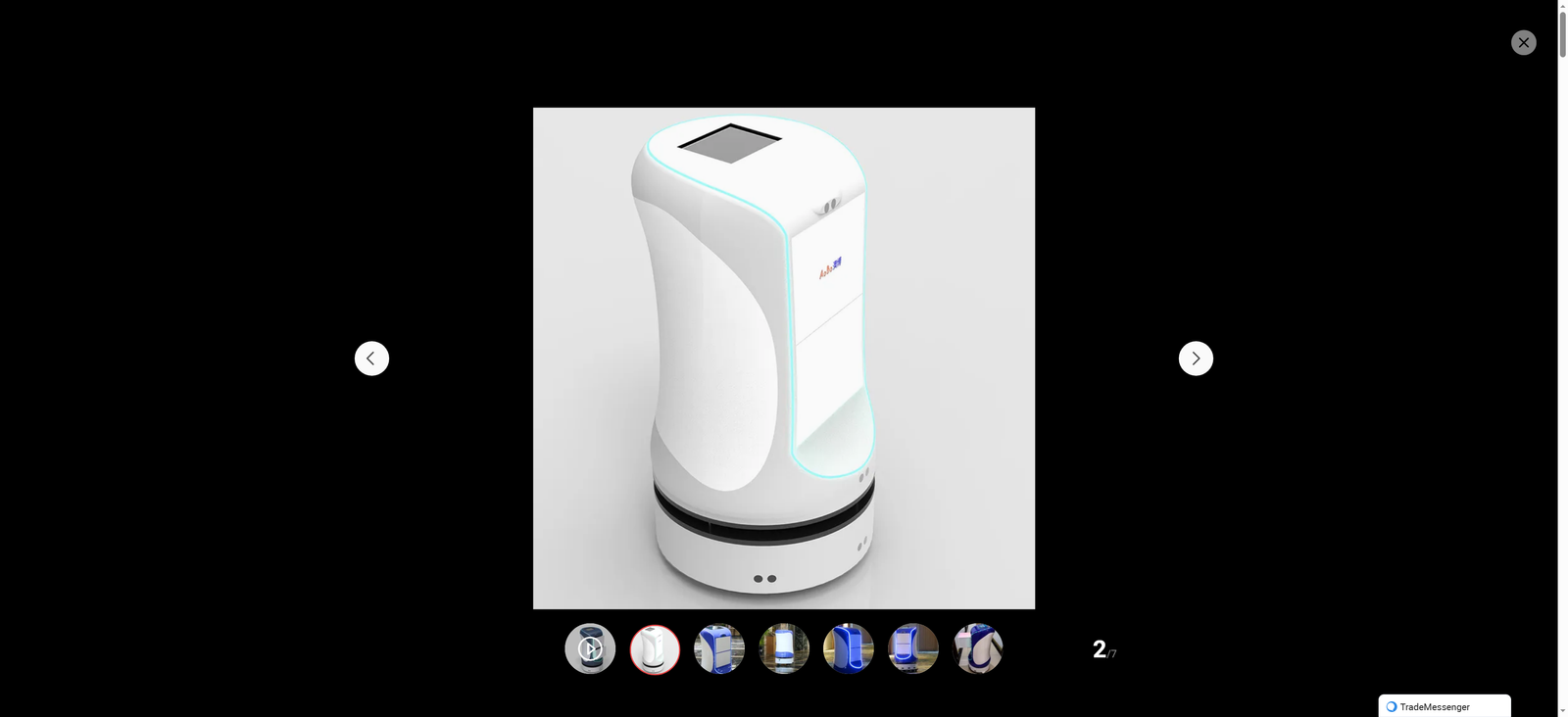
In the fast-paced catering industry, efficiency, stability, and transparency have become the core pillars of sustainable development. As restaurants strive to enhance customer experience, reduce operational costs, and adapt to the trend of intelligent transformation, the high quality, good performance real-time monitoring restaurant delivery robot has emerged as a game-changer. This innovative equipment integrates cutting-edge technology to solve pain points such as inefficient manual delivery, high error rates, and difficult process supervision, injecting new vitality into the traditional catering service model.
The high quality of the restaurant delivery robot is reflected in its robust hardware configuration, durable structure, and humanized design, which lay a solid foundation for long-term stable operation in complex catering environments. Unlike ordinary delivery robots that are prone to malfunctions or damage during frequent use, high-quality models adopt industrial-grade materials and precision manufacturing processes. For example, the body is made of wear-resistant, waterproof, and high-temperature resistant materials, which can easily cope with oil fumes, water stains, and collisions in restaurants. The tray design is optimized to carry up to 40 kilograms of food with multi-layer partitions, preventing spillage and ensuring the integrity of meals during delivery. In addition, the humanized design such as adjustable speed, soft voice prompts, and 360° obstacle avoidance sensors not only improves the safety of operation but also enhances the interaction experience between customers and robots, aligning with the high-standard service needs of modern restaurants.
Good performance is the core competitiveness of the real-time monitoring restaurant delivery robot, enabling it to efficiently complete delivery tasks and adapt to diverse catering scenarios. In terms of movement performance, the robot is equipped with advanced SLAM navigation technology and multi-sensor fusion algorithm, which can quickly build a map of the restaurant environment, realize centimeter-level precise positioning, and flexibly shuttle through narrow aisles (even 59cm wide) without manual intervention. The running speed can be adjusted between 0.1-1.0m/s according to the dining peak, ensuring fast delivery while avoiding collisions with customers or waiters. In terms of endurance performance, the robot adopts a high-capacity lithium battery system, which can work continuously for 9-12.5 hours after a single charge, fully meeting the needs of all-day operation of restaurants, whether it is a busy lunch and dinner peak or a late-night service. Moreover, the multi-machine collaboration function allows multiple robots to work simultaneously, intelligently planning the optimal path to avoid "traffic jams", which greatly improves the overall delivery efficiency—data shows that a single high-performance delivery robot can replace 1.5-2 human waiters, handling 400-600 dishes a day.
Real-time monitoring is the most distinctive feature of this type of robot, which breaks through the limitations of traditional delivery methods that are difficult to supervise, and realizes full transparency and controllability of the delivery process. The robot is integrated with a high-definition camera, ESP32-CAM module, and real-time data transmission system, which can transmit the delivery status to the restaurant management platform in real time. Restaurant managers can clearly view the robot's location, delivery progress, remaining power, and working status through a mobile phone or computer terminal, and timely handle abnormal situations such as food spillage, robot malfunction, or path deviation. For example, if the robot encounters an obstacle that cannot be avoided automatically, the monitoring system will issue an alarm immediately, and the manager can remotely control the robot to adjust its path or send staff to assist, ensuring that the delivery task is completed on time. At the same time, the real-time monitoring function can also record the delivery data, providing data support for restaurant managers to optimize the delivery process, adjust the number of robots, and improve operational efficiency. For chain restaurants, the cloud-based monitoring system also allows the headquarters to uniformly manage the robots of all stores, realizing the standardization of service quality across regions.
The application of high quality, good performance real-time monitoring restaurant delivery robots not only brings practical benefits to restaurants but also meets the increasingly diversified needs of consumers. For restaurants, it reduces labor costs significantly—solving the problem of labor shortage in the catering industry, and reducing the training cost and turnover rate of delivery staff. The high efficiency and low error rate of the robot also reduce customer complaints caused by delayed delivery or wrong delivery, improving customer satisfaction and loyalty. For example, the well-known hot pot brand Haidilao and Banu have introduced such delivery robots, which not only improved service efficiency but also created a novel dining experience, helping stores achieve revenue growth. For consumers, the contactless delivery service provided by the robot is more hygienic and safe, especially in the post-epidemic era, which effectively reduces the risk of cross-infection. The real-time query function of the delivery progress also makes the dining experience more assured and convenient.
With the continuous advancement of artificial intelligence, Internet of Things, and sensor technology, the high quality, good performance real-time monitoring restaurant delivery robot is also constantly upgrading and iterating. In the future, it will integrate more advanced technologies such as voice recognition, facial recognition, and emotional interaction, realizing more intelligent functions such as active greeting, personalized order recommendation, and automatic bill payment. The integration of metaverse and AR technologies will also bring more innovative experiences, such as allowing customers to preview dishes through the robot's display screen. In terms of environmental adaptability, the robot will be further optimized to adapt to more complex catering scenarios, such as outdoor dining areas and multi-storey restaurants, with the ability to climb stairs and adapt to harsh weather conditions. The global catering delivery robot market is growing at a CAGR of 21.8%, and it is predicted that by 2032, the market size will reach 4.35 billion US dollars, which fully indicates that intelligent delivery robots have broad development prospects in the catering industry.
In conclusion, the high quality, good performance real-time monitoring restaurant delivery robot is an important product of the intelligent transformation of the catering industry. It solves the pain points of traditional catering delivery, integrates efficiency, stability, and transparency, and brings a win-win situation for restaurants and consumers. As the catering industry continues to pursue high-quality development, this type of intelligent robot will become an indispensable part of modern restaurants, promoting the continuous upgrading of the catering service model and creating a more intelligent, efficient, and humanized dining experience for people.