
Voice-Controlled, Touch-Screen Interactive Delivery Robots: Reshaping the Future of Intelligent Services
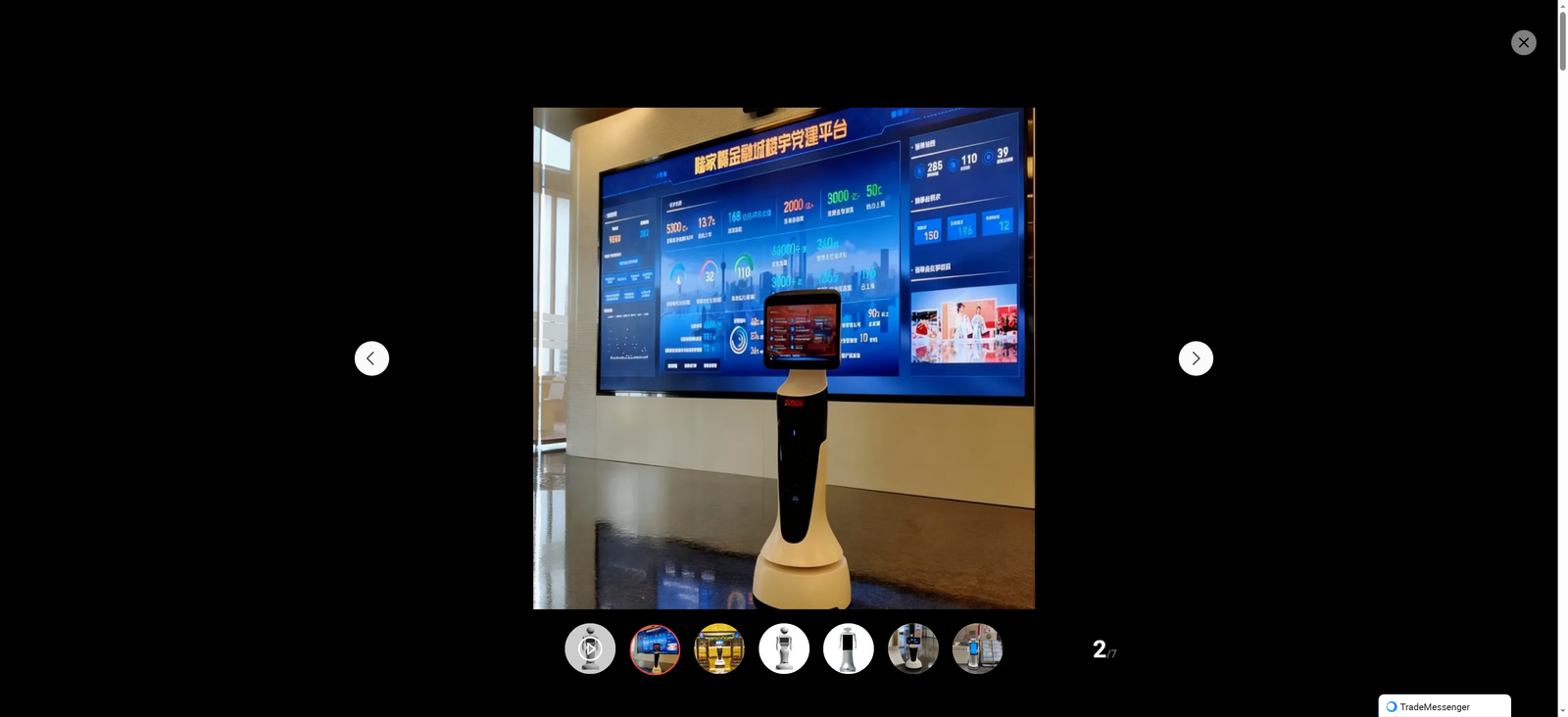
In the wave of digital transformation, service robots have become a key force driving industrial upgrading, among which voice-controlled and touch-screen interactive delivery robots stand out. By integrating advanced voice recognition, intuitive touch operation, and intelligent interactive technology, these robots break the limitations of traditional manual delivery, creating efficient, convenient, and humanized service experiences in multiple fields such as catering, hotels, hospitals, and office buildings. They are not only tools for improving efficiency but also important symbols of the deep integration of technology and services.
The core competitiveness of voice-controlled and touch-screen interactive delivery robots lies in their humanized interactive design, which bridges the gap between machines and humans. Voice control technology, supported by ASR (Automatic Speech Recognition) and NLP (Natural Language Processing), enables the robot to accurately understand human instructions in multiple languages and dialects. Whether it is a diner ordering food by saying "Deliver this dish to Table 8" in a restaurant, a hotel guest requesting "Send an extra pillow to Room 1503" via voice, or a nurse instructing "Transport these medicines to the third-floor ward," the robot can quickly respond, generate task orders, and start delivery autonomously. This hands-free interaction method is particularly suitable for scenarios where users' hands are occupied, greatly enhancing the convenience of service.
The touch screen, as another important interactive interface, complements the voice control function and enriches the interaction scenarios. Equipped with 8 to 10-inch high-definition touch screens, most delivery robots can display key information such as order details, delivery routes, and item lists in real time. For users who are not accustomed to voice commands, they can directly input instructions, modify delivery destinations, or query task progress through the touch screen. In catering scenarios, the touch screen can show dish introductions and nutritional information, helping customers make better choices; in hotel settings, it supports staff to manage task queues and adjust work modes through simple screen operations. Some advanced models even integrate advertising broadcast and IoT connection functions on the touch screen, realizing the dual value of service and operation management .
Beyond interactive functions, the stable operation capability of delivery robots relies on integrated technological support. These robots adopt multi-sensor fusion technology, combining laser radar, depth cameras, ultrasonic sensors, and anti-drop sensors to achieve precise autonomous navigation and intelligent obstacle avoidance . They can flexibly bypass pedestrians and obstacles in crowded restaurants, accurately identify glass and mirror surfaces that are difficult to detect, and avoid falling from steps and platforms, ensuring safe and smooth delivery. Taking the Robotis Gaemi robot as an example, it can operate continuously for 24 hours, with a maximum load capacity of 30 kg, and is equipped with multiple storage compartments such as drawers and swing doors to meet the delivery needs of different items . In high-end hotels, the combination of voice-controlled delivery robots and AI voice butlers has achieved remarkable results—undertaking more than 70% of high-frequency service tasks, saving a lot of manual time, and building a 24-hour undisturbed service system that balances efficiency and privacy .
The application scenarios of voice-controlled and touch-screen interactive delivery robots are constantly expanding, injecting new vitality into various industries. In the catering industry, they have become a common sight in restaurants and canteens, efficiently completing meal delivery and plate recycling tasks during peak hours, reducing customer waiting time and improving service quality . Some models are also equipped with anti-theft sensors; if items are mistakenly taken, they will issue a voice reminder immediately, ensuring the accuracy of delivery . In the hotel and hospitality industry, robots are competent for 24-hour delivery of amenities, laundry, and food, freeing hotel staff from tedious repetitive work to focus on providing personalized high-quality services . In medical institutions, they undertake the delivery of medicines and medical supplies, reducing the risk of cross-infection caused by manual handling and improving the efficiency of medical services. Even in office buildings, they can realize the automatic delivery of documents and small parcels, optimizing internal office processes.
Looking to the future, with the continuous advancement of artificial intelligence, IoT, and battery technology, voice-controlled and touch-screen interactive delivery robots will usher in broader development space. Technically, the accuracy of voice recognition and the intelligence of human-computer interaction will be further improved, enabling robots to understand more complex instructions and achieve emotional interaction. In terms of application, they will break through the limitations of indoor scenes, gradually expand to community distribution and outdoor scenarios, and form a collaborative delivery mode with drones . Some innovative models have even solved the problem of cross-floor delivery without elevators through deformable climbing wheels, further expanding the scope of application . However, the industry still faces challenges such as imperfect technical standards, high costs, and regulatory lag . It requires joint efforts from enterprises, governments, and research institutions to promote technological innovation, improve supporting policies, and promote the healthy development of the industry.
As an important carrier of intelligent services, voice-controlled and touch-screen interactive delivery robots are changing the way services are provided with their unique advantages of efficiency, intelligence, and humanization. They not only alleviate the pressure of labor shortage in various industries but also redefine the connotation of high-quality services. In the era of intelligence, these robots will continue to iterate and upgrade, integrating more deeply into people's work and life, and writing a new chapter of intelligent service development.